

Your digging level

For this genre
0/8
🏆
Sign in, then listen to this genre to level up

Description

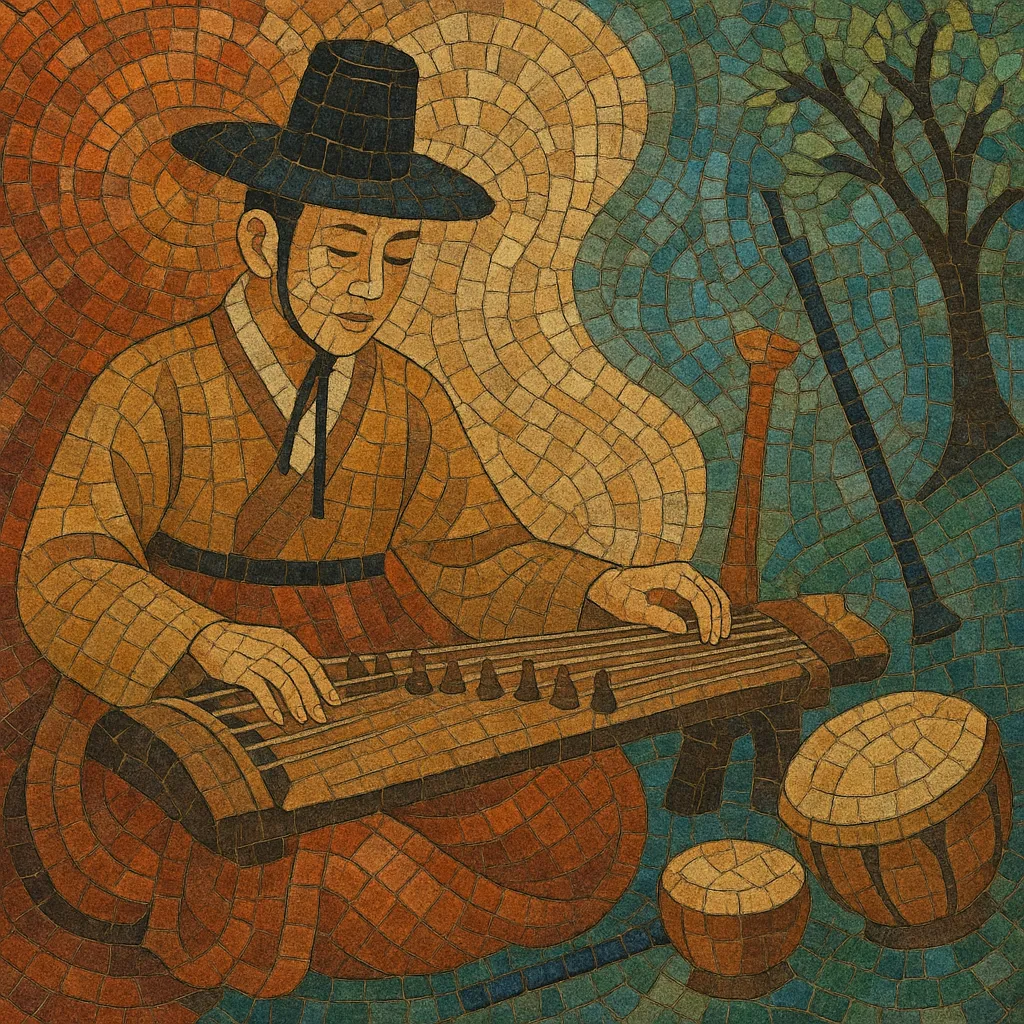
Korean classical (gugak jeongak) refers to the refined court, ritual, and literati art music that crystallized during the Joseon dynasty (1392–1910).

It encompasses three major court streams: aak (Confucian ritual music imported and localized from Chinese yayue), hyangak (indigenous Korean court repertories), and dangak (music of Tang/Chinese origin adapted in Korea). Beyond the palace, jeongak aesthetics also shaped aristocratic vocal–instrumental genres and ceremonial ensembles.

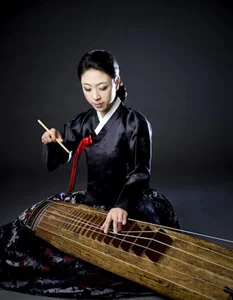
The style favors long-breathed melodies, heterophonic textures, and ritualized pacing, articulated by cyclical rhythms and subtle ornamentation (sigimsae). Iconic timbres come from piri (double-reed), daegeum (large transverse flute), haegeum (two-string fiddle), gayageum and geomungo (zithers), and grand ritual sets like pyeonjong (bronze bells) and pyeongyeong (stone chimes).


Sources: Spotify, Wikipedia, Discogs, RYM, MB, user feedback and other online sources

History

Origins (Goryeo to early Joseon)
•   Aak entered Korea in the 12th century from Song China as a Confucian ritual music (localization of Chinese yayue). Under early Joseon rulers, aak was systematized for state rites (Jongmyo Jerye, Munmyo Jerye) alongside indigenous hyangak and sinicized dangak. •   Court theorists and musicians codified pitch systems, instruments, and ensemble roles; the square-grid jeongganbo notation (15th c.) provided an exact rhythmic–melodic layout unique to Korea.
Joseon consolidation (15th–19th c.)
•   The court maintained three pillars: aak (ritual), hyangak (native court repertory), and dangak (Sino-Korean repertory). Grand ritual ensembles deployed pyeonjong/pyeongyeong (bell and stone chime sets), with flutes, oboes, zithers, and percussion in carefully stratified textures. •   Jeongak aesthetics informed literati vocal arts (e.g., sijo and gagok) and indoor chamber ensembles. Military/ceremonial wind–percussion bands (e.g., daechwita) developed in parallel from court institutions.
20th century decline and preservation
•   Political upheavals and modernization reduced court patronage. After 1945, state institutions (notably the National Gugak Center) stabilized transmission, while shrine rites (Jongmyo Jeryeak, Munmyo Jeryeak) continued as living traditions. •   UNESCO inscriptions and academic restoration projects in the late 20th century revitalized ritual and court repertories, standardizing pedagogy and performance practice.
Contemporary practice and influence
•   Today, court and jeongak repertories are performed by national and municipal gugak orchestras and shrine ensembles. Their modes, rhythmic cycles, instruments, and aesthetics inform modern concert works, film scores, and fusion gugak, while remaining central to state and Confucian rites.

How to make a track in this genre

Core materials
•   Scales/modes: Employ court-derived modal colors (e.g., ujo and gyemyeon-type ambiences) with characteristic central tones and pentatonic emphasis. Favor stepwise motion and controlled ornamental slides (sigimsae) rather than wide leaps. •   Rhythm: Organize phrases in cyclical patterns (jangdan) with long, even pulses. In ritual aak, keep tempo spacious and processional; in hyangak/dangak chamber settings, use gently breathing cycles with subtle accelerations/decelerations.
Instrumentation and texture
•   Winds: piri (cylindrical double-reed) for lead melody, daegeum (transverse bamboo flute) for sustained, breathy lines; danso and taepyeongso as context requires. •   Strings: gayageum and geomungo provide plucked ostinati and modal anchors; haegeum and ajaeng add sustained and rasped timbres. •   Ritual sets: pyeonjong (bronze bells) and pyeongyeong (stone chimes) articulate pitch hierarchies in aak; add idiophones (jing, ching) and soft percussion for cadence cues. •   Texture: Aim for heterophony—voices share one melody with individualized ornamentation and staggered entries, rather than Western harmony.
Form and notation
•   Phrase architecture: Build long, arching periods with cadences paced by percussion signals. Allow silence and resonance to function as structural elements. •   Notation: Sketch in modern staff if needed, but think in jeongganbo-like grids—fixed pulses within boxes—so rhythm and melody align precisely over the cycle.
Performance practice
•   Timbre and breath: Maintain restrained dynamics, rounded tone, and steady breath; vibrato is minimal, ornaments are deliberate and codified. •   Ensemble leadership: The piri/daegeum often lead; percussion cues coordinate section changes and ritual gestures. •   Venue and affect: Keep ceremonious poise—this music is as much spatial and ritual as it is sonic.

Top tracks

Locked
Share your favorite track to unlock other users’ top tracks

Upcoming concerts

in this genre
Influenced by
Has influenced

Download our mobile app

Get the Melodigging app and start digging for new genres on the go
© 2026 Melodigging
Melodding was created as a tribute to Every Noise at Once, which inspired us to help curious minds keep digging into music's ever-evolving genres.
Buy me a coffee for Melodigging