Your digging level

For this genre
0/8
🏆
Sign in, then listen to this genre to level up

Description

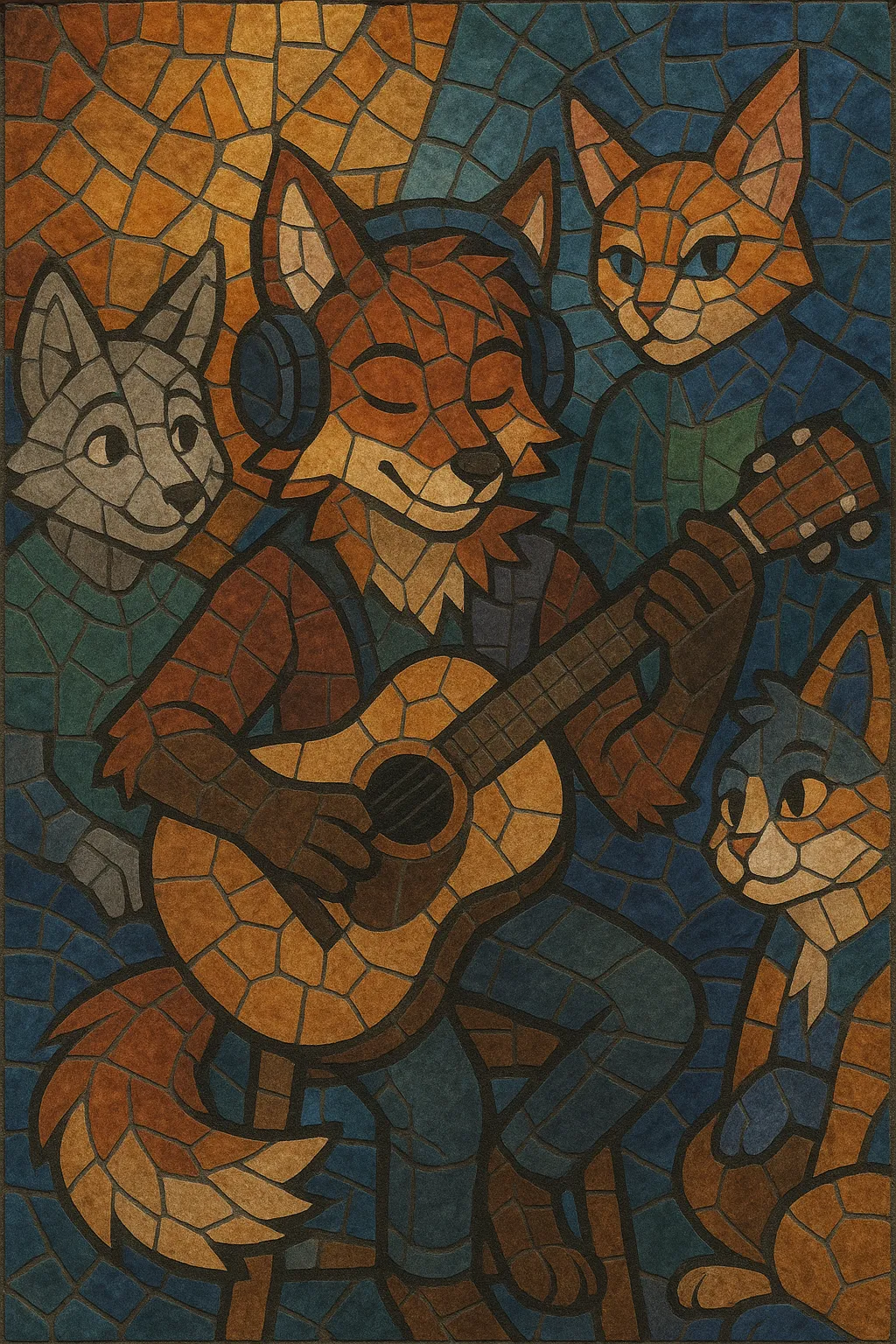
Furry music is a community-driven umbrella for songs and productions made by, for, and about the furry fandom. Rather than a single sound, it is defined by its audience, themes, and artist personas (fursonas), with releases circulating through Bandcamp, SoundCloud, YouTube, and performances at furry conventions.

Sonically it spans upbeat pop and electropop, EDM and dubstep, chiptune and breakcore, pop‑punk/indie rock, and pockets of hip hop and singer‑songwriter. Lyrics often center on anthropomorphism, identity and belonging, queer‑friendly storytelling, convention culture, and playful or comedic memes. Visual presentation—mascot masks, fursuits, illustrated avatars—forms part of the aesthetic, helping tie disparate styles into a coherent scene.


Sources: Spotify, Wikipedia, Discogs, Rate Your Music, MusicBrainz, and other online sources

History

Origins (late 1990s–2000s)

Early traces grew out of sci‑fi/fantasy fan music and internet DIY culture. As the furry fandom organized conventions in North America and Europe, musicians began writing original songs about fursonas and community life. MP3 sharing, forums, and early netlabels lowered barriers, allowing producers and singer‑songwriters to connect and play con stages.

Consolidation in the 2010s

The 2010s saw a visible surge through Bandcamp, YouTube, and livestreaming. Electronic producers blended EDM, chiptune, and breakcore with character‑driven branding, while pop‑punk and folk‑rock songwriters wrote anthems for convention crowds. Con events (e.g., dances, formal concerts, and charity showcases) normalized live performance, and compilation albums raised funds for animal and community causes. The scene’s hallmark became inclusivity and a meme‑savvy, internet‑native voice.

2020s and cross‑pollination

In the 2020s the sound broadened further, absorbing hyperpop gloss, bedroom‑pop intimacy, and social‑video aesthetics (TikTok shorts, VTuber‑style presentation). Remote collaboration matured, merch and Patreon models sustained full‑time creators, and curated playlists/radio streams helped newcomers navigate a stylistically wide but thematically unified scene.

Aesthetic identity over strict genre rules

Across its history, “furry music” remained defined less by tempo or harmony and more by narrative themes, character personas, visual art, and community spaces—tying together otherwise disparate pop, rock, EDM, and hip‑hop substyles.

How to make a track in this genre

Choose a sonic lane (style first, theme second)

Pick a base idiom—EDM/electropop, pop‑punk/indie rock, chiptune/breakcore, hip hop, or acoustic pop. The "furry" part comes from lyrics, persona, and visuals rather than a mandated tempo or chord palette.

Harmony and melody
•   Favor catchy, vocal‑friendly keys (C–G–A major/minor). •   Use bright, consonant progressions common to pop and EDM (I–V–vi–IV, vi–IV–I–V) or power‑chord riffs for pop‑punk. •   Craft sing‑along choruses with clear hooks and call‑and‑response moments suited to convention crowds.
Rhythm and tempo
•   Electropop/EDM dance sets: 118–128 BPM; add sidechain‑compressed pads and four‑on‑the‑floor kicks. •   Dubstep/bass music: 140 BPM (or halftime 70), prominent sub‑bass and syncopated drums. •   Pop‑punk/rock: 150–180 BPM, driving straight‑8th hats and palm‑muted guitars. •   Chiptune/breakcore experiments: anything from 120 to >180 BPM; lean on tracker‑style rhythms and bit‑crushed percussion.
Sound design and instrumentation
•   EDM/electropop: supersaw leads, glittery plucks, vocoder or tuned doubles, wide pads, tight claps/snares. •   Rock/punk: two guitars (rhythm/lead), bass with mid punch, energetic drums; layer gang vocals for the chorus. •   Chiptune: 8‑bit/16‑bit waveforms (pulse/noise/triangle), simple arps, sample‑rate/bit‑reduction for retro sheen.
Lyrics, persona, and visuals
•   Write about fursonas, community, conventions, chosen family, and playful romance or humor. •   Keep lines concise and chantable; include fandom in‑jokes sparingly so newcomers aren’t excluded. •   Develop a consistent visual identity (character art, fursuit/VTuber avatar) for covers, videos, and live shows.
Production and performance
•   Mix for translation: strong vocal presence (2–6 kHz clarity), controlled low end (30–80 Hz), and tame harshness around 8–10 kHz for bright synths. •   Arrange sets with peaks and breathers; intersperse high‑energy tracks with mid‑tempo sing‑alongs. •   At cons, use backing tracks and click where needed; prioritize audience interaction and safe, comfortable stagewear/fursuit considerations.
Release strategy
•   Use Bandcamp for sales/charity compilations, YouTube for lyric videos/visualizers, and streaming for reach. •   Engage art commissions and collab remixes to cross‑pollinate audiences within the fandom.

Top tracks

Locked
Share your favorite track to unlock other users’ top tracks
Influenced by
Has influenced
No genres found
Challenges
Digger Battle
Let's see who can find the best track in this genre
© 2026 Melodigging
Melodding was created as a tribute to Every Noise at Once, which inspired us to help curious minds keep digging into music's ever-evolving genres.
Buy me a coffee for Melodigging