Your digging level
Description
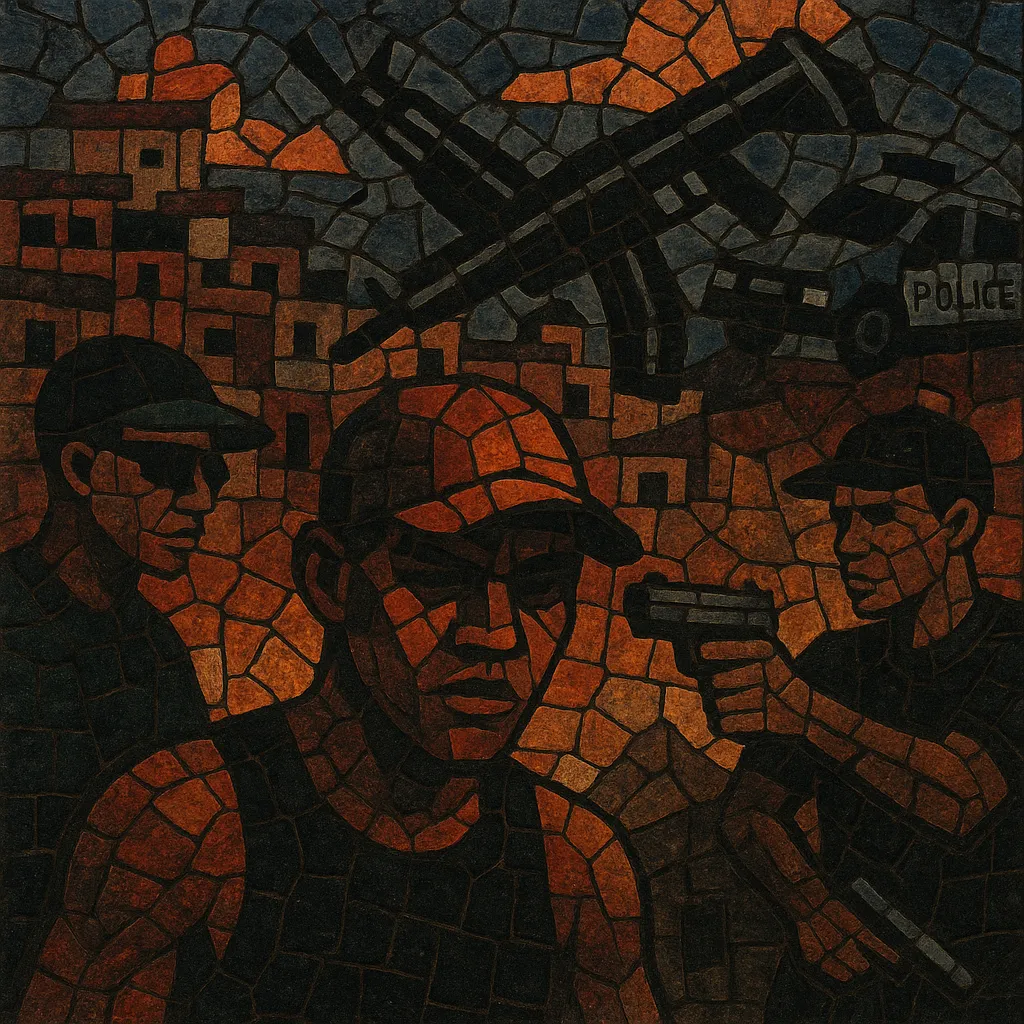
Funk proibidão (literally “highly forbidden”) is a raw, aggressive subgenre of funk carioca that emerged in the favelas of Rio de Janeiro in the early 1990s. It is closely tied to local gang dynamics: MCs often deliver gritty narratives or explicit shout‑outs to drug factions, while DJs power baile funk parties deep inside the communities.
Musically, proibidão sits on the classic tamborzão/Miami‑bass‑derived funk carioca beat—heavy sub‑bass, clipped drum-machine hits, vocal chops, and sample stabs (sirens, gun cocks) that underline its confrontational tone. Vocals are typically shouted or chanted in call‑and‑response style, with lo‑fi, on‑the‑spot production that favors impact over polish.
Because lyrics can openly praise or reference specific criminal organizations and territorial disputes, proibidão is often subject to broadcast restrictions and law enforcement pressure—hence the name.




History
Funk proibidão grew in parallel with the expansion of baile funk culture in Rio’s favelas. As drug factions consolidated territorial control, they began sponsoring sound systems and DJs, using parties both as community entertainment and as a means of messaging. Within that context, MCs developed a harder strain of funk carioca whose lyrics narrated daily life under faction rule, celebrated local crews, and taunted rivals—material that quickly earned the music its “prohibited” label.
Built on the tamborzão groove and Miami‑bass lineage, proibidão tracks emphasized booming kick drums, syncopated claps, and aggressive vocal delivery. Cassette/CD-R circulation, community radio, and street parties carried the sound beyond individual hillsides. Despite periodic police crackdowns and media controversies, the genre persisted as a hyperlocal chronicle of territory, resistance, and status.
Through the 2000s, proibidão became a recognized lane within Brazilian funk, even as other substyles (funk consciente, funk ostentação, later 150 BPM) rose in parallel. Legal and ethical debates around incitement and glorification never disappeared, and many tracks stayed informal or underground. Still, its stark realism and kinetic energy influenced the broader aesthetic of Rio funk and informed the darker edge of later scenes.
Today, proibidão remains a reference point for the "hard" end of baile funk: its drum programming, chant‑like hooks, and uncompromising street reportage helped define how Rio funk can sound—and how it can function as a local newswire from the favela perspective.

Top albums



Best playlists