Your digging level

For this genre
0/8
🏆
Sign in, then listen to this genre to level up

Description

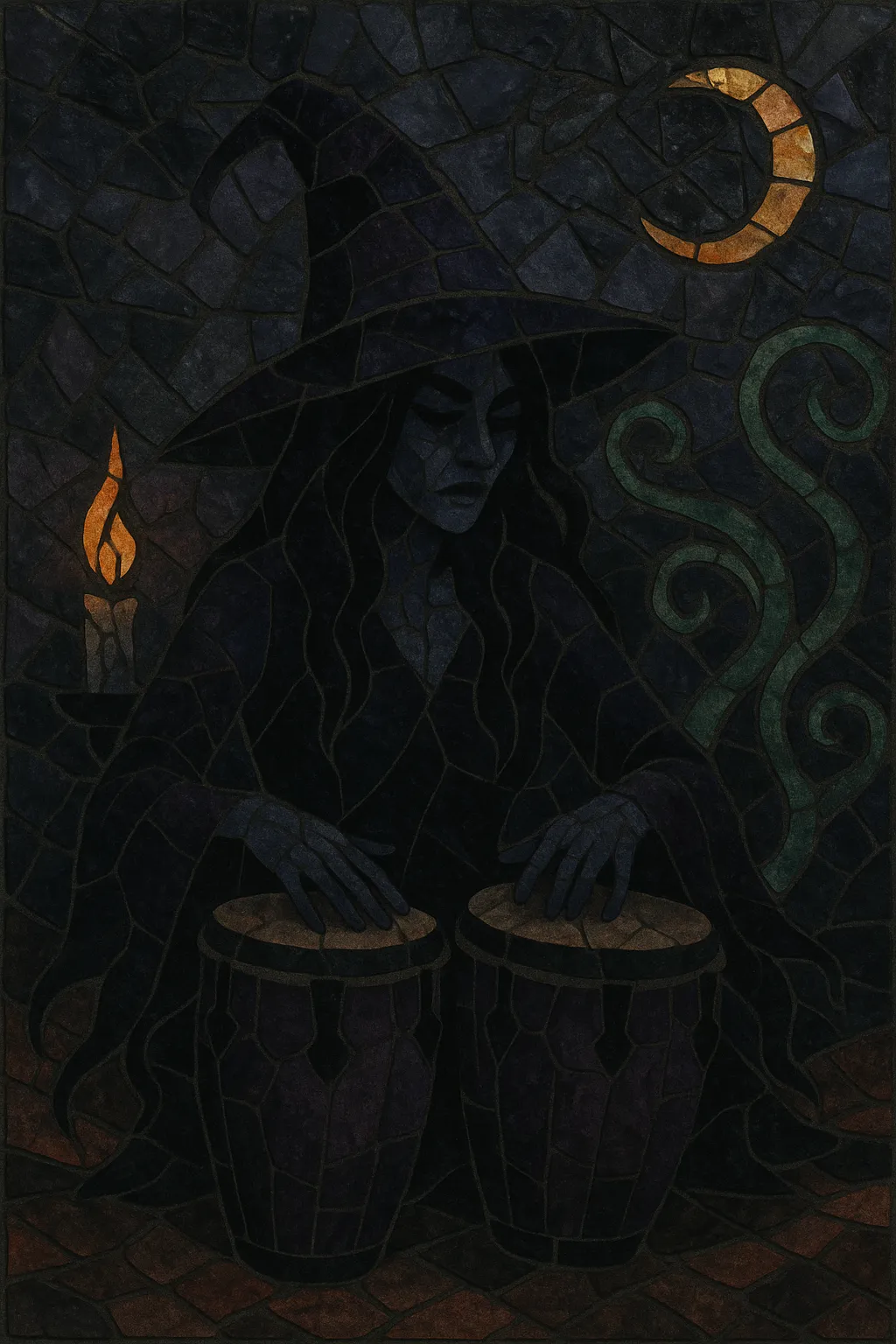
Funk bruxaria is a dark, occult-tinged microstyle of Brazilian baile funk that blends the raw, percussive drive of funk carioca with eerie sound design and gothic/witchy aesthetics.

Producers favor minor modes, ominous pads, whispered or pitched-down vocal chops, ritual-like percussive cycles, and cinematic foley (bells, chimes, wind, thunder) to create a brooding, supernatural atmosphere over unmistakably dance-oriented funk rhythms. The result sits between the street energy of baile funk and the hazy, nocturnal mood of witch house and trap, often at 130–150 BPM (with frequent 150-BPM variants).


Sources: Spotify, Wikipedia, Discogs, Rate Your Music, MusicBrainz, and other online sources

History

Origins (late 2010s)

Funk bruxaria emerged in Brazil in the late 2010s as baile funk producers on SoundCloud and in underground parties pursued a darker, mystic aesthetic. Building on long-standing montage techniques of funk carioca and the heavier club push of 150-BPM funk, they began combining ritual-like percussion loops with cinematic textures, whispered hooks, and minor-key atmospheres.

Aesthetic formation

The scene drew visual and sonic cues from witch house (dragged vocals, occult imagery) and trap’s sub-heavy sound design, while staying firmly rooted in baile funk’s tamborzão-derived rhythms. Producers experimented with reversed samples, choral pads, bells, and spectral FX to evoke a sense of spell-casting or night-time rites—hence the name “bruxaria” (witchcraft).

Spread and online circulation

The style circulated primarily through SoundCloud mixes, DJ edits, and party circuits in São Paulo and Rio, where darker club sets welcomed hybrid forms of funk. Playlists and DJ collectives helped codify the tag, giving listeners a recognizable shorthand for “dark, witchy funk.”

Consolidation and cross-pollination

By the early 2020s, funk bruxaria became a recognized microstyle within the broader Brazilian funk ecosystem, cross-pollinating with funk mandelão, 150-BPM funk, trapfunk, and experimental club music. While niche, it influenced the mood and sound design choices of many baile funk edits, further broadening the creative palette of contemporary Brazilian club culture.

How to make a track in this genre

Rhythm and tempo
•   Work in the 130–150 BPM range; 150 BPM is common for a driving, night-time pulse. •   Anchor the beat in baile funk patterns (tamborzão/montagem logic): punchy kick on the downbeat, syncopated claps, and swung hi-hats.
Sound palette and harmony
•   Use minor modes (Aeolian/Phrygian) and sparse, tense chordal movement; drones and pedal tones keep it hypnotic. •   Layer ominous pads, choirs, and bell/chime textures. Add reversed swells, breathy whispers, thunder/wind, and distant metallic hits to evoke occult ambience.
Bass and drums
•   Sub-forward 808s (sine/triangle subs) with occasional glides; keep the low end clean and mono-centered. •   Percussion should feel ritualistic: toms and congas in repeating cells, with tasteful distortion/saturation to roughen edges.
Vocals and sampling
•   Chop MC calls or ad-libs; pitch them down or add formant shifts for a spectral feel. Whispered one-shots or mantra-like phrases work well. •   If using religious or ceremonial recordings, be respectful: avoid sampling sacred rites without consent; prefer original sound design or licensed libraries.
Arrangement and mix
•   Build tension via subtraction: start minimal, introduce a hook (bell motif, vocal spell), then drop into a heavier drum section. •   Use gated reverbs, delays, and sidechain compression to keep space breathing around the kick and sub. Saturate busses for grit, but protect the low end from clipping.
Finishing touches
•   Emphasize contrast: stark percussive breaks vs. foggy pad passages. Small risers, reversed cymbals, and filtered noise sweeps enhance the supernatural narrative.

Top tracks

Locked
Share your favorite track to unlock other users’ top tracks
Influenced by
Challenges
Digger Battle
Let's see who can find the best track in this genre
© 2026 Melodigging
Melodding was created as a tribute to Every Noise at Once, which inspired us to help curious minds keep digging into music's ever-evolving genres.
Buy me a coffee for Melodigging