

Your digging level
For this genre
0/8
🏆
Sign in, then listen to this genre to level up
Description
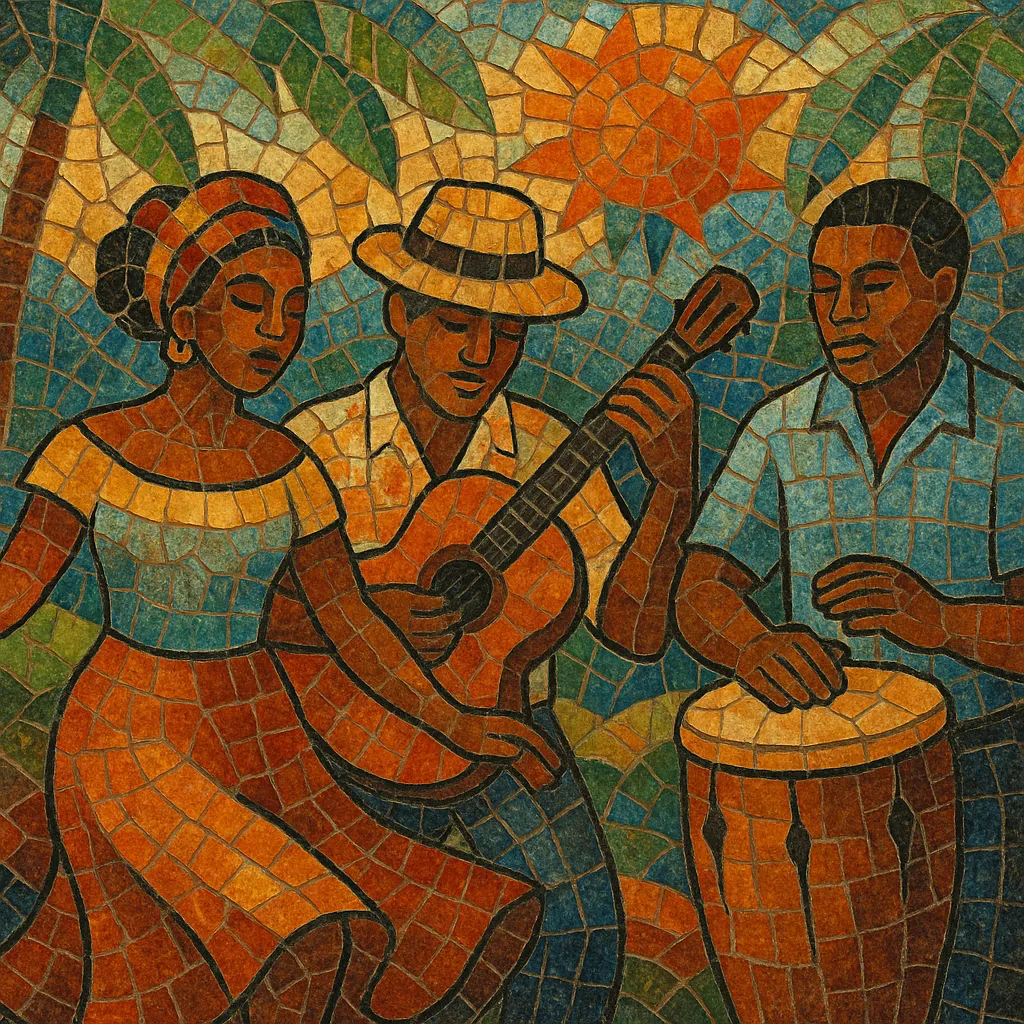
French Caribbean music is an umbrella term for popular and folkloric styles from the French Antilles (Guadeloupe, Martinique, Dominica, Saint Lucia) and from Haiti. It encompasses island dance musics (biguine, gwo ka, bélé), the Haitian méringue-derived compas (konpa), 1970s cadence-lypso, and the 1980s studio-driven zouk, along with many regional variants.
Shared features include Creole (Kréyol/Créole) and French lyrics, call-and-response refrains, syncopated hand-drumming patterns (ka, ti-bwa), horn riffs, tumbling bass ostinatos, and a strong emphasis on social dance. While instrumentation evolved from acoustic ensembles to drum machines and synthesizers, the heartbeat remains the Caribbean dance floor.
History
Early Roots (19th–early 20th c.)
• In Martinique and Guadeloupe, Afro-Creole drumming traditions such as gwo ka and bélé blended with European social dances (quadrille, polka, mazurka) to produce biguine. By the 1930s, biguine jazz bands popularized Antillean sounds in Paris, establishing a transatlantic audience for French Antillean music.
Mid‑Century Haiti and the Compas Revolution (1950s–60s)
• In Haiti, Nemours Jean‑Baptiste formalized compas (konpa) in the 1950s from the local méringue, tightening the 4/4 dance pulse, spotlighting guitar strums, conga/tanbou patterns, and horn arrangements. Compas quickly became a regional lingua franca, influencing bands across the French Antilles and the wider Caribbean.
Cadence‑Lypso and Mini‑Jazz (1970s)
• Dominican and Guadeloupean/Martinican bands fused Haitian kadans/compas with calypso to create cadence‑lypso—an electric, horn‑rich club sound advanced by Exile One and Ophelia Marie. Parallel Haitian "mini‑jazz" guitar bands streamlined compas for smaller dancehalls, spreading the style via touring circuits and diaspora networks.
Zouk and the Studio Era (1980s–90s)
• Kassav’ synthesized Antillean rhythms (biguine, bélé), compas/cadence, and modern studio production into zouk: fast, highly arranged, and hook‑driven. Zouk love later slowed the tempo for romantic ballads. These sounds traveled widely through francophone Africa and Lusophone countries, catalyzing new urban genres.
2000s–Present
• French Caribbean music continues to evolve through diasporic hubs (Paris, Montréal, New York), digital production, and crossovers with dancehall, Afro‑house, rap, and R&B. Heritage drumming and string ensembles (e.g., Malavoi’s string‑led biguine) coexist with contemporary zouk/compas chart acts, keeping the region’s dance‑floor identity vibrant.
Core Groove and Tempo
• Aim for a dance-first pulse. For compas/cadence, use a steady 4/4 at roughly 90–115 BPM (zouk love) or 115–140 BPM (zouk/classic dancefloor). Keep the kick and bass tightly interlocked; place syncopated snare or rim accents on the offbeats.
Rhythm and Percussion
• Layer hand drums (ka/tanbou), congas, and shakers with a ti‑bwa woodblock pattern (lilting, repeating ostinato). Introduce call‑and‑response claps or short percussive fills before chorus entries to cue dancers.
Harmony and Bass
• Favor singable diatonic progressions (e.g., I–V–vi–IV, I–IV–V, ii–V–I) with occasional minor‑mode turns for bittersweet color. Write a tumbling, ostinato bassline that locks to the kick and outlines roots/5ths with syncopated approach notes.
Melody, Riffs, and Vocals
• Compose memorable choruses with antiphonal hooks. Use Creole and/or French lyrics with vivid imagery, playful double meanings, and dance‑floor invitations. Horns (sax/trumpet/trombone) or strings (for biguine à la Malavoi) should provide catchy riffs and unison punches.
Instrumentation and Production
• Traditional palette: guitar/banjo, horns, ka/tanbou, bass, ti‑bwa. Modern palette: drum machines, synth bass, bright poly-synth stabs, clean rhythm guitar, polished vocal stacks. Keep the mix mid‑forward and rhythm‑centric; automate breaks/stops to energize dancers before drops and chorus returns.
Arrangement Tips
• Structure: intro (percussion or horn riff) → verse → pre‑chorus → chorus → instrumental/horn break → verse/chorus → outro vamp. Insert a brief percussive breakdown to spotlight ka/ti‑bwa and invite crowd call‑backs.

Top albums


Top tracks
Locked
Share your favorite track to unlock other users’ top tracks
Upcoming concerts
in this genre
