Your digging level

For this genre
0/8
🏆
Sign in, then listen to this genre to level up

Description

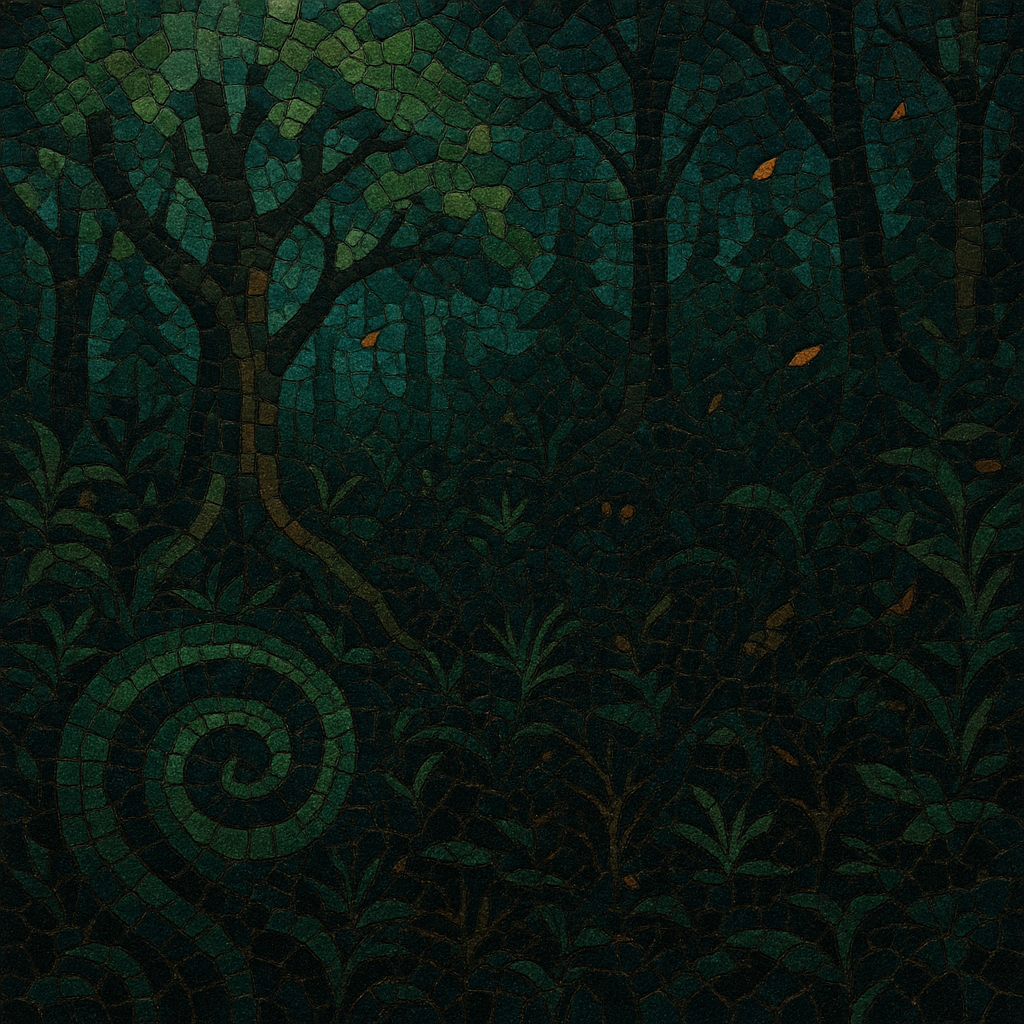
Forest psy is a shadowy, organic strain of psychedelic trance characterized by earthy textures, intricate polyrhythms, and a deep, nocturnal atmosphere. It emphasizes immersive sound design—creaking wood, insect chatter, distant animal calls—woven into rolling basslines and highly syncopated percussion.

Typically running around 148–156 BPM, forest psy favors long-form storytelling over big melodic hooks. Harmonic content is sparse or ambiguous, often leaning into modal or atonal motifs and carefully sculpted dissonances. The result is a hypnotic, heady trip that feels subterranean and alive, as if the dancefloor were nestled in a living forest at night.


Sources: Spotify, Wikipedia, Discogs, Rate Your Music, MusicBrainz, and other online sources

History

Origins (early–mid 2000s)

Forest psy emerged in the early 2000s within the broader dark psytrance movement, clustering around Scandinavian and Central/Eastern European circles. Swedish projects and labels were particularly pivotal, setting the template for an organic, non-synthetic feel inside psychedelic trance. Producers gravitated toward field recordings, creaking and rustling textures, and highly textural processing to evoke the sensation of being deep in a forest at night.

Aesthetic consolidation

As the sound matured, its hallmarks solidified: rolling, rubbery basslines; syncopated, insectoid percussion; restrained or atonal melodies; and extended arrangements that evolve slowly and unpredictably. Labels and crews in Sweden, the Balkans, and Russia cultivated rosters that prioritized sound design and atmosphere over bombastic drops, encouraging long DJ sets that emphasize narrative flow.

Global diffusion and cross-pollination

By the late 2000s and 2010s, forest psy had become a recognizable niche worldwide. It cross-pollinated with darker, faster currents (helping push the technicality and sound-design arms race that also shaped hi‑tech psy) while remaining distinct from full‑on and festival-friendly strains. The genre also influenced experimental producers in adjacent scenes who adopted its organic foley, granular processing, and spatial mixing approaches.

Today

Forest psy remains a specialist nighttime sound: detailed, immersive, and designed for open-air gatherings. Its community continues to prioritize slow-burning set crafting, vinyl- or digital-hybrid performance practices, and constant exploration of new ways to manipulate naturalistic sound sources.
How to make a track in this genre

Tempo, groove, and structure
•   Aim for 148–156 BPM with a rolling, hypnotic drive. Use 16th‑note bass patterns that subtly morph across bars. •   Build long arcs (7–10+ minutes). Avoid obvious breakdowns; instead, let elements slither in and out to create tension.
Sound palette and instrumentation
•   Layer organic foley: branches snapping, leaves rustling, insect and night-bird calls, wind through trees. Record your own or source high‑quality libraries. •   Use analog and FM synths for rubbery basses and glitchy mid textures. Granular and spectral tools excel for morphing natural sounds into musical material. •   Percussion should feel “alive”: shakers, wooden hits, tuned knocks, and detailed high‑frequency ticks arranged in micro‑grooves.
Harmony and tonality
•   Keep harmony minimal and modal (Phrygian, Locrian colors) or flirt with controlled atonality. Favor short motifs, drones, and tense intervals over big chord progressions. •   Employ dissonance as texture, resolving only partially to maintain nocturnal suspense.
Arrangement and motifs
•   Introduce tiny evolving cells (a two‑note chirp, a wood creak, a filtered tick) and transform them with modulation, filtering, and spatial movement. •   Use call‑and‑response between percussive layers and FX “creatures” to suggest a living ecosystem.
Mixing and space
•   Prioritize depth: multi‑stage reverbs (short rooms for drums, long dark tails for atmos) and tempo‑synced delays. •   Pan micro‑events across the stereo field; automate width and early reflections to simulate movement through foliage. •   Keep low end tight and monophonic; carve midrange lanes so intricate details don’t mask the bass roll.
Performance tips
•   Prepare extended transitions that blend atmospheres before introducing new bass variations. •   On stage, use clip launching or stem mixing to maintain flow while continuously mutating textures and FX.

Main artists

Top tracks

Locked
Share your favorite track to unlock other users’ top tracks
Influenced by
Challenges
Digger Battle
Let's see who can find the best track in this genre
© 2026 Melodigging
Melodding was created as a tribute to Every Noise at Once, which inspired us to help curious minds keep digging into music's ever-evolving genres.
Buy me a coffee for Melodigging