Your digging level

For this genre
0/8
🏆
Sign in, then listen to this genre to level up

Description

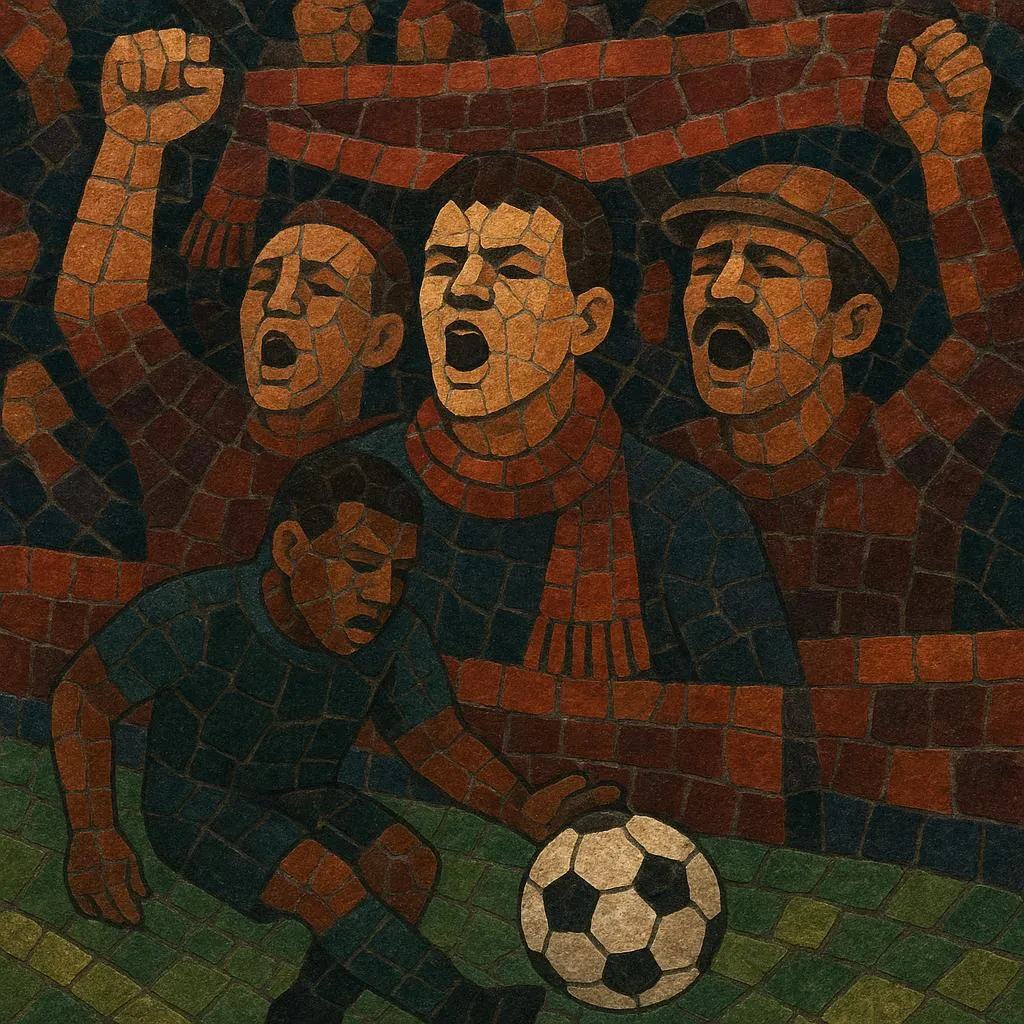
Football (soccer) music is the collective body of terrace chants, club anthems, supporter songs, and official competition themes tied to association football culture.

It is characterized by massed, unison singing; simple, instantly memorable melodies; short, repetitive phrases; and heavy call‑and‑response. Tunes are frequently adapted from hymns, marches, music‑hall standards, and contemporary pop, then refitted with lyrics about clubs, players, cities, and rivalry. Arrangements favor strong rhythmic drive (snare, bass drum, handclaps), brass or organs for fanfare impact, and chantable hooks designed to carry across open stadiums.

Beyond terraces, the genre also includes officially commissioned anthems by leagues and governing bodies, which often blend orchestral or cinematic writing with modern pop/EDM production for broadcast spectacle.


Sources: Spotify, Wikipedia, Discogs, Rate Your Music, MusicBrainz, and other online sources

History

Origins (early 20th century–1950s)

Supporters were singing at football grounds long before recordings captured it. Early club songs and terrace singing drew on the United Kingdom’s hymn tradition, brass‑band and music‑hall culture, and popular standards—easy melodies everyone knew and could sing together.

Terrace culture boom (1960s–1980s)

The 1960s saw a dramatic rise in organized chanting in British stadiums. As amplified PA systems and broadcast coverage improved, simple call‑and‑response refrains and percussion (drums, claps) became staples. Clubs adopted signature anthems, and traveling fans exported chant formulas across Europe.

From terraces to records (1980s–1990s)

Supporter choirs, club squads, and pop acts began releasing football singles tied to tournaments and cup runs. These recordings codified the terrace style on vinyl and later CD—unison choruses, marching beats, and lyrics celebrating teams, players, and national pride.

Globalization and mega‑events (1990s–2010s)

Televised international tournaments spurred officially commissioned themes and broadcast IDs. Orchestral/cinematic textures merged with pop and dance production to create competition and league anthems designed for stadium playback, TV idents, and global branding—while grass‑roots chant culture continued to adapt current pop hooks.

Digital era and transnational chant exchange (2010s–present)

Streaming and social media accelerated the spread of chants, with terrace versions of global pop hooks appearing within weeks. Professional league and federation themes now coexist with ultra groups’ percussion‑led songs, brass ensembles, and fan‑recorded chants, forming an international, fast‑evolving football soundscape.

How to make a track in this genre

Core songwriting
•   Aim for a narrow vocal range (about an octave) and stepwise melodies so large crowds can sing in unison. •   Use strong, square phrasing (most often 4 or 8 bars) with short, repeatable refrains and an easy call‑and‑response hook. •   Favor major keys and uplifting, familiar progressions (e.g., I–V–vi–IV or I–IV–V) at 90–130 BPM. Keep the chorus rhythmically obvious and syllabically clear.
Lyrics and themes
•   Celebrate identity: club, colors, city, players, managers, historic wins; include playful taunts and in‑jokes. Keep lines punchy (5–9 syllables) and rhyme simply. •   Build a chant spine: a memorable vocable ("oh, oh‑oh" / "olé, olé") that works without instruments.
Arrangement and instrumentation
•   Terrace style: snare/bass drum patterns, floor toms, handclaps on 2 and 4, and crowd gang‑vocals tracked in layers. Add brass (trumpets/trombones) or organ for fanfare weight. •   Official anthem style: blend orchestral strings/brass and large choir with modern drums, hits, and sub‑bass for broadcast impact; use big crescendos and cadential hits synced to visuals.
Production and performance
•   Record multiple takes of group vocals at varying distances to simulate terraces; compress lightly to preserve shout energy but control harshness. •   Emphasize transients (claps, snares) and midrange presence (1–3 kHz) so hooks cut through stadium noise. •   Test singability: if a chorus works a cappella with claps, it will work in the stands.

Related labels

Top tracks

Locked
Share your favorite track to unlock other users’ top tracks
Influenced by
Has influenced
No genres found
Challenges
Digger Battle
Let's see who can find the best track in this genre

Download our mobile app

Get the Melodigging app and start digging for new genres on the go
© 2026 Melodigging
Melodding was created as a tribute to Every Noise at Once, which inspired us to help curious minds keep digging into music's ever-evolving genres.
Buy me a coffee for Melodigging