Your digging level
Description
Folklore panameño is the umbrella term for Panama’s traditional music and dance practices, bringing together Hispanic (Iberian), Indigenous, and Afro-Panamanian elements.
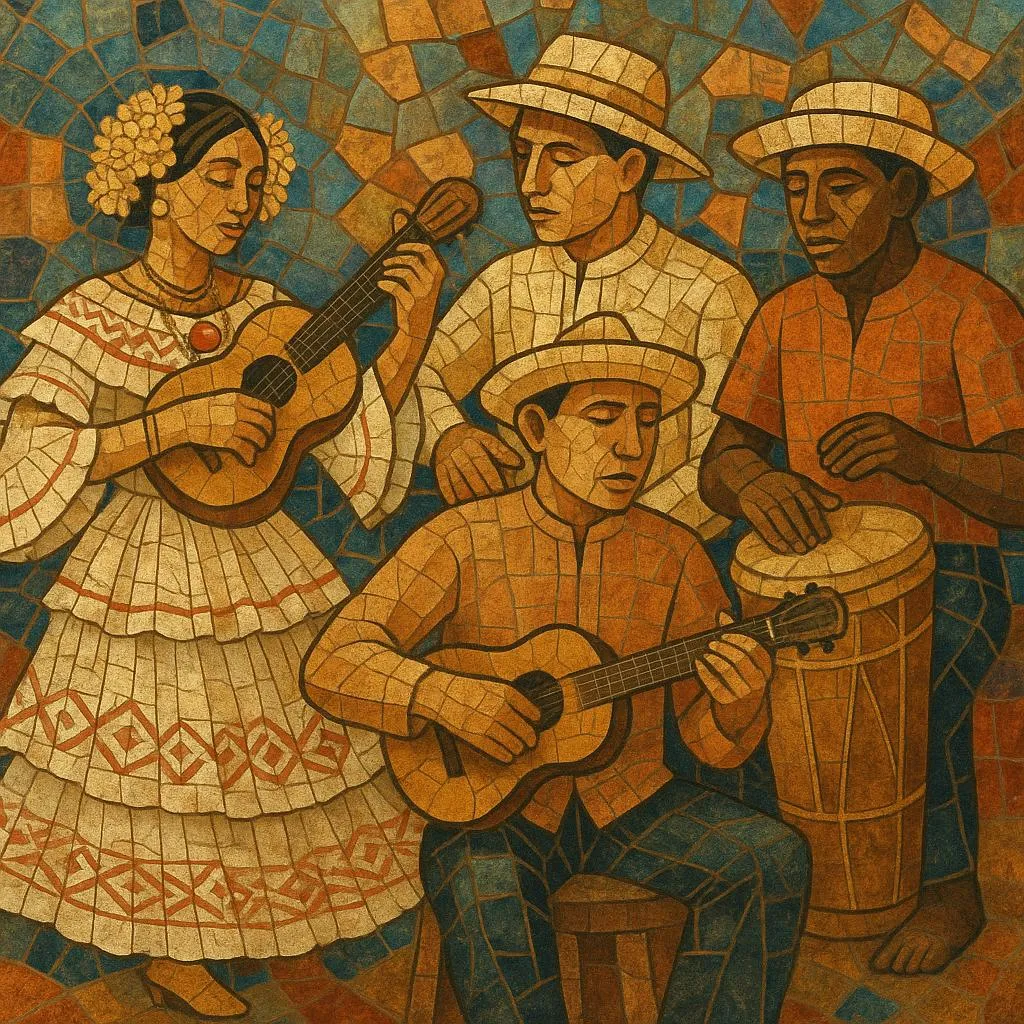
At its core are song forms and dances such as the tamborito (often called the national dance), mejorana and décima singing accompanied by the five‑string mejoranera guitar, the punto (a virtuosic couple dance), and local cumbia variants. Ensembles range from small string groups (mejoranera, rabel/fiddle, guitar) to drum-and-voice ensembles (repicador, pujador, caja; maracas; güiro/churuca), and, in modern típico streams, button accordion-led bands. Call‑and‑response vocals, poetic improvised décimas, and metric play between 2/4, 3/4, and 6/8 underpin its characteristic swing.
Regionally, Azuero’s string and décima traditions, the Congo music of Colón’s Afro-Panamanian communities, and Indigenous repertoires contribute distinctive timbres, rhythms, and performance contexts. Today the genre thrives in festivals, patron‑saint fiestas, and staged folklore presentations, while also feeding into contemporary típico and popular fusions.
History
Panama’s folk sound world formed from sustained contact among Spanish settlers, Indigenous nations (including Guna, Ngäbe‑Buglé, Emberá‑Wounaan), and Afro‑descendant communities brought through the isthmus. Iberian strophic poetry (copla, romance) and the décima espinela supplied poetic frameworks for sung storytelling; Indigenous flutes, rattles, and ceremonial song practices contributed timbre and melodic turns; and Afro‑Atlantic drumming, responsorial singing, and circular dance patterns shaped the tamborito and Congo traditions.
By the late 1800s and early 1900s, regionally distinct repertoires—mejorana songs in the Azuero peninsula, punto and cumbia variants, Congo music in Colón—were recognized locally as “lo típico.” Folklorists and musicians began documenting melodies, décimas, and dance choreographies, helping codify stylistic norms that communities already practiced at fiestas patronales and social gatherings.
In the mid‑1900s, national and regional festivals, cultural institutes, school ensembles, and radio helped present folklore panameño on formal stages. Public competitions for décima singing and mejorana playing, along with organized dance troupes performing tamborito and punto, elevated local masters to national figureheads and encouraged transmission to younger generations.
From the late 20th century onward, típico bands with button accordion, bass, and drum set popularized danceable cumbia and punto variants, while traditional drum‑and‑voice ensembles and mejoranera groups retained community functions. Today, folklore panameño coexists with—and often informs—Panamanian popular music, from festival showcases and school curricula to studio recordings and cross‑genre collaborations.