Your digging level

For this genre
0/8
🏆
Sign in, then listen to this genre to level up

Description

Experimental dub is a boundary‑pushing offshoot of dub that keeps the music’s deep bass, echo, and studio-as-instrument philosophy, but stretches it into new territories through noise, industrial textures, ambient space, post‑punk grit, and avant‑electronic processing.

Where classic dub strips songs down to bass, drums, and fleeting fragments, experimental dub further deconstructs rhythm and form, folds in unconventional sound sources (field recordings, feedback, found voices), and treats the mixing desk, delays, and filters as performance tools. The result ranges from smoky, slow, and weightless to abrasive, hypnotic, and rhythmically unsteady—always prioritizing space, texture, and low‑end pressure.


Sources: Spotify, Wikipedia, Discogs, RYM, MB, user feedback and other online sources

History

Roots (1970s)

Dub emerged in Jamaica in the late 1960s and 1970s, with engineers transforming reggae cuts into spacious, bass‑heavy versions using tape delay, spring reverb, subtractive mixing, and radical EQ. Those studio techniques—recasting the mixer as a live instrument—became the conceptual spine for later experimentation.

Mutation in the UK (1980s)

By the early 1980s in the United Kingdom, maverick producers and bands began fusing dub methodology with post‑punk, industrial, and early electronic gear. Labels and studio collectives championed an exploratory approach: harsher drum programming met cavernous echo chambers; live percussion locked with drum machines; and noise, spoken word, and found sound were folded into bass-led frameworks.

Globalization and cross‑pollination (1990s)

Through the 1990s, experimental dub fed into and dialogued with illbient, trip‑hop, and left‑field electronics. Berlin- and Detroit‑connected scenes extended the approach with austere minimalism and sound‑system pressure, while bass culture in Europe and North America absorbed dub’s spatial strategies and tactile low end.

Digital abundance and hybrid forms (2000s–present)

Affordable DAWs, modular synths, and boutique analog effects made live dub manipulation accessible. Experimental dub now overlaps with deconstructed club, industrial hip‑hop, ambient and noise scenes, and adventurous sound‑system music. Across the world, producers continue to treat silence, decay, and feedback as composition—keeping the classic dub ethos but refusing stylistic containment.

How to make a track in this genre

Sound palette and tools
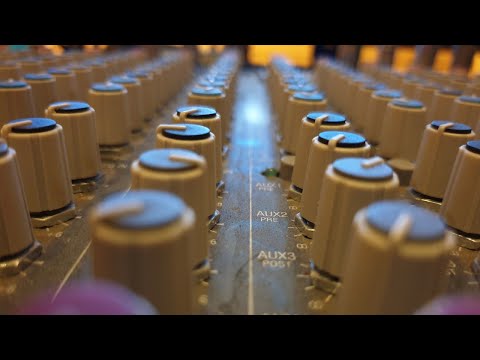
•   Center everything around a weighty, sine-like or mildly overdriven bass (sub‑focused; 40–80 Hz fundamentals). •   Use a drum foundation that can be live or programmed: swung one‑drop, steppers, half‑time hip‑hop lopes, or skeletal broken beats. Layer acoustic percussion (blocks, bells, shakers) with drum machines or sampled kits. •   Make the mixer and sends your “instrument”: multiple delay lines (tape or tape‑style), spring or plate reverbs, filters, resonant EQ, frequency‑dependent ducking, and feedback loops. •   Add unconventional sources—field recordings, radio static, circuit noise, dub siren, melodica, modular burbles—to widen the textural field.
Rhythm, harmony, and space
•   Tempo typically 70–120 BPM; half‑time feels are common. Groove should feel anchored yet elastic—ghost notes, off‑beat skanks, and syncopated rimshots keep motion alive. •   Harmony is sparse: minor keys, pentatonic or modal bass ostinatos, drones, occasional suspended or quartal voicings. Prioritize negative space over chord changes. •   Use send‑and‑return performance: ride mutes, echo throws, and filter sweeps in real time. Carve midrange for spaciousness; let the bass and delays create depth.
Arrangement and performance
•   Start with a stable bass/drum loop; “compose” by subtracting and reintroducing layers. •   Treat delay feedback like a soloist—capture fragments of vocals or percussion, then dub them into self‑oscillating textures. •   Resample live dub passes to build layered versions; contrast stark, dry passages with engulfing reverb swells for tension/release.
Production tips
•   Sidechain or dynamic EQ the bass against the kick to preserve headroom; gentle tape saturation can glue transients. •   Use parallel chains: clean bass below ~90 Hz; grit and movement (chorus, phaser, LFO‑filter) on a duplicated mid‑band. •   Calibrate monitors/sub and leave ample mix headroom; the genre lives or dies by controlled low‑end and the intelligibility of echoes.

Top tracks

Locked
Share your favorite track to unlock other users’ top tracks

Upcoming concerts

in this genre
Influenced by
Has influenced

Download our mobile app

Get the Melodigging app and start digging for new genres on the go
© 2026 Melodigging
Melodding was created as a tribute to Every Noise at Once, which inspired us to help curious minds keep digging into music's ever-evolving genres.
Buy me a coffee for Melodigging