Your digging level

For this genre
0/8
🏆
Sign in, then listen to this genre to level up

Description

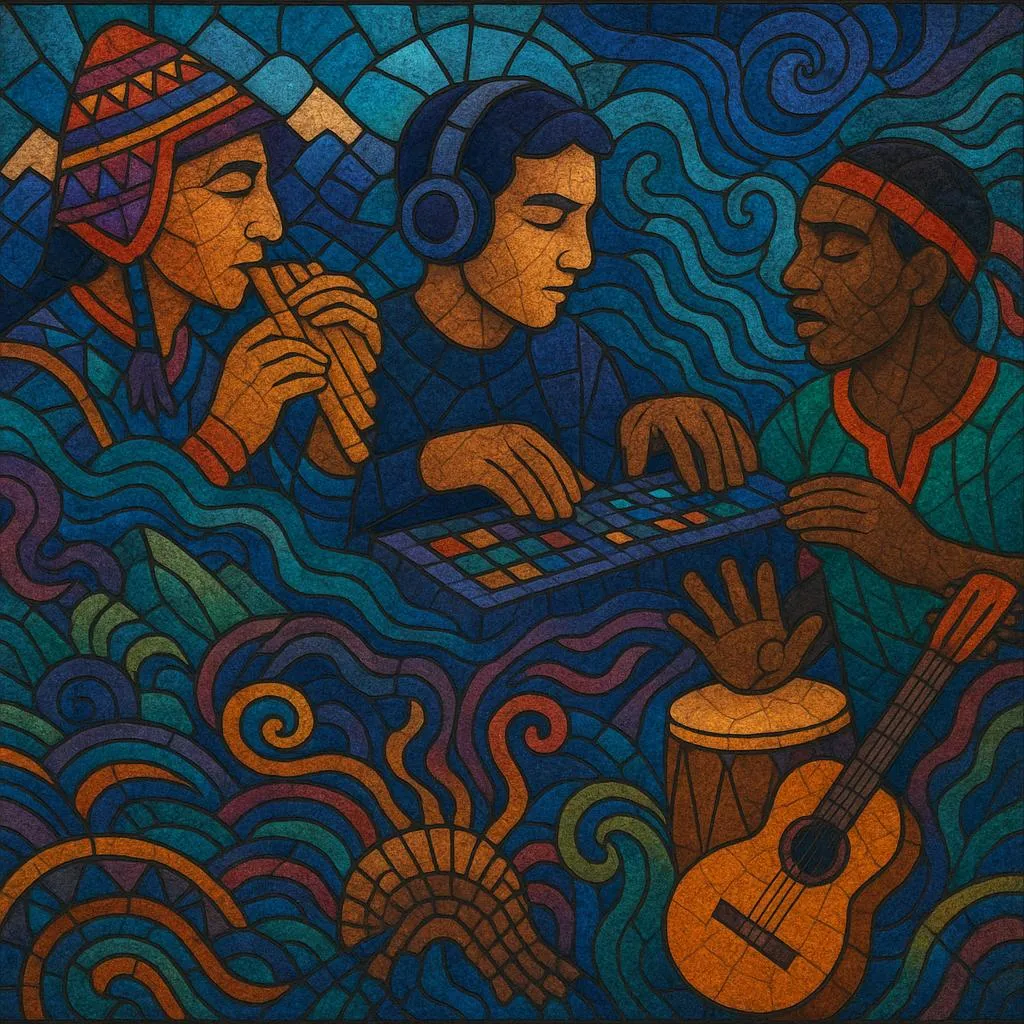
Electronica peruana is the umbrella for Peru’s contemporary electronic music that filters Andean, Amazonian, and Afro‑Peruvian rhythms, melodies, and timbres through modern club and experimental production.

Producers often remix cumbia (especially chicha/Amazonian cumbia), festejo and landó grooves, pan‑Andean pentatonic motifs, and coastal percussion (cajón, quijada), blending them with house/techno frameworks, dub effects, bass‑heavy sound design, and psychedelic textures. The result ranges from hypnotic, polyrhythmic dance tracks to atmospheric, folkloric‑electronic fusions that maintain a distinctly Peruvian sense of groove and melody while speaking the global language of electronica.


Sources: Spotify, Wikipedia, Discogs, RYM, MB, user feedback and other online sources

History

Roots and Early Experiments (2000s)

Peru’s electronic turn took shape in the 2000s as DJs and producers began reimagining local styles for clubs and laptops. Early adopters drew on chicha (electric Peruvian cumbia), Afro‑Peruvian percussion, and Andean folk motifs, aligning them with house/techno grids, dub processing, and downtempo aesthetics. This period laid the conceptual groundwork: treat Peruvian rhythm and melody as the primary source material, then reframe them with contemporary electronic production.

Global Breakout and Scene Consolidation (2010s)

The 2010s saw a visible international profile for electronica peruana. Independent labels and collectives in Lima and beyond championed nu‑cumbia, psychedelic bass, and folkloric‑electronic hybrids. Touring artists and digital platforms helped codify a vocabulary: deep cumbia grooves at club‑friendly tempos, psychedelic synths echoing Amazonian guitar lines, and sound‑system low end under Andean pipes or charango hooks. Festivals and showcases across Latin America and Europe amplified the scene’s identity as both proudly Peruvian and globally conversant.

Diversification, Hybridity, and Tech Craft (late 2010s–2020s)

Producers broadened the palette—microhouse minimalism, broken‑beat syncopation, ambient and experimental electronics joined bass‑driven cumbia and four‑to‑the‑floor frameworks. Field recordings (markets, procession bands, street sellers) and archival samples found new life in modern mixes. Collaboration with traditional musicians, as well as visual/AV artists, further embedded place, memory, and ritual into club contexts. By the 2020s, electronica peruana functioned as a flexible methodology rather than a single sound: a way to translate Peruvian musical DNA into modern electronic language.


How to make a track in this genre

Rhythm and Groove
•   Start with cumbia or Afro‑Peruvian foundations. A classic cumbia pulse in 4/4 (kick on 1 and 3, off‑beat/percussive snare, syncopated congas/guacharaca) translates well to 90–110 BPM; for house/techno contexts, 115–125 BPM preserves swing while adding club energy. •   Incorporate festejo or landó patterns for coastal feel—these bring loping, off‑center polyrhythms that contrast nicely with grid‑locked electronics.
Melody, Harmony, and Scales
•   Reference Andean pentatonic melodies (quena, zampoña, charango lines). Short modal phrases, parallel fourths/fifths, and call‑and‑response licks evoke highland colors. •   Harmony is often sparse: drones, pedal tones, or two‑ to three‑chord vamps support cyclical grooves and leave space for rhythmic detail and timbral storytelling.
Instrumentation and Sound Design
•   Blend traditional timbres (cajón, quijada, charango, pan‑pipes) with synth bass, analog/digital leads, and dub‑style delays and spring reverbs. •   Re‑amp or saturate electric‑guitar lines to echo psychedelic chicha; layer tape‑wow/flutter or chorus on organ/synths for vintage warmth. •   Use field recordings (street vendors, processions, markets, rainforest ambience) as rhythmic textures and scene‑setting intros/outros.
Arrangement and Mixing
•   Structure around hypnotic cycles: long A‑sections with evolving percussion and bass, subtle filter sweeps, and periodic breakdowns that spotlight a folkloric hook. •   Sidechain kick to bass and pads; let percussion sit forward in the mix. Contrast dry, close percussion with wet, distant melodic elements to create depth.
Cultural Care and Collaboration
•   When sampling traditional ensembles or rituals, seek context, permission, and credit. Collaborating with local musicians keeps phrasing and ornamentation authentic while allowing fresh electronic framing.

Top tracks

Locked
Share your favorite track to unlock other users’ top tracks

Upcoming concerts

in this genre
Influenced by
Has influenced

Download our mobile app

Get the Melodigging app and start digging for new genres on the go
© 2026 Melodigging
Melodding was created as a tribute to Every Noise at Once, which inspired us to help curious minds keep digging into music's ever-evolving genres.
Buy me a coffee for Melodigging