Your digging level
Description
Early synthpop refers to the first wave of pop music built primarily around synthesizers and drum machines at the turn of the late 1970s and early 1980s.
It merged new wave’s songwriting and post-punk’s austerity with the precision of disco-era rhythms and the melodic directness of classic pop. The sound typically favors analog synthesizers, simple sequenced basslines, mechanically steady 4/4 beats, and cool, detached vocals, while retaining strong hooks and concise song forms.
Aesthetically, it projects a futuristic, urban, and sometimes dystopian mood—reflecting themes of technology, alienation, romance, and modern life. Scenes in cities like Sheffield, Basildon, and Manchester were especially crucial, and the genre quickly crossed over from underground clubs to mainstream charts.


History
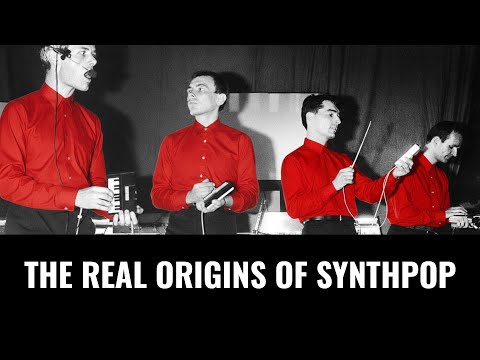
The earliest synthpop crystallized in the United Kingdom in the late 1970s, drawing on the electronic innovations of krautrock (particularly Kraftwerk), the angular minimalism of post-punk, and the steady, danceable foundations of disco and electro‑disco. Affordable analog synthesizers, step‑sequencers, and early drum machines (such as the Roland CR‑78) enabled bands to replace or minimize guitars and foreground electronic timbres without abandoning pop songcraft.
Between 1979 and 1982, acts like The Human League, Gary Numan, OMD, Ultravox, and Soft Cell brought the style to a wide audience with concise, hook‑driven singles. The arrival of MTV amplified the impact of sleek, stylized visuals that matched the music’s futuristic aesthetic. New studio tools (Linn LM‑1, Roland TR‑808, polyphonic synths from Roland/Korg/Sequential) refined the sound while keeping arrangements minimal and rhythmically tight.
Early synthpop compositions typically use verse‑chorus forms, strong topline melodies, and steady 4/4 drum‑machine patterns. Lyrical topics often juxtapose technology and modern life with emotionally cool or melancholic delivery. Production embraces clean lines—sequenced bass, arpeggiators, simple diatonic harmony—enhanced with chorus, flanging, plate reverb, and occasional vocoder effects.
Early synthpop set the template for decades of electronic‑leaning pop. It directly informed later electropop, new romantic, and dance‑pop, and its textures and moods resurfaced in synthwave, chillwave, and indietronica. The genre’s emphasis on accessible songcraft, electronic timbres, and drum machines remains a cornerstone of contemporary pop and electronic music.



Best playlists