Your digging level

For this genre
0/8
🏆
Sign in, then listen to this genre to level up

Description

Early American folk refers to the traditional songs, dance tunes, ballads, hymns, and work songs that circulated in the North American colonies and the young United States from the 18th through the mid-19th century.

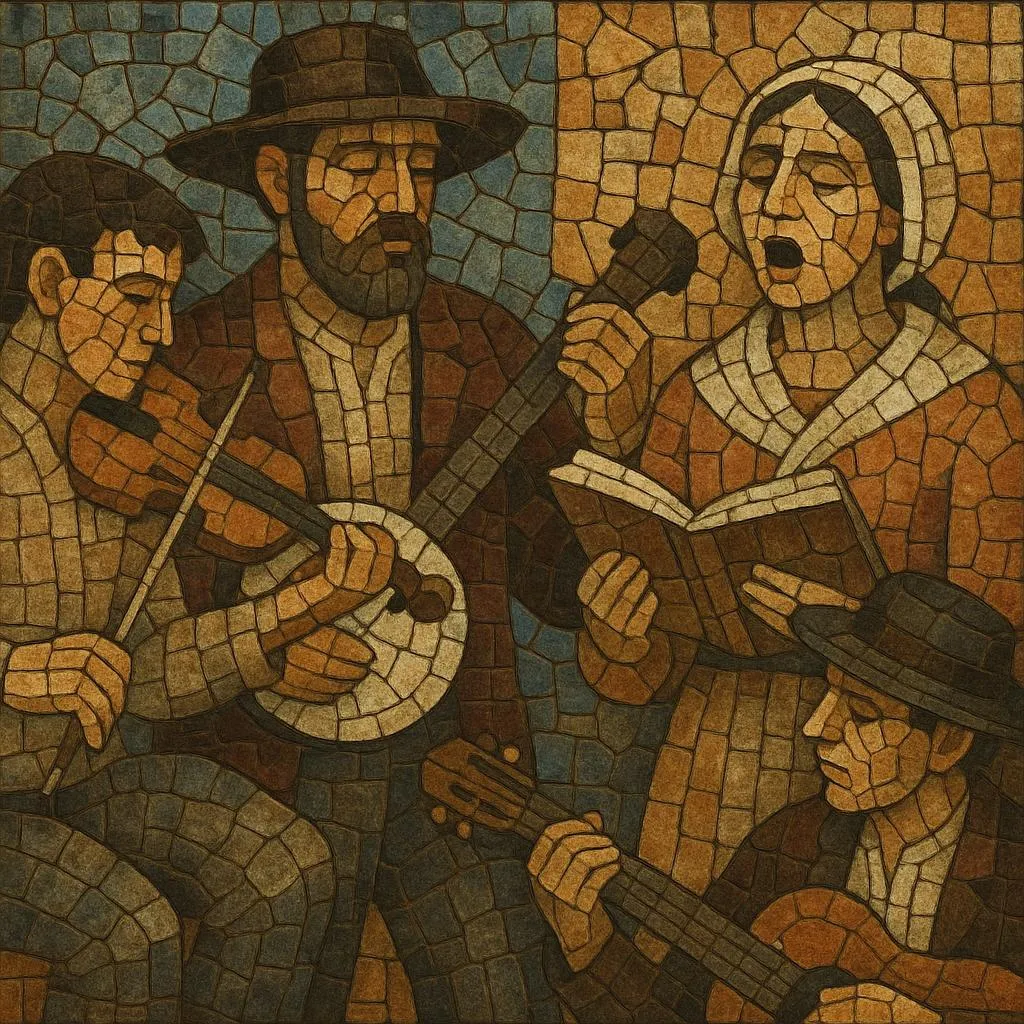
The repertoire blends ballad and dance tune traditions from the British Isles with African-American rhythmic practices and instruments (notably the banjo), Indigenous North American melodies and ceremonial song structures, and European sacred singing (psalmody and later shape‑note/Sacred Harp). Much of it was transmitted orally, with local variants emerging region by region. Typical sounds include unaccompanied ballad singing, fiddle-and-fife dance bands, fife-and-drum corps, dulcimer and banjo string music, and robust congregational hymn-singing.


Sources: Spotify, Wikipedia, Discogs, RYM, MB, user feedback and other online sources

History

Origins (18th century)

Early American folk took shape as settlers in the colonies brought English, Scottish, and Irish ballads and dance tunes (reels, jigs, hornpipes), which mingled with Indigenous musical practices and the musical cultures of enslaved Africans. Congregational psalm-singing and later frontier camp-meeting hymns added a powerful sacred strand. Many pieces were transmitted orally, spawning local variants and regional styles.

Revolutionary and Federal periods

During the American Revolution and early republic, fife-and-drum corps, march tunes, and broadside ballads circulated widely, while country-dance fiddle music animated social gatherings. Shape-note tunebooks and community singing schools flourished in New England and Appalachia, codifying a distinctive, open-voiced choral sound in sacred folk repertoire (the Sacred Harp tradition).

19th century diversification

By the early–mid 1800s, parlor song and printed broadsides coexisted with older ballads and dance music. African-American influence deepened the rhythmic vocabulary and instrumentation (banjo, bones, call-and-response), while sea shanties, canal and railroad work songs, cowboy songs, and frontier fiddle music broadened the repertoire. Regional traditions (New England hymnody, Appalachian ballads, Southern string-band music, and fife-and-drum lines) developed strong local identities.

Preservation and revival

Although much of this music remained community-based, collectors and later folklorists documented the tradition from the late 19th into the 20th century. Its vocabulary and repertoire became the foundation for old-time, country, bluegrass, and the 20th‑century American folk revival, while Sacred Harp and shape-note singing continued as living communal practices.

How to make a track in this genre

Core forms and melody
•   Use strophic ballad forms with clear storytelling verses and refrains. Common modes include Mixolydian and Dorian alongside major; pentatonic contours are frequent. •   For dance tunes, compose reels (2/2 or 4/4), jigs (6/8), and hornpipes (often dotted 4/4), aiming for memorable, easily repeatable 8‑bar phrases (AABB).
Harmony and singing style
•   For sacred pieces inspired by shape‑note traditions, favor open intervals (perfect 5ths, octaves), parallel motion, and powerful homophony. Include fuguing sections where voice parts enter in staggered imitation before returning to block chords. •   Unaccompanied solo ballad singing should prioritize clear diction, natural ornamentation (slides, grace notes), and narrative pacing.
Rhythm and groove
•   Keep dance tunes buoyant and strongly pulsed; bowing patterns for fiddle and accent placement should "lift" the step. For work songs or shanties, anchor call‑and‑response with steady, functional rhythms that align with physical tasks.
Instrumentation
•   Fiddle as lead for dance music; fife-and-drum for marches; mountain dulcimer, banjo (stroke/clawhammer styles), jaw harp, bones/spoons, and simple guitar accompaniments for songs. •   Small ensembles (fiddle + banjo + dulcimer or fife + drum) or unaccompanied/communal voices for hymns and ballads.
Lyrics and topics
•   Draw on frontier life, love and loss, maritime journeys, labor, local events, and moral or spiritual reflection. Keep imagery concrete and vernacular, with refrains that invite participation.
Performance practice
•   Favor communal participation and responsive tempo to dancers/singers. Embrace regional variants and oral transmission—variations in verses, melodic turns, and tempo are authentic to the style.

Top tracks

Locked
Share your favorite track to unlock other users’ top tracks

Upcoming concerts

in this genre
Influenced by
Has influenced

Download our mobile app

Get the Melodigging app and start digging for new genres on the go
© 2026 Melodigging
Melodding was created as a tribute to Every Noise at Once, which inspired us to help curious minds keep digging into music's ever-evolving genres.
Buy me a coffee for Melodigging