Your digging level
Description
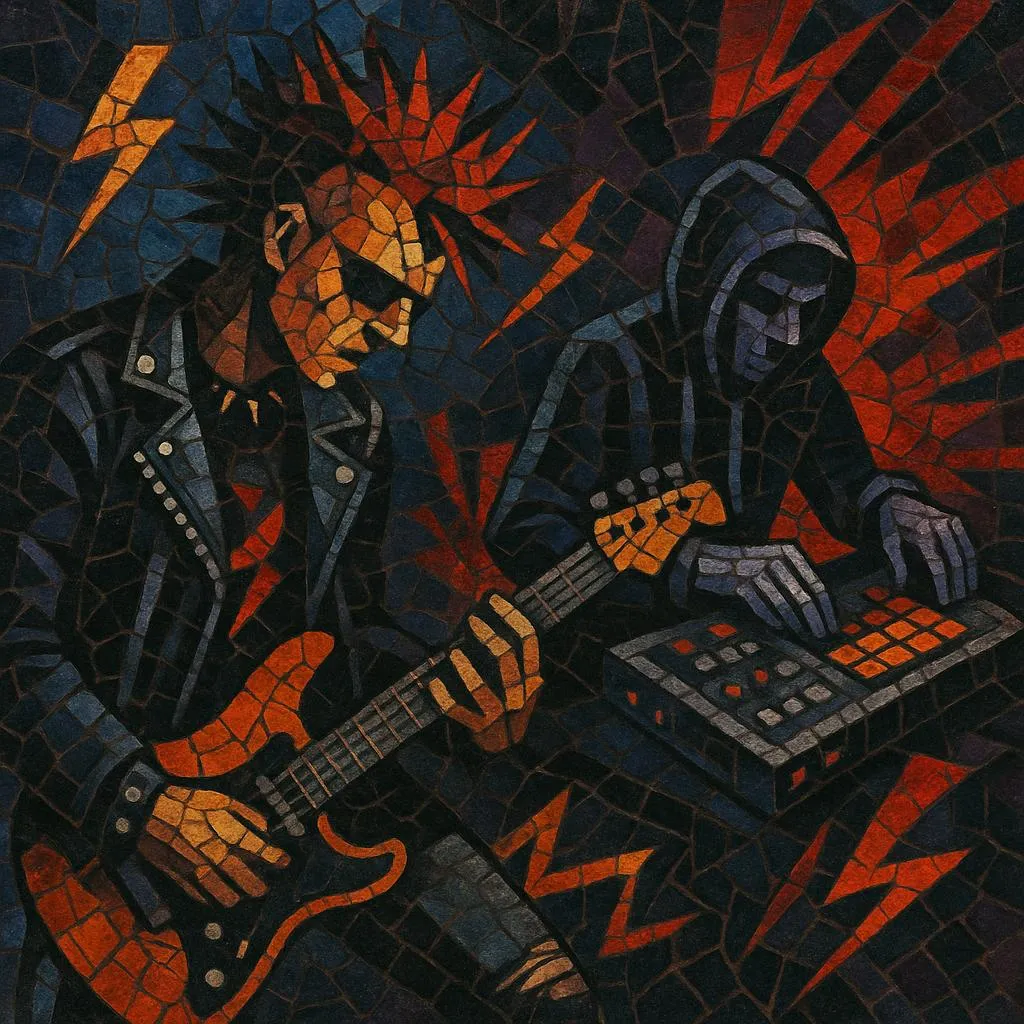
E‑punk (short for electronic punk) fuses the attitude, speed, and DIY ethos of punk with the timbres and sequencing of electronic music. It swaps or supplements a traditional drum kit and bass guitar with drum machines, samplers, and synths, yet keeps the barked vocals, anti‑authoritarian stance, and raw immediacy of punk.
Emerging from late‑1970s/early‑1980s synth‑punk and German electropunk currents, the style privileges distortion, clipped loops, and simple, hard‑hitting riffs—whether played on power‑chord guitars or monophonic synth bass. Across its later waves it has absorbed EBM, industrial dance, and club sensibilities, yielding everything from minimalist, body‑music stomp to frantic, breakcore‑like blasts that still feel unmistakably punk.


History
Electronic instrumentation entered punk almost as soon as affordable synths and drum machines appeared. Proto‑synth‑punk in the U.S. (e.g., Suicide) and German electropunk/Neue Deutsche Welle (e.g., DAF, Liaisons Dangereuses) showed how punk minimalism, chant‑like vocals, and rigid machine rhythm could coexist. These acts distilled rock instrumentation to its essence, often replacing it with sequenced bass, noise bursts, and 4/4 kick patterns borrowed from early electro and nascent EBM.
As club culture and industrial dance grew, a more aggressive e‑punk continuum emerged: digital hardcore (Atari Teenage Riot) pushed tempos and distortion, while industrial rock blurred guitar and synth roles. E‑punk at this stage frequently adopted the aesthetics of rave and warehouse shows—loud PAs, strobing lights, and DJ‑style transitions—without abandoning punk’s confrontational stance.
The 2000s brought a high‑visibility wave through electroclash and dance‑punk. Artists combined punk delivery with 80s synth references, EBM basslines, and indie‑club energy. Cheap DAWs and soft‑synths democratized production, reinforcing the DIY thread back to punk, and spreading the sound across Europe and North America.
In the streaming and SoundCloud eras, e‑punk’s DNA surfaces in glitchy, ultra‑compressed micro‑scenes (glitchcore/digicore) and boundary‑breaking internet pop. Some artists route punk vocals through blown‑out 808s and breakbeats; others keep the chant‑driven simplicity of 80s electropunk, now rendered with modern software distortion. Live shows still emphasize sweat, proximity, and catharsis—whether the rhythm section is a laptop or a battered drum machine.