Your digging level
Description
Colour bass is a melodic, harmony-forward branch of dubstep and bass music that emphasizes bright, prismatic timbres and expressive chord movement. It keeps the rhythmic engine and sound-design intensity of dubstep, but replaces monotone, minimal drops with lush progressions, lead motifs, and chord-driven bass patches.
Producers achieve its "colorful" feel through vowel/formant-rich wavetables, animated filters, and vivid spectral motion—often combining supersaws with talking basses, glassy plucks, and sparkling arpeggios. Typical tempos sit around 140 BPM with a halftime backbeat, though four-on-the-floor sections and hybrid drops are common.
The aesthetic is cinematic and emotive: major-key palettes (frequent Lydian flavors), add9/maj7 chords, and melodic call-and-response share space with aggressive growls and detailed automation. The result bridges festival energy with euphoric, game/anime-influenced melodicism.


History
Colour bass emerged in the mid–late 2010s when a cohort of producers sought to reconcile dubstep’s heavyweight sound design with the harmonic and melodic richness of future bass and melodic dubstep. UK producer Chime popularized both the term and the approach, curating releases that leaned into vivid timbres and chord-led drops rather than pure rhythmic minimalism.
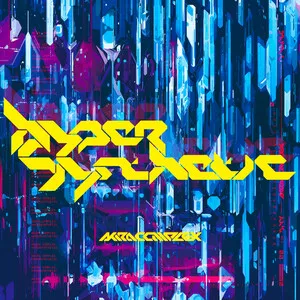
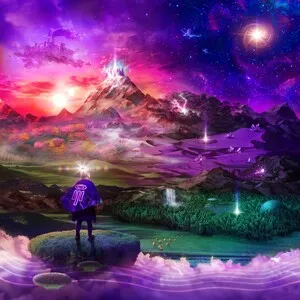
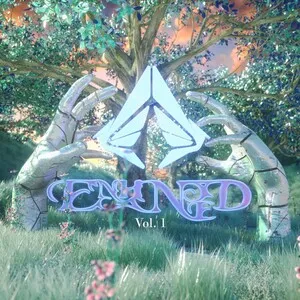
Labels and collectives centered around melodic, forward-thinking bass—most notably Rushdown—gave the style a recognizable home. Tutorials, livestreams, and patch-sharing accelerated a common vocabulary: wavetable/FM vowel basses, spectral morphing, wide supersaws, and intricate automation. A shared visual language (prismatic cover art, gaming/anime influences) reinforced the “color” concept.
In the early 2020s, the sound crystalized as a recognizable microgenre within the broader bass scene. Releases by artists like Ace Aura, Skybreak, and Sharks showcased harmonically substantive drops, with gospel-tinged extensions (maj7/add9/11), modulations, and melodic motifs. The approach also informed adjacent styles—most clearly future riddim—which borrowed colour bass’s glossy synths and chord motion while adopting different groove templates.
Colour bass’s legacy is its proof that high-impact bass music can foreground melody and harmony without losing dancefloor punch. It broadened dubstep’s palette, normalized advanced harmonic writing in drops, and inspired producers to prioritize musicality alongside cutting-edge sound design.