Your digging level
Description
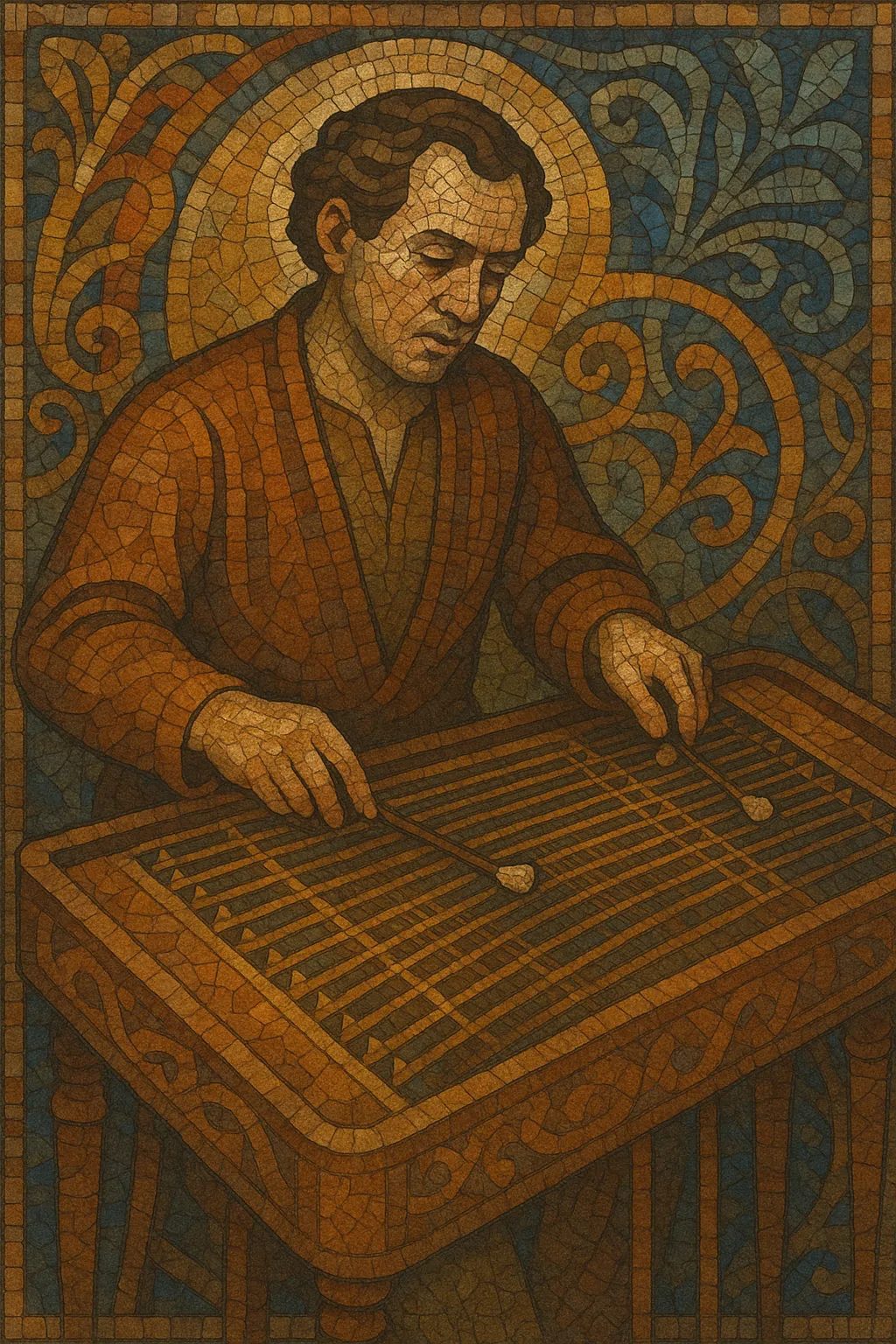
Cimbalom is a performance-centered genre built around the Hungarian concert cimbalom, a large chromatic hammered dulcimer played with lightweight beaters and controlled with a damper pedal. Its shimmering attacks, rolling tremolos, and bell-like arpeggios make it a signature sound of Central and Eastern Europe.
While related dulcimers existed for centuries, the modern concert cimbalom was standardized in Budapest in the 1870s. The instrument then became central to urban Romani ("Gypsy") orchestras and Romanian taraf ensembles, and later entered classical, jazz, and film music. In this genre context, "cimbalom" denotes repertoire and ensembles where the instrument is the expressive lead voice.
History
Hammered dulcimers spread across Europe over many centuries, but the concert cimbalom as we know it today was standardized in Budapest in the 1870s by maker József Schunda. His version added a chromatic layout, a sturdy frame with legs, and a damper pedal, turning a folk instrument into a concert-ready lead voice.
From the late 19th century onward, the cimbalom became a hallmark of Hungarian Romani orchestras and Romanian taraf bands, often paired with violin/violă (kontra), clarinet, and double bass. It took on dance forms such as csárdás, sârbă, hora, and rhythmic rubato styles like doina, while also interfacing with klezmer traditions (related to the tsimbl).
Early 20th-century Hungarian composers such as Zoltán Kodály brought the cimbalom into the concert hall (famously in the Háry János Suite). Internationally, Igor Stravinsky featured it (e.g., in Ragtime), and later Central European modernists—including György Kurtág and Péter Eötvös—used its color in chamber and orchestral settings.
From the 1990s, the instrument found new audiences in world/jazz fusion and in film and television scoring, where its metallic shimmer and agile arpeggios became a sonic shorthand for Central/Eastern European atmosphere and espionage intrigue. Contemporary virtuosi continue to expand its technique, repertoire, and role across folk revival, jazz, and contemporary classical scenes.