Your digging level
Description
Trás-os-Montes folk music is the traditional music of Portugal’s northeastern uplands, especially the Terra de Miranda plateau on the Spanish border. It is marked by vigorous dance tunes for bagpipe-and-drum ensembles, seasonal ritual songs, and distinctive stick-dance repertoires.
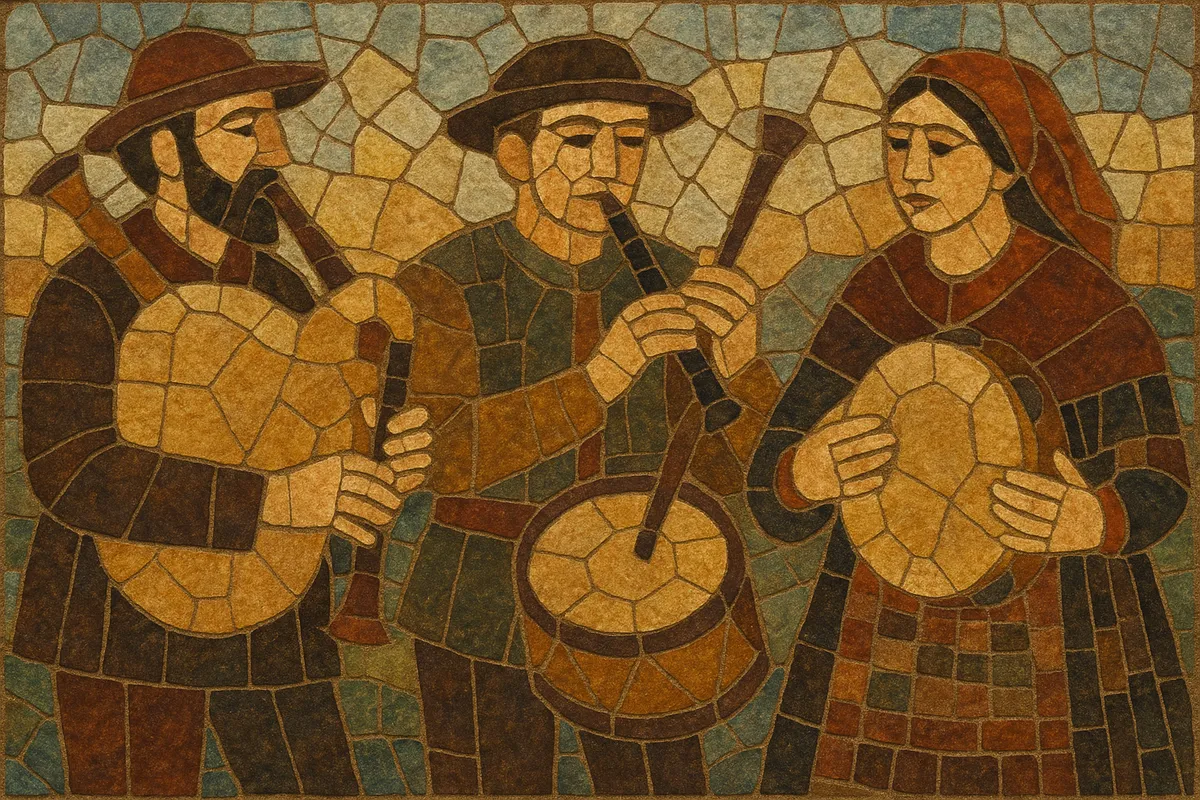
Core sounds include the gaita-de-foles mirandesa (Mirandese bagpipe), bombos (bass drums), caixas (side drums), and the pandeiro/pandeira quadrado (square frame drum) often played by women. Singing can be solo or in small groups, in Portuguese or Mirandese (Mirandês), and frequently uses strophic, call-and-response forms with memorable refrains.
The idiom accompanies community life—romarias (pilgrimages), Carnival (Entrudo) with the Caretos of Podence, winter caroling (Janeiras), and Lenten laments—blending lively circle and line dances (chulas in 2/4, viras in 3/4) with modal melodies, bagpipe drones, percussive footwork, and the striking stick patterns of the pauliteiros (Mirandese stick-dance troupes).
History
Trás-os-Montes folk music crystallized from rural and pastoral traditions in Portugal’s remote northeast. The region’s cattle- and sheep-herding culture fostered portable instruments, modal piping, and strong communal dance practices. Early documentation of bagpipes and ritual song in the area dates back several centuries, with village feasts, processions, and agricultural cycles shaping the repertory and performance occasions.
By the early modern era, the Mirandese bagpipe (gaita-de-foles mirandesa) with drum accompaniment had become central to local dance music. Women’s square frame drums (pandeiro/pandeira quadrado) supported song-led occasions. Vocal types range from work songs and lullabies to winter carols (Janeiras) and Lenten laments (Encomendação das Almas). Dance suites—chula (often in 2/4), vira (commonly in 3/4), and the iconic pauliteiros stick dances—feature repetitive strains, drones, and heterophonic textures.
In the mid‑20th century, ethnographers and collectors recorded village ensembles and singers, preserving endangered repertoires. After the 1970s Portuguese folk revival, professional and semi-professional groups began arranging Trás‑os‑Montes material for stage, festivals, and recordings while maintaining community transmission through local troupes and festivals (e.g., in Sendim and Miranda do Douro).
The style thrives in ritual contexts (Carnival Caretos, romarias), in local pauliteiros groups, and on concert stages, where ensembles balance authenticity with contemporary arrangement. Bagpipe makers, youth troupes, and regional schools help sustain the tradition, and artists often sing in both Portuguese and Mirandese to affirm linguistic heritage.