Your digging level

For this genre
0/8
🏆
Sign in, then listen to this genre to level up

Description

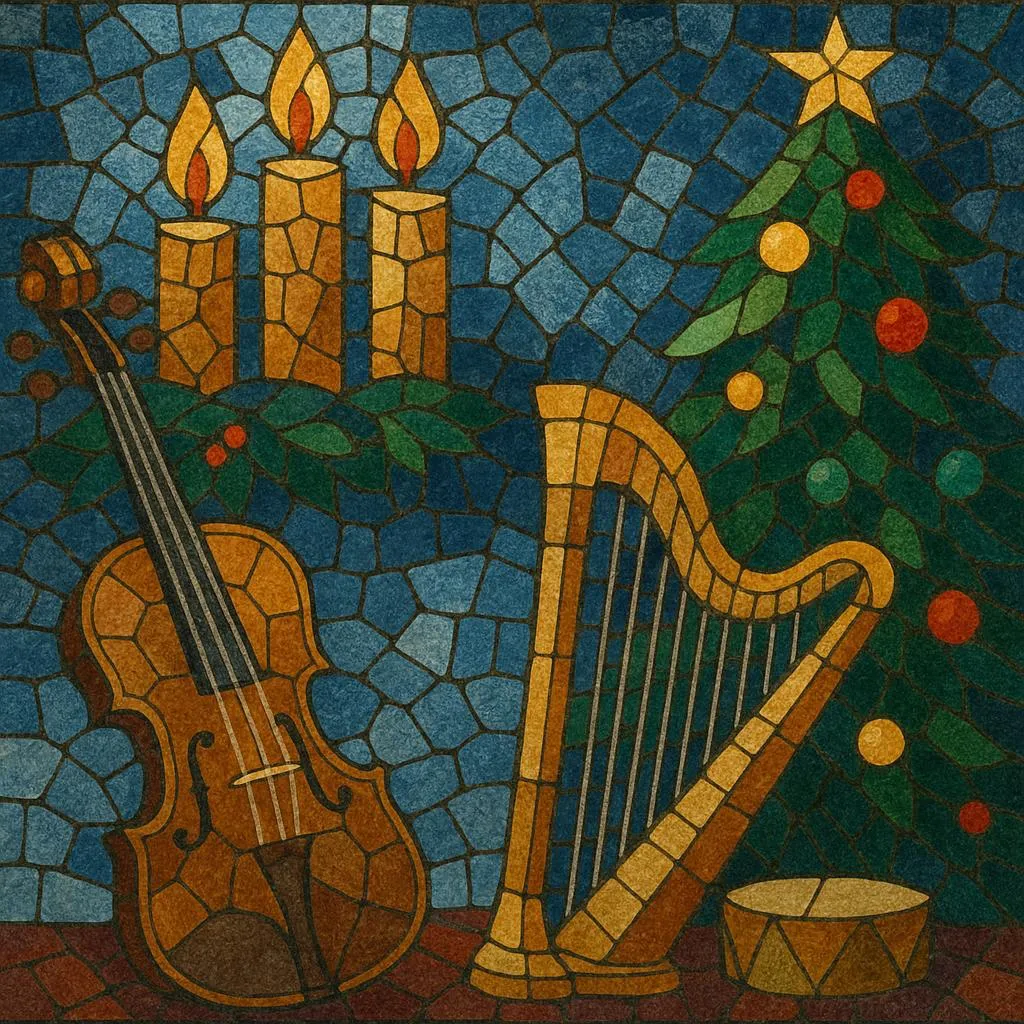
Christmas instrumental is a seasonal style centered on wordless arrangements of Christmas carols, hymns, and secular holiday standards.

It privileges melody-forward renditions performed by orchestra, jazz combo, brass band, solo piano or guitar, and light-pop studio ensembles. Common timbres include strings, woodwinds, brass, celesta, glockenspiel, harp, sleigh bells, and warm reverb-heavy production, evoking winter imagery and nostalgia. Reharmonized jazz versions, lush easy-listening orchestrations, and intimate solo settings coexist under the same umbrella, unified by a festive, reflective mood.

As a recorded genre it crystallized in the mid‑20th century alongside easy listening and pops orchestras, and later expanded to new-age piano and cinematic/TV cues. Today it spans everything from classic orchestral medleys to smooth-jazz sax and lo‑fi piano covers designed for cozy ambience.


Sources: Spotify, Wikipedia, Discogs, RYM, MB, user feedback and other online sources

History

Early roots

Instrumental renditions of Christmas music trace back to the instrumental practice of carols and hymns in Europe, but the style as a popular recorded category began to cohere in the mid‑20th century. Brass bands (including Salvation Army ensembles) and symphonic pops orchestras were performing carol medleys well before LPs normalized the idea of a dedicated holiday album.

Mid‑century definition (1950s–1960s)

The postwar boom of hi‑fi listening, easy listening, and pops orchestras helped define the sound: lush strings, celesta, woodwinds, harp, and sleigh bells in reverberant spaces. Arrangers like Percy Faith and Mantovani popularized elegant, melody‑first settings aimed at domestic listening and department‑store ambience, cementing seasonal instrumentals as a mass‑market staple.

Jazz and pop idioms

In parallel, jazz trios/combos and guitar groups recast carols with swing feels, bossa or waltz meters, brushed drums, and reharmonization. The sound expanded from orchestral grandeur to intimate club warmth, while studio guitar and surf‑instrumental acts showed that holiday tunes could also groove and dance.

Late‑century to modern diversification

From the 1980s onward, new‑age piano, smooth jazz saxophone, and cinematic/TV cues broadened the palette. High‑concept productions (e.g., synth‑orchestral fusions and symphonic rock crossovers) brought bigger stages and theatricality, while libraries of production and background music made instrumental Christmas ubiquitous in retail, film, and advertising. In the streaming era, solo piano/guitar, lo‑fi, and relaxation‑focused mixes thrive alongside enduring orchestral classics.

How to make a track in this genre

Core materials
•   Rework well-known carols and seasonal standards (public-domain or licensed) with clear melody statements. •   Choose an idiom: lush orchestral, small‑combo jazz, solo piano/guitar, brass band, or smooth‑jazz/synth‑orchestral.
Instrumentation and timbre
•   Orchestral: strings, woodwinds, brass, harp, celesta, tubular bells, glockenspiel, sleigh bells; warm hall reverb. •   Jazz combo: piano, upright bass, brushed drums, guitar, light horns; subtle room ambience. •   Solo: felted or concert piano, fingerstyle acoustic guitar, or nylon‑string; intimate mic’ing and soft compression.
Rhythm and groove
•   Use gently swaying meters: 3/4 and 6/8 for lullaby/waltz feels; light swing at 60–90 BPM for cozy jazz; brighter two‑step/Latin hints for festive numbers. •   Add sleigh bells on light offbeats or barlines to signify the season without overwhelming the groove.
Harmony and arranging
•   Start with diatonic I–IV–V frameworks; enrich with secondary dominants, ii–V turnarounds, and borrowed iv or bVII for color. •   Jazz versions: employ extended chords (maj7, 9, 13), passing diminished chords, inner‑voice motion, and gentle reharmonizations that preserve the tune. •   Orchestration: double the melody in octaves (violins + flute), countermelodies in violas/clarinet, sustained pads in horns/low strings, and sparkle with celesta/glockenspiel. •   Form: intro (seasonal motif or bell tones), AABA or verse/chorus, an interlude or key‑lift (often a whole‑step up), and a tender coda.
Production cues
•   Prioritize warmth and clarity; moderate tape‑style saturation and plate/room reverbs. •   Pan percussion sparingly; keep sleigh bells and high chimes clear but not harsh. •   For background/playlist use, limit dynamic extremes; for concert cues, allow cinematic swells and brass climaxes.

Top tracks

Locked
Share your favorite track to unlock other users’ top tracks

Upcoming concerts

in this genre
Influenced by
Has influenced

Download our mobile app

Get the Melodigging app and start digging for new genres on the go
© 2026 Melodigging
Melodding was created as a tribute to Every Noise at Once, which inspired us to help curious minds keep digging into music's ever-evolving genres.
Buy me a coffee for Melodigging