Your digging level

For this genre
0/8
🏆
Sign in, then listen to this genre to level up

Description

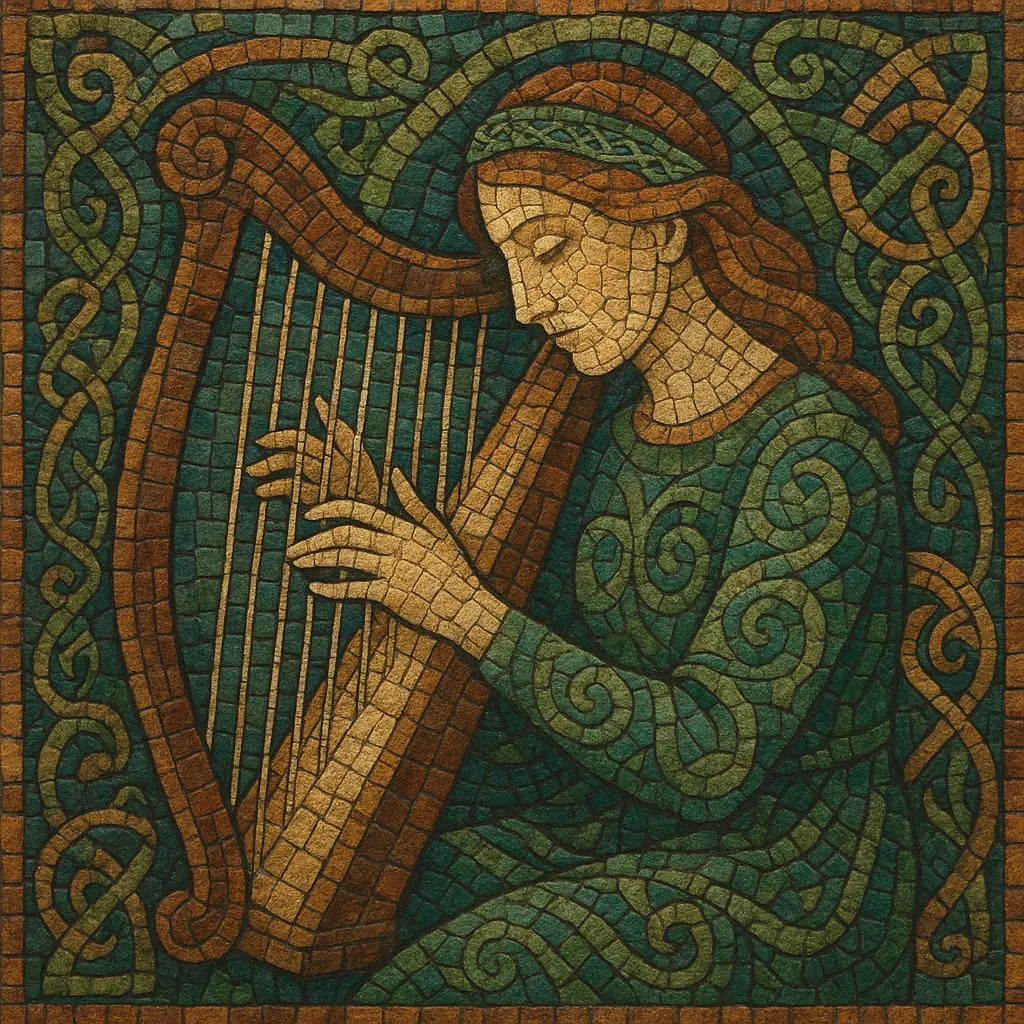
Celtic harp is a genre centered on the traditional small harp of the Celtic nations (Irish cláirseach, Scottish clàrsach, Welsh telyn), today most often the modern lever harp. It features instrumental arrangements of traditional airs, planxties, laments, and dance tunes (jigs, reels, hornpipes, slip jigs), as well as newly composed pieces in a Celtic idiom.

The sound is shimmering and bell-like, using arpeggiated accompaniments, drones, rolled chords, and rich damping techniques. Modal harmony (Dorian, Mixolydian, Aeolian) and pentatonic colors are common, and performers often change mode mid‑piece via lever flips. While rooted in folk tradition, the contemporary genre spans concert stages, folk festivals, and contemplative/new‑age settings, ranging from solo harp to small ensembles with fiddle, flute/whistle, bodhrán, and voice.


Sources: Spotify, Wikipedia, Discogs, RYM, MB, user feedback and other online sources

History

Medieval roots and Gaelic harps

Wire‑strung Gaelic harps flourished in medieval Ireland and Scotland, serving courts and bardic traditions. Repertoires included laments, marches, and noble airs, and early technique emphasized resonance, counter‑melody, and damping on brass strings.

Decline and preservation (18th–19th centuries)

By the late 18th century the courtly harp tradition waned. Figures like Turlough O’Carolan bridged folk and Baroque styles, leaving planxties that became core repertoire. Harp making and pedagogy persisted sporadically in Ireland, Scotland, and Wales (including the triple harp), but public prominence diminished.

20th‑century revival and the lever harp

Folk revivals across the Celtic nations in the mid‑20th century inspired new instrument building (gut/nylon‑strung, lever harps) and pedagogy. From the 1970s, recording artists and educators standardized a modern technique for dance sets, slow airs, and O’Carolan repertoire, bringing the harp back to festivals, session culture, and concert halls.

Globalization and crossover

From the 1980s onward, the Celtic harp became a global emblem of Celtic identity and a vehicle for new composition. Artists expanded into chamber, world, and new‑age contexts, collaborated with fiddles, flutes, uilleann pipes, and even electronics, and helped establish competitions, conservatory programs, and maker communities. Today, the genre bridges tradition and innovation, with repertory spanning archival tunes, historically informed wire‑strung practice, and newly composed modal works.
How to make a track in this genre

Instruments and setup
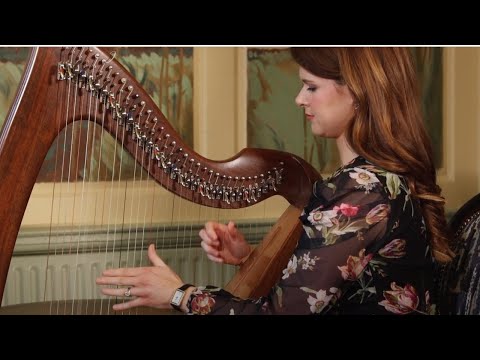
•   Use a lever (Celtic) harp tuned in E♭ or C, with levers set for modal access (Dorian, Mixolydian, Aeolian). •   For historical color, consider wire‑strung clàrsach (brighter, sustaining) or Welsh triple harp.
Repertoire and forms
•   Build sets from traditional tune types: jigs (6/8), reels (4/4), hornpipes (dotted 4/4), slip jigs (9/8), marches, and slow airs (free rubato). •   Include planxties and O’Carolan tunes to blend folk melody with Baroque‑tinged harmony.
Harmony and texture
•   Favor modal cadences (e.g., Mixolydian I–♭VII–IV–I; Dorian i–VII–IV–i) and pedal‑point drones (tonic or dominant) to evoke pipe and fiddle traditions. •   Accompany with broken chords, rolled chords, cross‑hand arpeggios, and inner‑voice counter‑melodies. •   Use selective damping to shape resonance and keep dance rhythms crisp.
Ornaments and articulation
•   Emulate Celtic ornamentation: cuts, rolls (rapid grace‑note clusters), mordents, and slides. •   In dance tunes, keep ornamentation rhythmically tight; in slow airs, use expressive rubato and dynamic swells.
Lever strategy and modulation
•   Pre‑plan lever positions to enable modal shifts between tune parts (e.g., Dorian A‑part to Mixolydian B‑part). •   Practice silent lever flips during sustained notes to avoid clicks.
Ensemble practice
•   Pair with fiddle, wooden flute/whistle, bodhrán, or guitar/bouzouki (dorian/mixo chords) for a full session sound. •   Alternate melody and accompaniment between instruments; use harp intros/outros with harmonics and bell effects.
Composition tips
•   Write singable, pentatonic‑friendly melodies with clear two‑strain (AABB) structures. •   Vary repeats with ornaments, octave displacement, bass runs, and reharmonization. •   For contemplative pieces, thin the texture, extend drones, and explore spacious modal voicings.

Top tracks

Locked
Share your favorite track to unlock other users’ top tracks

Related labels

Upcoming concerts

in this genre
Influenced by
Has influenced

Download our mobile app

Get the Melodigging app and start digging for new genres on the go
© 2026 Melodigging
Melodding was created as a tribute to Every Noise at Once, which inspired us to help curious minds keep digging into music's ever-evolving genres.
Buy me a coffee for Melodigging