Your digging level
Description
Carnatic vocal music is the South Indian classical vocal tradition, centered on melodic ragas and cyclical talas, with a highly developed system of composition and improvisation.
It is fundamentally a song-based art, with repertoire (kritis, varnams, javalis, padams) composed largely in Telugu, Sanskrit, Tamil, and Kannada. Performances balance composed material with manodharma (improvisation): raga alapana (unmetered raga unfolding), neraval (melodic–rhythmic extemporization on a lyric line), kalpanaswaram (solmized melodic improvisation), and the demanding Ragam–Tanam–Pallavi (RTP).
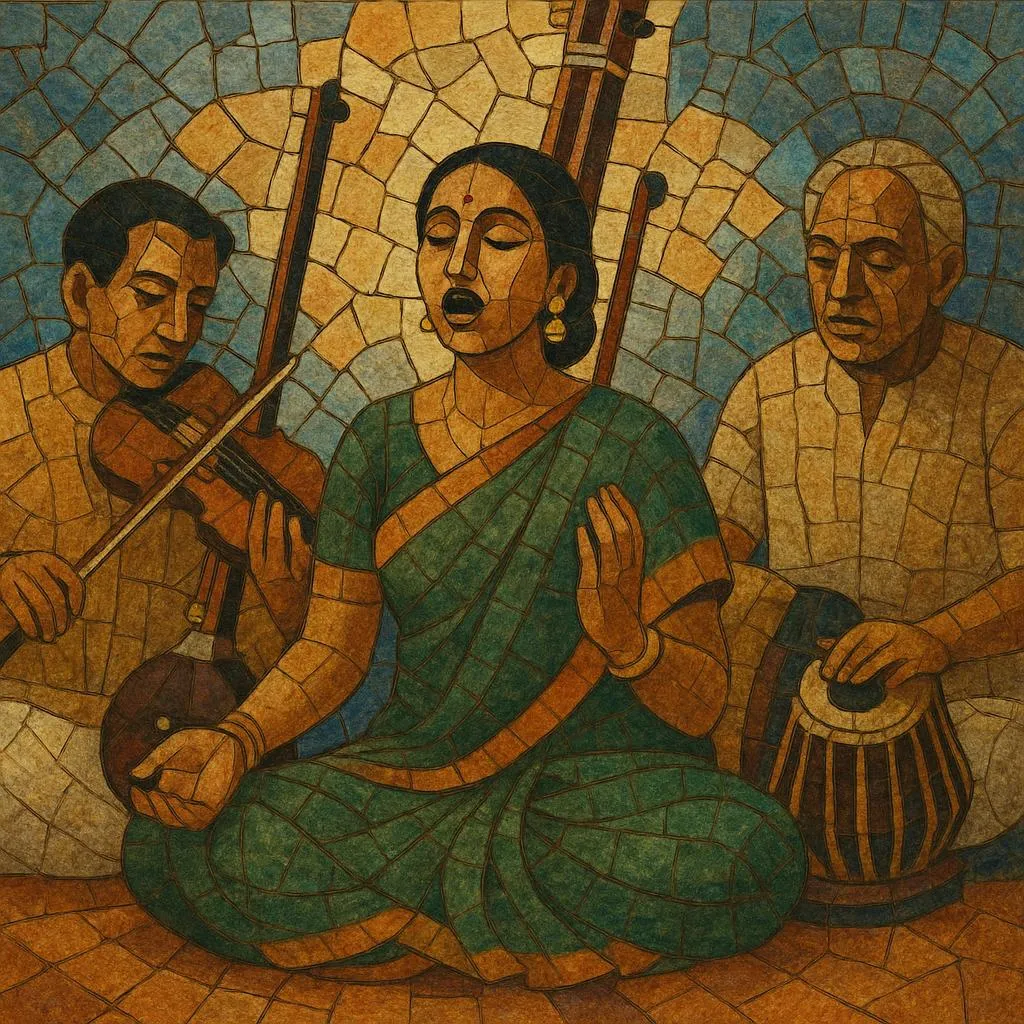
A Carnatic recital typically features a principal vocalist accompanied by violin (shadowing and dialoguing with the singer), mridangam (double-headed drum), and often ghatam, kanjira, or morsing, with a sruti (drone) sustained by tambura or electronic box. Ornamentation (gamaka) is essential, as is precise intonation against the drone. The raga system is organized around the 72 melakarta parents and their janya (derived) ragas, while talas include Adi, Rupaka, Misra/Khanda Chapu, and more.
History
Carnatic vocal practice traces to temple, courtly, and devotional song in South India, informed by Vedic chant, bhakti poetry, and regional liturgical repertoires. By the medieval period, treatises and performance lineages articulated concepts of raga, tala, sruti, and gamaka.
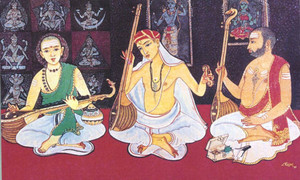
The modern vocal tradition crystallized around the Carnatic “Trinity” of composers—Tyāgarāja (1767–1847), Muthuswami Dīkshitar (1775–1835), and Syāma Śāstri (1762–1827)—whose kritis set enduring models for text–melody–rhythm integration. Their works, along with varnams and padams, became the backbone of the concert repertoire. The violin was adopted as the principal melodic accompanist, and mridangam technique advanced alongside.
A standardized kutcheri (recital) format took shape: opening varnam, kritis of varied tempo and raga, a central improvisational suite (often RTP), tani avartanam (percussion solo), and lighter pieces. Guru–śishya paramparā (apprenticeship) remained the core training model, while notation systems (sargam/solfa and Western staff experiments) aided pedagogy.
Recordings, radio (e.g., All India Radio), and sabhas (concert societies) broadened audiences. Diasporic communities established vibrant scenes worldwide. Contemporary vocalists expand manodharma, commission new kritis, engage with social themes, and collaborate across genres (indo‑jazz, raga rock, and broader world fusion), while maintaining rigorous classical grammar.