Your digging level
Description
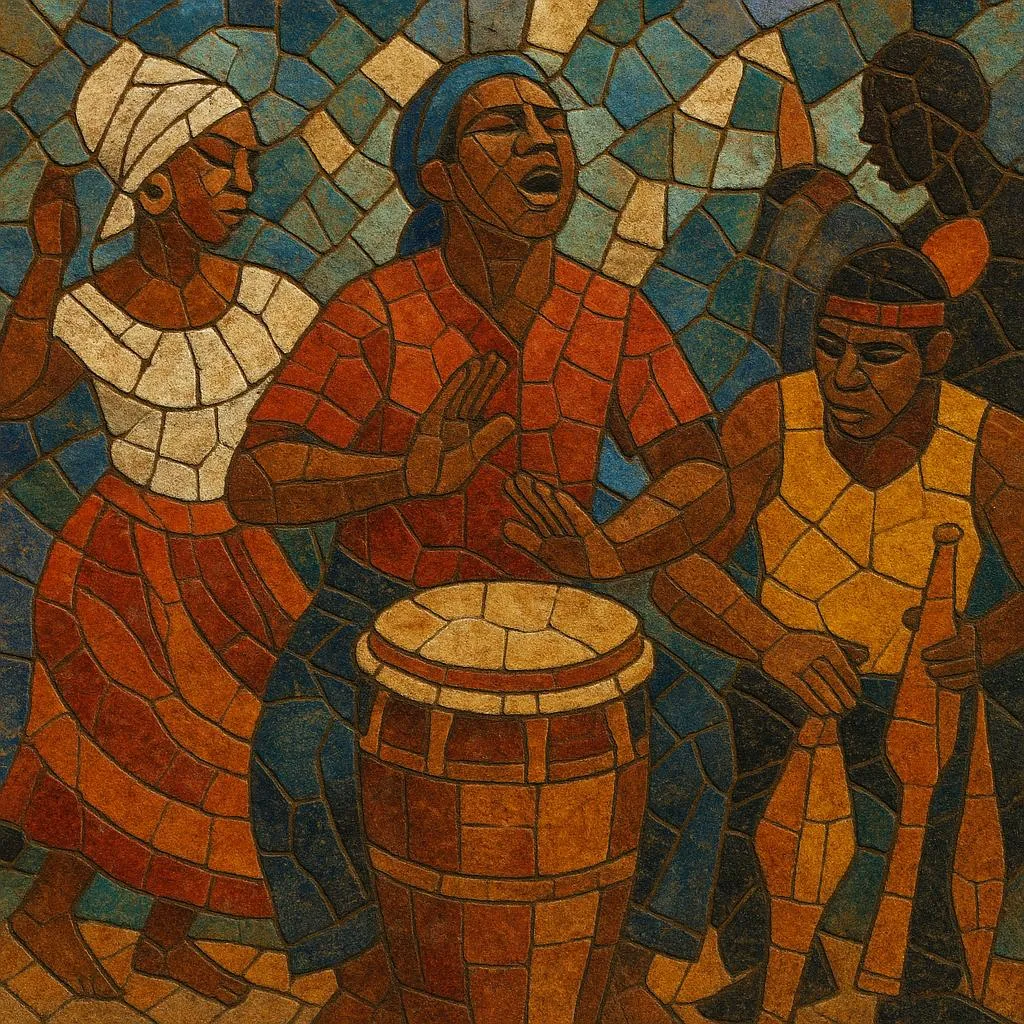
Bultrón is an Afro‑Venezuelan drum-and-chant style rooted in the coastal communities of central Venezuela (notably Barlovento and nearby towns). It is performed in communal and ritual settings, with call-and-response singing over interlocking hand‑drum patterns, dance, and celebratory procession.
The sound is driven by barrel and conical drums (such as mina, cumaco, and the family of culo’e puya), plus supporting instruments like the curbata (timekeeper), shakers, and handclaps. Vocal lines are led by a pregonero (caller) and answered by a chorus, often in Spanish with vernacular expressions, praise of saints (especially San Juan), and community themes.
Rhythmically, bultrón favors polyrhythmic cycles in 6/8 and 12/8, syncopated off‑beats, and powerful drum timbres. Dancing is integral: steps and heel‑toe gestures converse with the drum ensemble, reinforcing the strong, festive, and trance‑tinged character of the music.
History
Bultrón emerged in the 1800s among Afro‑descendant communities on Venezuela’s central Caribbean coast. Enslaved and then free Black populations maintained and transformed West and Central African drumming and song practices, blending them with Catholic festivities—especially the June celebrations of San Juan. This syncretism produced processional drum genres in which call‑and‑response singing, communal dance, and devotional imagery coexist.
Across the 1900s, coastal brotherhoods, cofradías, and neighborhood ensembles safeguarded bultrón as part of a wider “tambores de la costa” constellation (with toques such as mina, cumaco, curbata and the culo’e puya family). Seasonal cycles, saint days, and carnivalesque gatherings kept the repertoire alive. From the 1970s onward, Venezuelan folk ensembles and the nueva canción movement brought these local musics to national stages, recordings, and radio, encouraging broader recognition while community custodians preserved ritual contexts.
In the 2000s–2020s, renewed field recordings, cultural policies, and international touring by coastal ensembles amplified bultrón’s profile. Contemporary artists began blending the tambor ensemble with bass, brass, and electronics, while community groups doubled down on intergenerational teaching. Today, bultrón circulates both as a living ritual practice and as a performance idiom heard at festivals, in classrooms, and on global world‑music stages.