Your digging level
Description
Afro‑Cuban traditional refers to the folkloric, largely ceremonial and community‑based musics in Cuba that preserve West and Central African musical lineages brought by enslaved peoples and their descendants.
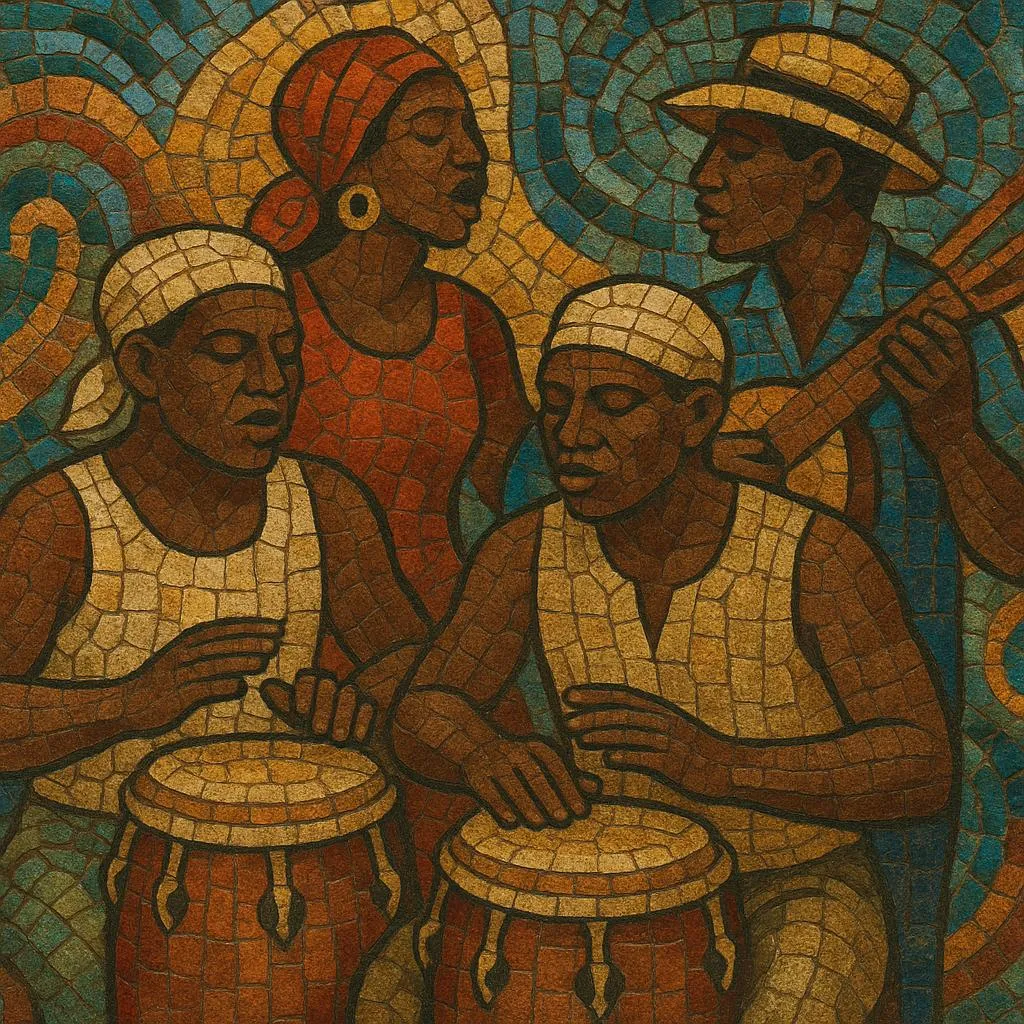
It encompasses ritual repertoires such as the Lucumí/Yoruba batá “toques” for the orishas (Oru del Igbodú), Kongo‑derived Palo/yuka drumming, Abakuá (Éfik‑Ibibio) ceremonials, Arará/Fon‑Ewe song‑drum traditions, as well as secular yet Afro‑rooted forms like early rumba and coros de clave. Core traits include layered polyrhythms, a timeline pattern (clave) orientation, responsorial (call‑and‑response) vocals, tonal languages or liturgical lexicons (e.g., Lucumí), and hand‑drum/idiophone ensembles that drive dance and trance‑ritual contexts.
History
Afro‑Cuban traditional music crystallized in the 1800s as enslaved Africans and their descendants in Cuba preserved and adapted sacred and social musics from Yoruba (Lucumí), Kongo (Palo), Éfik‑Ibibio/Carabalí (Abakuá), and Fon‑Ewe (Arará) communities. Within cabildos (mutual aid/ritual societies), repertoires, instruments, and dances were maintained, recontextualized, and syncretized alongside Catholic practice.
By the late 19th to early 20th century, distinct ceremonial complexes were widely established: Lucumí batá drumming and songs for the orishas; Kongo‑derived Palo with yuka ensembles; Abakuá societies with bonkó enchemiyá lead drum rituals; and Arará lineages with their own song‑drum cycles. Parallel community practices such as coros de clave and street comparsas fed the emergence of secular Afro‑rooted genres (e.g., rumba), while remaining interlinked with ritual aesthetics.
Across the 20th century, practitioners codified toques, song texts, and drum techniques, while state‑sponsored ensembles and folkloric groups documented and staged traditions. Recordings, anthropological work, and diaspora networks spread knowledge of batá, yuka, Abakuá, and Arará outside Cuba. These traditions profoundly shaped Cuban popular dance music and international jazz through rhythm, form, and instrumentation.
From mid‑century onward, Afro‑Cuban traditional vocabularies became foundational for rumba, son, salsa, timba, and Latin jazz. In parallel, ceremonial lineages continue in private and public religious contexts (e.g., Regla de Ocha/Lucumí), while community ensembles, ballets folklóricos, and independent akpwón (lead singers) and drummers maintain and teach the repertories worldwide.