Your digging level
Description
Antilliaanse folklore is the traditional and salon-derived music of the Dutch Caribbean—especially Curaçao, Aruba, and Bonaire—where Afro‑Caribbean rhythms, Iberian song forms, and 19th‑century European dance music mingled with local Papiamentu/Papiamento language and performance practice.
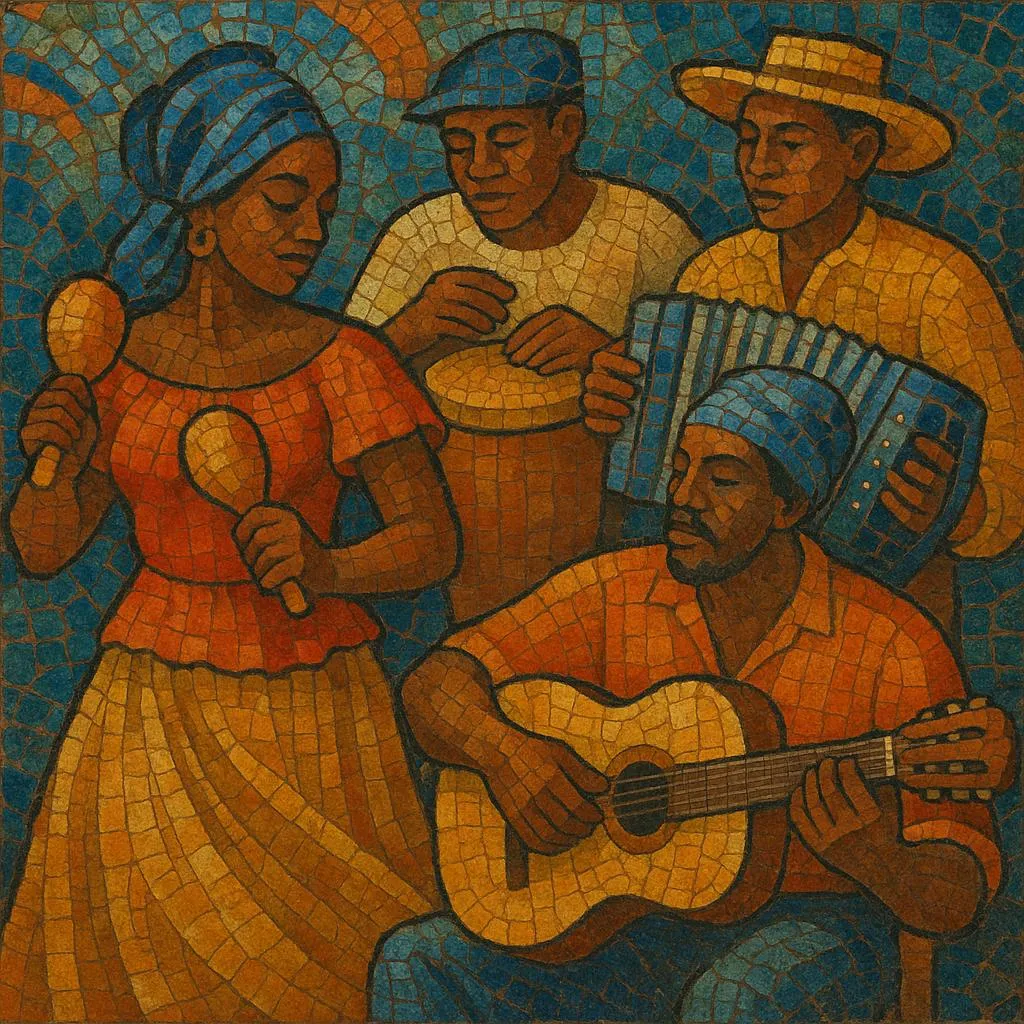
The repertoire spans Afro‑Curaçaoan tambú and seú processional songs alongside elegant salon forms such as the Antillean waltz, mazurka, polka, and Cuban‑derived danza and habanera. Characteristic instruments include the tambú drum, chapi (hoe‑blade idiophone), wiri/guayo (scraper), maracas, guitar/kuarta (cuatro), mandolin/bandolin, accordion, and, in salon settings, piano and strings. Melodies often carry European contours, while rhythms are syncopated and polyrhythmic, reflecting West and Central African heritage.
Lyric themes range from social commentary and satire to romance, celebration, and community identity, delivered primarily in Papiamentu/Papiamento with Spanish and Dutch traces. The result is a distinctive, danceable yet expressive idiom that oscillates between ceremonial call‑and‑response and refined, harmonically rich salon pieces.
History
Enslaved and free Afro‑Caribbean communities on the ABC islands preserved and adapted West African musical ideas—call‑and‑response, timeline patterns, and hand‑drum textures—into local ceremonial forms such as tambú and seú. Concurrently, port cities and mission schools provided access to European dance music (waltz, mazurka, polka) and salon performance, which island musicians absorbed and re‑shaped in local parlors and town squares.
From the mid‑1800s, Curaçaoan composers cultivated a distinctive salon repertoire. Antillean waltzes, danzas, and habaneras—performed on piano, strings, and winds—combined Romantic‑era harmony and form with Caribbean rhythmic lilt. This circle produced enduring melodies that circulated in manuscript, domestic music‑making, and civic concerts, helping to codify a “classical” strand of Antillean folklore alongside Afro‑creole traditions.
In the 20th century, radio, migration, and tourism intensified exchange with neighboring Caribbean musics (calypso, merengue, Cuban music). Folkloric ensembles emphasized indigenous instruments (tambú drum, chapi, wiri) and Papiamentu lyrics, while orchestras and piano trios kept the salon lineage alive. Carnival celebrations, processionals (seú), and community festivals provided annual stages for new compositions and dance practice.
Today, Antilliaanse folklore thrives in heritage ensembles, conservatory programs, and jazz/classical fusion projects. Performers often juxtapose tambú or seú rhythms with the elegance of the Antillean waltz, sustaining a living tradition that is both historically rooted and open to modern reinterpretation.