Description
Brazilian punk rock is a national scene encompassing several musical currents rather than a single, uniform sound. It ranges from the raw punk and hardcore associated with São Paulo to the new wave and post-punk directions pursued by bands with roots in Brasília’s punk scene. Some groups also moved toward thrash metal and crossover.
The scene has operated through underground records, shops, shows and networks, while some punk-rooted bands reached major labels and radio. Its language practices have changed: many bands in the 1990s sang in English, unlike the prevailing practice of the 1980s.
Based on: Wikipedia
More on: Every Noise at Once, Wikidata
History
Beginnings in the late 1970s
Punk rock and hardcore punk took root in Brazil in the late 1970s, inspired in part by British and American bands. Restos de Nada began playing in 1978 and is regarded as the first known Brazilian punk rock band. Early activity also emerged in Curitiba and Brasília.
Scenes and records in the 1980s
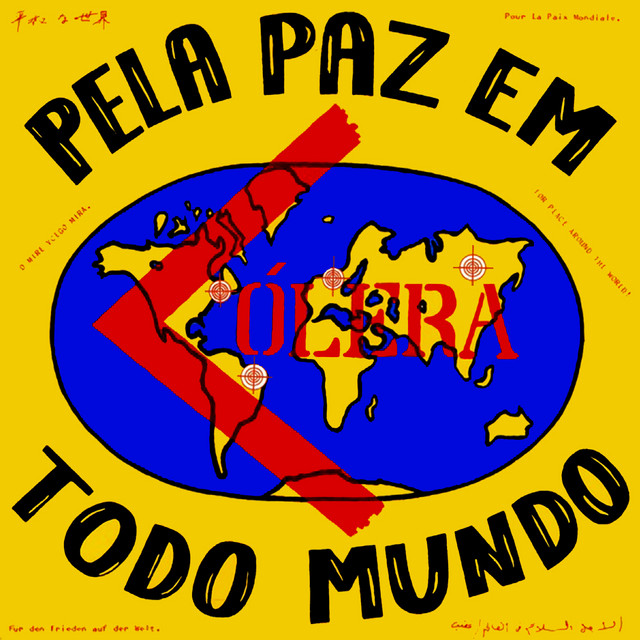
São Paulo became a major center for raw punk and hardcore. Fábio Sampaio opened Punk Rock Discos in 1979; the shop became a meeting place and circulated imported records and cheaper cassette compilations. Cólera, Olho Seco and Inocentes appeared on the 1982 compilation Grito Suburbano. Later that year, the festival O Começo do Fim do Mundo brought together bands from São Paulo and the neighboring ABCD region.
Brasília developed a different trajectory: Aborto Elétrico was an early local band, while groups including Plebe Rude moved closer to post-punk and new wave. By the middle of the decade, some Brasília bands with punk roots were releasing successful records on major labels. In Porto Alegre, Replicantes achieved national success, a major-label deal and FM radio play.
Police harassment and violence among punk gangs made São Paulo shows difficult by 1984. Some bands changed direction: Inocentes and Mercenárias moved toward post-punk, while Ratos de Porão and Lobotomia drew on thrash metal. Economic problems and renewed violence later reduced releases and made gigs rarer.
Renewal from the 1990s
The 1990s brought renewed punk and hardcore activity, including straight edge and riot grrrl currents. The underground network extended beyond São Paulo, with bands such as Dead Fish gaining recognition in Espírito Santo. Labels, venues and listeners helped sustain the scene into the following decade, when Brazilian thrashcore bands toured and released records abroad.
Choose a current
Start by deciding which part of the scene’s range you want to explore. A raw punk or hardcore approach can emphasize urgency and abrasion; a post-punk or new wave approach can leave more space for contrast and atmosphere. You could also draw on the heavier thrash-metal direction adopted by some Brazilian bands. These are different paths within a broad scene, not ingredients that every song must combine.
Build the arrangement
A common punk-rock approach is to begin with a direct guitar riff, bass and drums, then develop it into a compact arrangement with clear changes between sections. For a hardcore-influenced piece, you could use forceful attacks and abrupt transitions. For a post-punk direction, try a more prominent, repeating bass part and vary the texture rather than keeping every instrument at full intensity throughout.
Voice and presentation
Write vocals that fit the energy of the arrangement, whether delivered as a chant, a shout or a more restrained line. English is one option: many Brazilian bands used it in the 1990s. To work in the spirit of the scene’s underground networks, you could record a small collection of songs with other bands or organize a shared live bill.



Best playlists


Influenced by