Your digging level for this genre
Description
Bop (short for bebop) is a modern jazz style that emerged in the early-to-mid 1940s, marked by fast tempos, intricate melodies, and harmonically advanced improvisation. It shifted jazz from dance-oriented big-band entertainment to an art music centered on small combos and virtuosic soloing.
Hallmarks include complex chord progressions with extensive II–V–I movement, altered dominants, chromatic approach tones, and extended chord tones (9ths, 11ths, 13ths). Melodies ("heads") are often angular, syncopated, and densely notated, frequently written as contrafacts over familiar standards (e.g., rhythm changes or Cherokee). Rhythmic feel pivots on the ride cymbal, with the drummer "dropping bombs" on snare and bass drum, a walking bass underpinning, and comping piano punctuating harmonic motion.
Developed at New York venues like Minton’s Playhouse, bop elevated improvisational language, ensemble interplay, and artistic autonomy, laying the foundation for postwar modern jazz.
History
Bop coalesced in New York City jam sessions—most famously at Minton’s Playhouse and Monroe’s Uptown House—where innovators like Charlie Parker, Dizzy Gillespie, Thelonious Monk, Kenny Clarke, and Bud Powell experimented with faster tempos, extended harmonies, and new rhythmic concepts. Their work reacted against the constraints of big-band swing, emphasizing small-group autonomy, virtuosity, and improvisational depth.
Drummers (especially Kenny Clarke and Max Roach) moved timekeeping to the ride cymbal and used the bass and snare for syncopated accents ("dropping bombs"). Harmony expanded through reharmonization, tritone substitutions, and chromatic voice-leading. Composers crafted contrafacts—new melodies over existing chord progressions—producing staples like Anthropology, Ornithology, and Donna Lee. Soloists deployed bebop scales, enclosures, and rapid arpeggiation to navigate dense changes at brisk tempos.
Recordings by Parker and Gillespie, along with pivotal performances at clubs and on 52nd Street, broadcast the style’s language. While initially controversial for its complexity and departure from danceability, bop quickly became the lingua franca of modern jazz musicians.
Bop redefined jazz as an artist-driven, listening-focused music. Its harmonic vocabulary and rhythmic approach seeded cool jazz, hard bop, post-bop, modal jazz, and later avant-garde directions. Beyond jazz, bop’s phrasing and harmonic sensibility influenced composers, educators, and improvisers across genres.
How to make a track in this genre
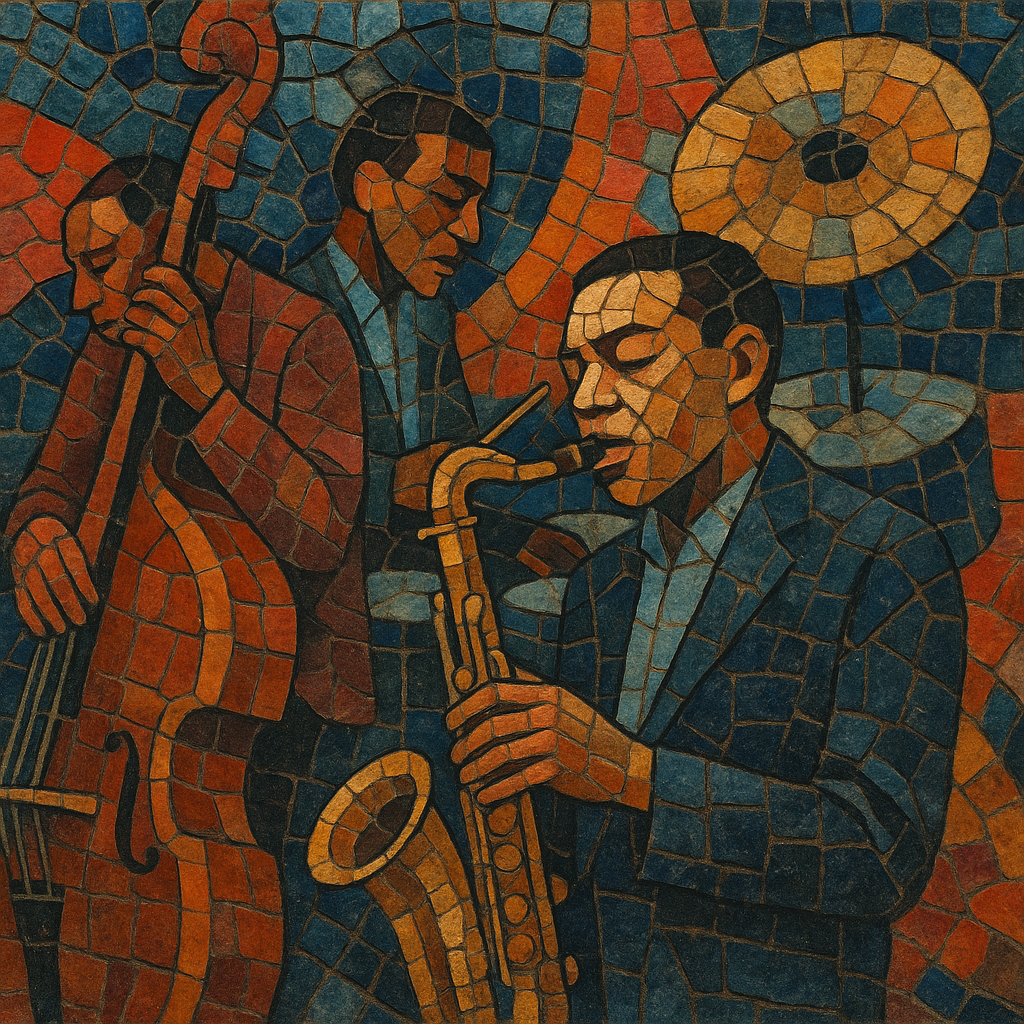
Use small combos (quartet or quintet): saxophone or trumpet as lead, piano, double bass, and drum set. Guitar can substitute or complement piano. Keep arrangements lean to prioritize the head and solos.
Favor 12-bar blues (with bebop reharmonization) and 32-bar AABA standards. Write contrafacts: compose new, syncopated heads over standard progressions (e.g., rhythm changes). Keep melodies angular with wide intervals, chromatic passing tones, and off-beat accents.
Build around II–V–I motion with extended chords (9, 11, 13) and altered dominants (b9, #9, b5, #5). Use tritone subs, secondary dominants, and diminished/whole-tone colors. Improvise with bebop major and dominant scales, enclosures, approach tones, and arpeggios outlining upper extensions. Aim for smooth voice-leading through rapid changes.
Set medium-up to very fast tempos. Drums keep time on ride cymbal with feathered bass drum and syncopated snare "bombs"; comping should be interactive and conversational. Bass walks four to the bar, strongly outlining harmony. Piano (or guitar) comps sparsely with syncopated shells and guide tones to leave space for the soloist.
Phrase in long, horn-like lines, often across bar lines. Use rhythmic displacement, accents, and chromaticism to create forward motion. Balance virtuosity with motivic development and clear cadential points.
Keep arrangements concise: head in, multiple improvised choruses, traded fours or eights with drums, and head out. Record with a live, acoustic sound to preserve dynamic interplay and spontaneity.