

Your digging level
Description
Bomba y plena refers to the paired Afro‑Puerto Rican traditions of bomba (with roots in the 17th–18th centuries) and plena (which emerged in the early 20th century), as well as the mid‑20th‑century popular band format that fused and alternated both styles on stage and record.
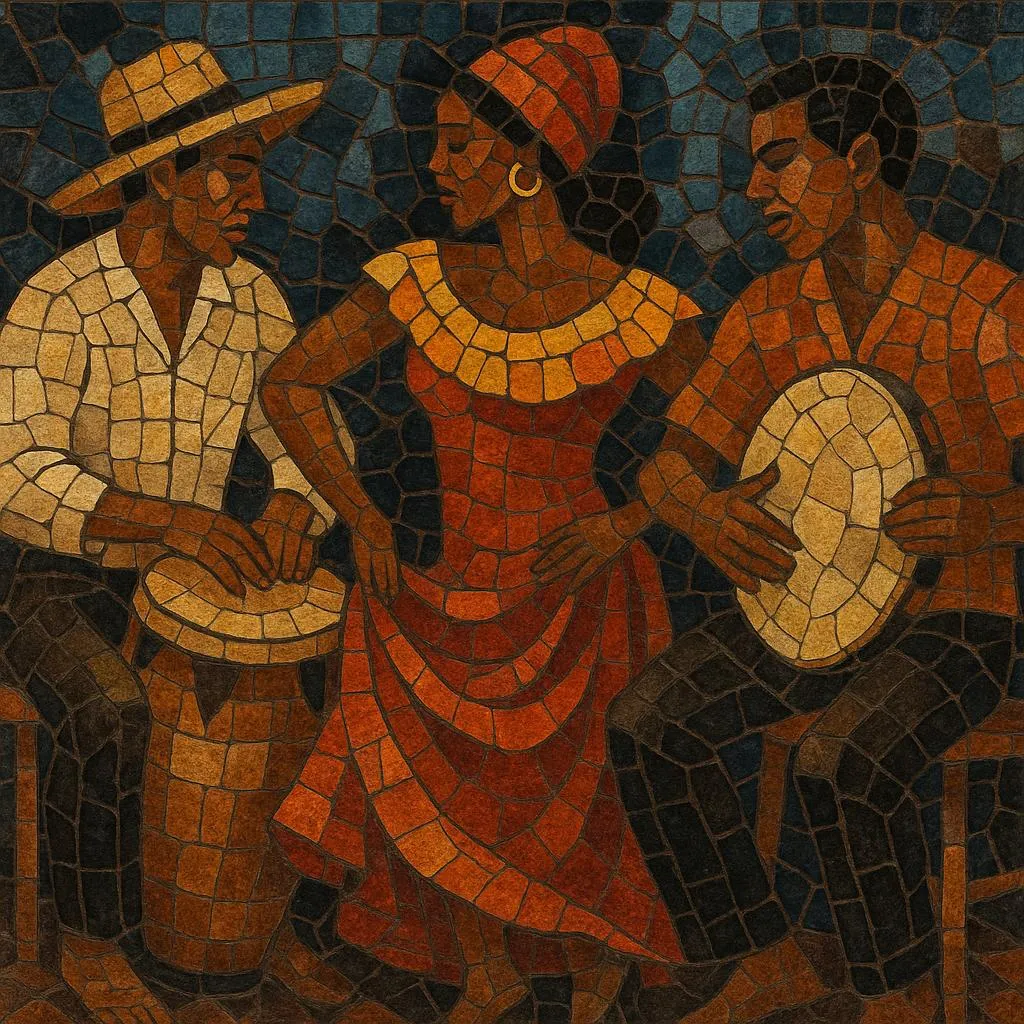
Bomba is a participatory music-and-dance practice centered on call-and-response singing and improvisatory dialogue between a solo dancer and the lead drum (subidor or primo). It employs barrel drums (barriles), a wooden slit-stick (cua), and maraca, and features a family of rhythms (e.g., sicá, yubá, holandés, cuembé) with strong West African lineage.
Plena is a topical, street-born song form often called the “periodical sung” for its news-reporting verses. It is driven by the panderos (panderetas)—three frame drums of different sizes (seguidor, punteador, and requinto)—plus güiro, with simple, catchy choruses for communal singing. In the 1950s and 1960s, dance bands in Puerto Rico and the diaspora arranged bomba and plena for horns, bass, and percussion, establishing “bomba y plena” as a cornerstone of Puerto Rican popular dance music.



