

Your digging level
Description
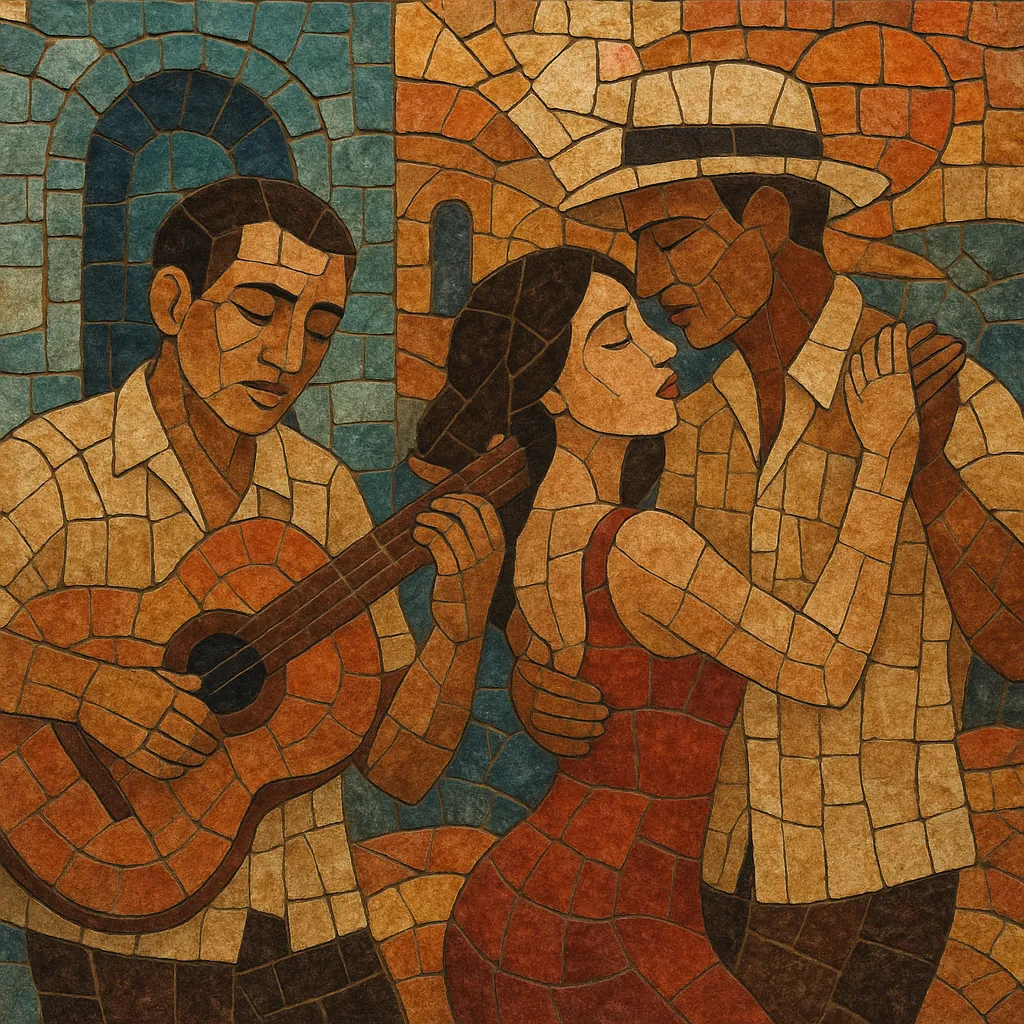
Bolero cubano is the Cuban song form that crystallized the Latin American idea of the bolero as a slow, romantic ballad for voice and guitar ensembles.
Born in Santiago de Cuba among trovadores, it features a supple, danceable slow‑to‑medium tempo in 2/4 or 4/4, a characteristic bolero/habanera lilt (often drawing on the cinquillo), and tender, poetic lyrics about love, longing, and memory. Harmonically it favors rich, song‑like progressions (I–vi–ii–V, secondary dominants, modal mixture) that support lyrical melodic lines and expressive rubato phrasing.
Typical performances range from intimate solo or duo guitar settings to male vocal trios and small salon groups with light percussion (claves, maracas), creating a refined, emotionally direct atmosphere suited for listening and close dancing.
History
Cuban bolero emerged in the 1880s in Santiago de Cuba within the trova tradition. José “Pepe” Sánchez is widely credited with composing the first Cuban bolero, “Tristezas” (c. 1883), establishing a lyrical, song‑forward approach distinct from the older Spanish dance called bolero. Early trovadores such as Sindo Garay, Manuel Corona, and María Teresa Vera carried the style across Cuba, shaping its poetic ethos and guitar‑centered accompaniment.
By the early 1900s, bolero cubano moved from patios and cafes to salons and emerging recording studios. The genre’s rhythmic identity incorporated the habanera feel and the Cuban cinquillo, while keeping a gentle sway suited to intimate singing. Vocal trios and duos flourished, standardizing close harmonies and alternating lead/response textures that became a signature of the style.
From the 1930s to the 1950s, bolero cubano spread across the Spanish‑speaking world via radio, cinema, and touring ensembles. Cuban artists collaborated with Mexican, Puerto Rican, and broader Latin American scenes, while the filin movement (César Portillo de la Luz and peers) introduced jazz harmonies and sophisticated guitar voicings. Bolero‑son hybrids (e.g., by Trío Matamoros) demonstrated how bolero’s lyricism could merge with Afro‑Cuban grooves.
Cuban bolero became the template for numerous regional bolero traditions and romantic Latin ballads. It directly informed bachata in the Dominican Republic, Spanish and Mexican bolero interpretations, and Vietnamese bolero. In the late 20th century it also colored salsa romántica’s lyrical sensibility. Today, classic Cuban boleros remain standards for vocalists and guitar trios, and continue to be reinterpreted by contemporary artists and orchestras.



