Your digging level
Description
Trio cubano refers to the Cuban tradition of three‑piece, guitar‑led vocal groups that popularized intimate boleros and light son/guajira repertoire in the first half of the 20th century.
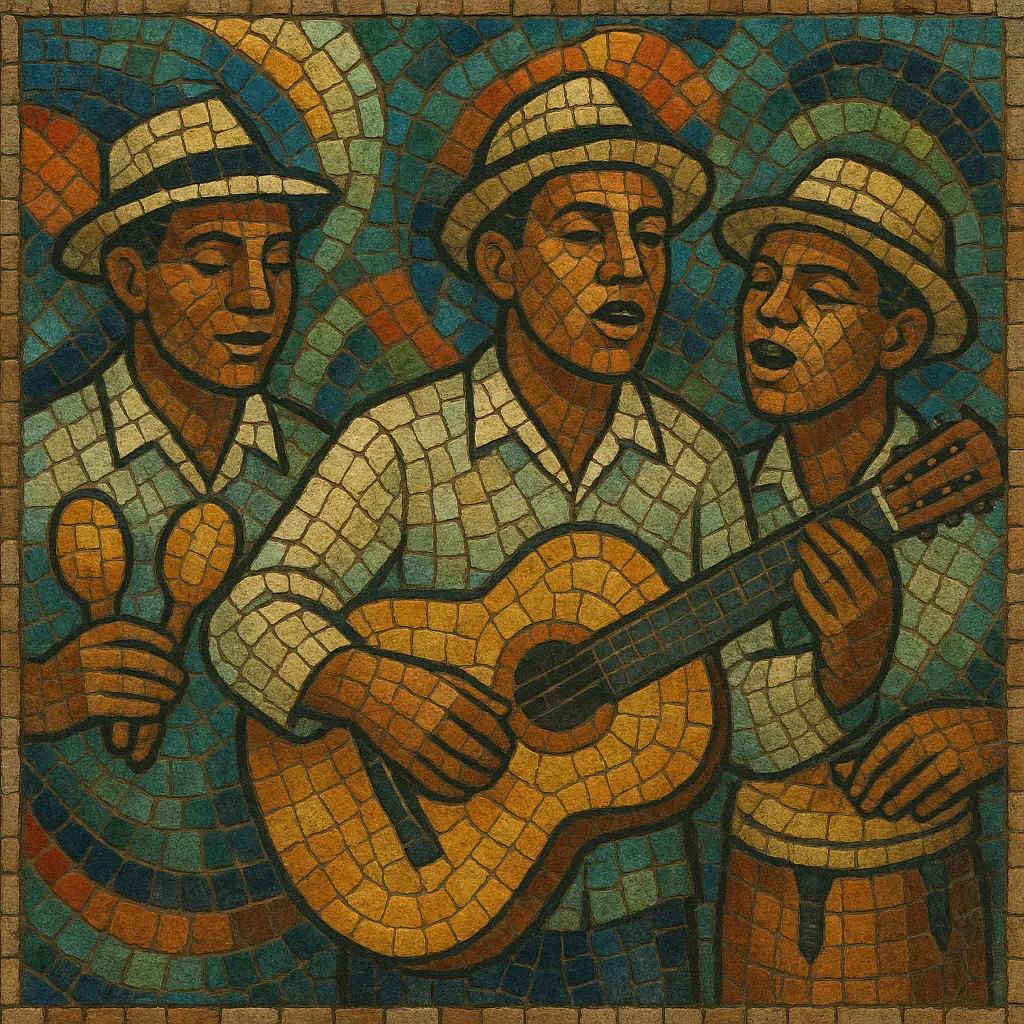
Typical ensembles feature three voices in close harmony accompanied by two or three plucked instruments (most commonly requinto or lead guitar, rhythm guitar or tres, and hand percussion such as maracas or claves). Repertoires emphasize romantic boleros enriched by Cuban rhythmic sensibilities, occasional montuno call‑and‑response passages, and elegant, small‑room performance aesthetics.
The style crystallized around trailblazing groups like Trío Matamoros, whose recordings helped codify the sonic identity of the Cuban trio: lyrical lead voice, responsive harmonies, tumbao‑aware accompaniment, and a balance between serenade intimacy and street‑born son cadence.
History
Cuban trio practice draws from the island’s trova tradition, in which singer‑guitarists performed romantic song forms in salons, plazas, and serenades. By the 1910s–1920s, bolero writing flourished in Santiago de Cuba and Havana, while son cubano and guaracha supplied dance‑grounded rhythmic languages. The emergence of the requinto and a taste for tighter vocal harmonies created the conditions for a standardized trio format.
The 1930s saw the rise of emblematic groups such as Trío Matamoros, whose recordings disseminated the trio sound across Cuba and abroad. These groups blended bolero lyricism with son swing, using claves‑informed phrasing and clear, close‑position harmonies. Radio and early record labels amplified the format’s reach, and trios became staples of cafés, theaters, and domestic listening.
As Cuban repertoire circulated regionally, parallel bolero‑trio scenes blossomed in Mexico, Puerto Rico, and elsewhere, feeding back into Cuban practices. Musicians moved between Havana, Santiago, Mexico City, and San Juan, enriching the trio’s harmonic palette (secondary dominants, chromatic approach chords) while preserving Cuban rhythmic identity.
While large ensembles and new popular styles rose to prominence, trio cubano remained a living heritage in peñas, cultural houses, and festivals celebrating bolero and trova. Periodic revivals—supported by archival reissues and heritage programs—have kept the canon of classic songs and the understated elegance of the trio format in circulation, influencing romantic Latin pop and salsa romántica aesthetics.