Your digging level

For this genre
0/8
🏆
Sign in, then listen to this genre to level up

Description

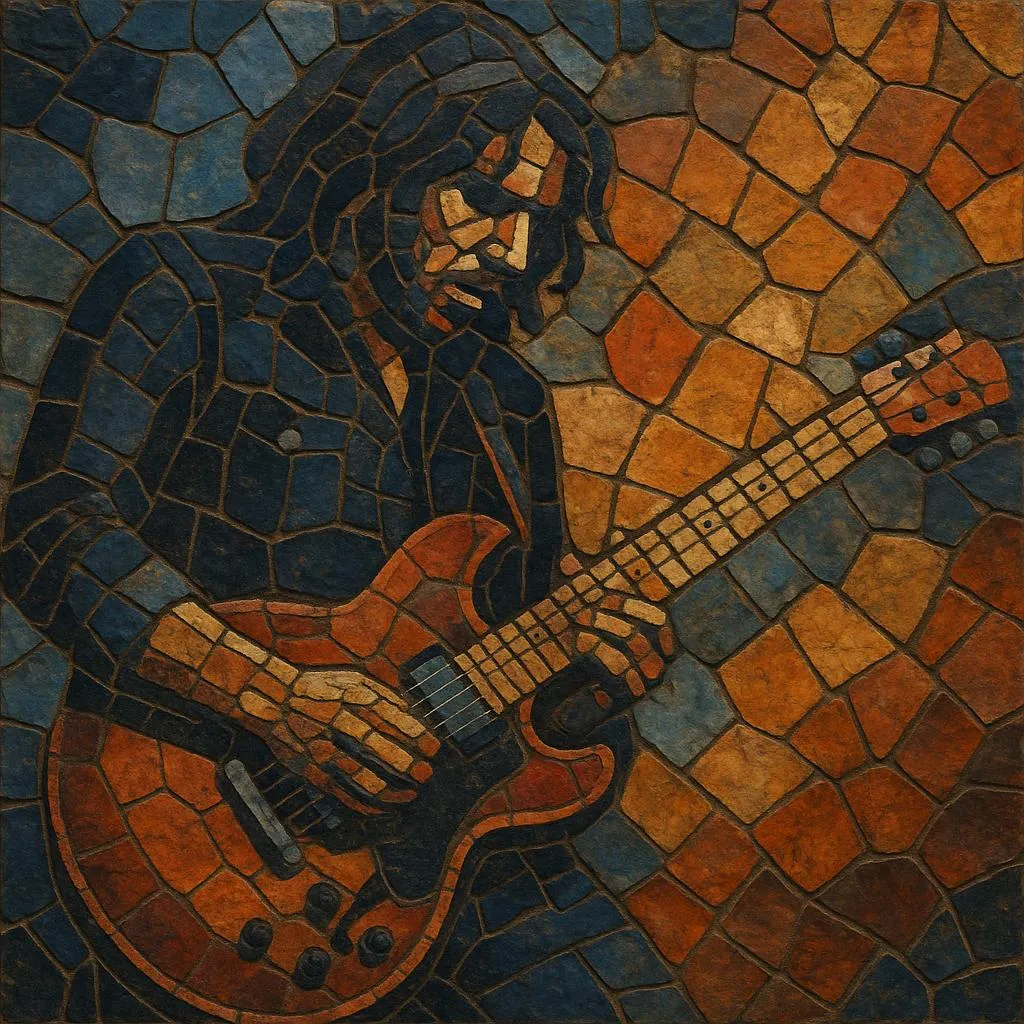
Blues-rock guitar is a guitar-forward strain of blues-rock that emphasizes expressive lead playing, riff-driven songs, and the power-trio aesthetic. Its language merges electric blues phrasing with the volume, drive, and rhythmic insistence of rock.

Typical hallmarks include overdriven tube-amp tone, vocal-like string bends and vibrato, minor/major pentatonic interplay, 12‑bar and verse–chorus song forms, and prominent guitar solos built from memorable motifs. While deeply rooted in American blues, the style crystallized during the mid‑1960s British blues boom and quickly cross‑pollinated with U.S. players, forging the “guitar-hero” era that would shape rock lead playing for decades.


Sources: Spotify, Wikipedia, Discogs, RYM, MB, user feedback and other online sources

History

Origins (mid‑1960s)

Blues-rock guitar emerged as British musicians electrified and intensified American blues. London’s scene—fed by record collectors and club residencies—pushed amplified Chicago blues toward louder drums, bass punch, and extended guitar improvisation. The result was a rock-ready, riff-focused approach that still honored I–IV–V harmony and blues vocal inflection.

The Guitar‑Hero Era (late 1960s)

Cranked tube amps, Marshall stacks, fuzz and wah pedals, and the minor pentatonic scale defined a new lead vocabulary. Songs extended into jams, and the power trio (guitar–bass–drums) became an archetype. This period established the expressive toolkit of wide bends, vocal-like phrasing, and dynamic call‑and‑response with the band.

Consolidation and Diversification (1970s–1980s)

Blues‑rock guitar seeded hard rock’s muscular riffing and southern rock’s boogie grooves, while studio craft added multitracking and refined tones. In the 1980s, a roots revival re-centered tight shuffles, Texas swing feels, and fiery but song‑serving solos, showing the style could be both virtuosic and traditional.

Modern Revivals (1990s–present)

New generations blended vintage gear with contemporary production. Live dynamics, head‑solos‑head structures, and emotive bends remain core, but artists also fold in soul, funk, and Americana. Boutique pedals, lower‑wattage amps, and analog‑leaning mixes help keep the sound visceral and room‑like.

How to make a track in this genre

Gear and Tone
•   Use a solid-body guitar with single-coils or low/medium-output humbuckers into a tube amp (Fender, Marshall, Vox). Aim for edge-of-breakup to medium overdrive. •   Employ classic pedals sparingly: overdrive/boost, fuzz, wah, vibe, slapback delay, spring reverb. Let picking dynamics control breakup.
Harmony and Vocabulary
•   Center harmony on I–IV–V (12‑bar or 8/16‑bar variants). Mix major and minor third for blues color. •   Solo with minor pentatonic + “blue note” (b5), and weave in major pentatonic for sweeter cadences. Add Mixolydian/Dorian flavors for turnarounds. •   Use motifs: short phrases developed through sequence, call‑and‑response, and dynamic contrast.
Rhythm and Groove
•   Favors 4/4 with a strong backbeat; shuffles, Texas boogies, and straight eighths are common. •   Riffs often come from boogie patterns (root–5–6–b7) and ostinati that lock with bass and kick.
Riffs, Solos, and Phrasing
•   Construct memorable, singable riffs in open-position keys (E, A, G) that accommodate open strings. •   Solo with vocal-like bends (¼‑, ½‑, whole‑step), wide vibrato, slides, double‑stops (thirds/sixths), and tasteful space. Shape a narrative: set-up, escalation, climax, release. •   Use call‑and‑response with vocals or rhythm section; end solos with a turnaround lick that re‑lands the groove.
Arrangement and Production
•   Classic format is power trio plus occasional keys. Start with riff intro, verse/chorus, middle‑eight or solo, and a final chorus/outro jam. •   Track live where possible; capture room mics, keep edits minimal, and let amp/air interact. Pan rhythm and lead for width, keep drums punchy and natural.
Common Pitfalls
•   Overplaying: prioritize melody and dynamics over nonstop speed. •   Excess gain: too much saturation masks articulation; let pick attack and phrasing carry emotion.

Top tracks

Locked
Share your favorite track to unlock other users’ top tracks

Upcoming concerts

in this genre
Influenced by
Has influenced

Download our mobile app

Get the Melodigging app and start digging for new genres on the go
© 2026 Melodigging
Melodding was created as a tribute to Every Noise at Once, which inspired us to help curious minds keep digging into music's ever-evolving genres.
Buy me a coffee for Melodigging