

Your digging level
Description
Bangla Gojol (Bengali: গজল) is the Bengali-language strand of Islamic devotional song.
It sets religious poetry that praises Allah (hamd), honors the Prophet Muhammad (naat), or conveys moral and spiritual counsel (nasheed-like texts) to melodic frameworks familiar to Bengali listeners.
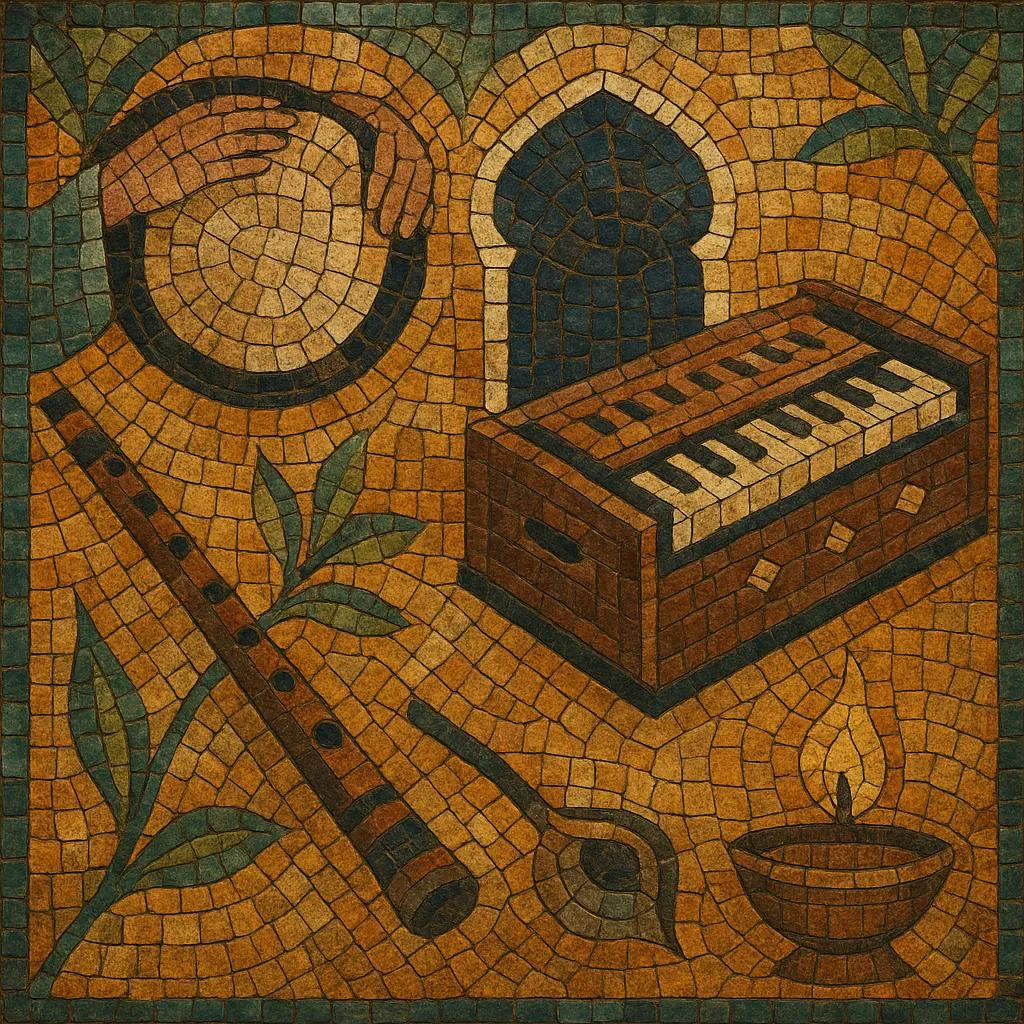
Performances range from unaccompanied voices and simple hand-claps or frame drum (duff) to small acoustic ensembles with harmonium, flute/bansuri, and light tabla or dholok. Melodies often draw on Hindustani ragas and Bengali folk contours, while rhythms commonly use keherwa (8-beat) and dadra (6-beat) cycles. The lyrical register mixes Bengali with Arabic or Persian devotional vocabulary (e.g., phrases of salawat), keeping the message accessible, didactic, and contemplative.
History
Islamic devotional singing arrived in Bengal with the spread of Islam from the 13th century onward, carried by Sufi orders and mosque pedagogy. Over centuries, Arabic and Persian poetic-devotional forms intermingled with Bengali poetics and melody-making. In the early 20th century, poet-composer Kazi Nazrul Islam wrote a large corpus of Islamic songs in Bengali, effectively codifying a modern Bengali devotional idiom that many later performers would recognize as gojol.
From the 1950s, radio (Pakistan Radio, later Bangladesh Betar) aired Bengali devotional programs, especially around Ramadan and Eid, normalizing a sound-world of Bengali text, Hindustani-leaning ragas, and modest acoustic accompaniment. The cassette boom (1970s–1990s) multiplied community ensembles and school/college-based shilpigosthi (performer groups). These groups popularized canonical hamd and naat in Bengali diction while keeping arrangements austere and text-forward.
Since the 2000s, studio-recorded gojol released on CDs and, later, YouTube and streaming platforms has widened the audience at home and in the Bengali diaspora (UK, Middle East, North America). Production remains intentionally restrained (voice-first, sparse percussion), though some releases fold in polished harmonium/strings pads and carefully tuned choirs. Ramadan programming, Islamic television segments, and school competitions sustain a continuous pipeline of new compositions and youthful ensembles, while classic Nazrul-era texts remain a touchstone.
Across eras, Bangla Gojol maintains a devotional ethic: textual clarity, moral exhortation, remembrance (dhikr-like refrains), and communal singability. It is performed at religious gatherings, school programs, and family events, balancing personal piety with a recognizably Bengali musical accent.



