Your digging level

For this genre
0/8
🏆
Sign in, then listen to this genre to level up

Description

Balfolk is a contemporary European folk-dance music movement centered on social dancing. It draws repertoire, dance types, and aesthetics from historic village and regional traditions—especially those of France (bourrée, scottish/schottische, mazurka, waltz, polka, branles, gavottes) and Brittany—while welcoming tunes and dances from neighboring countries.

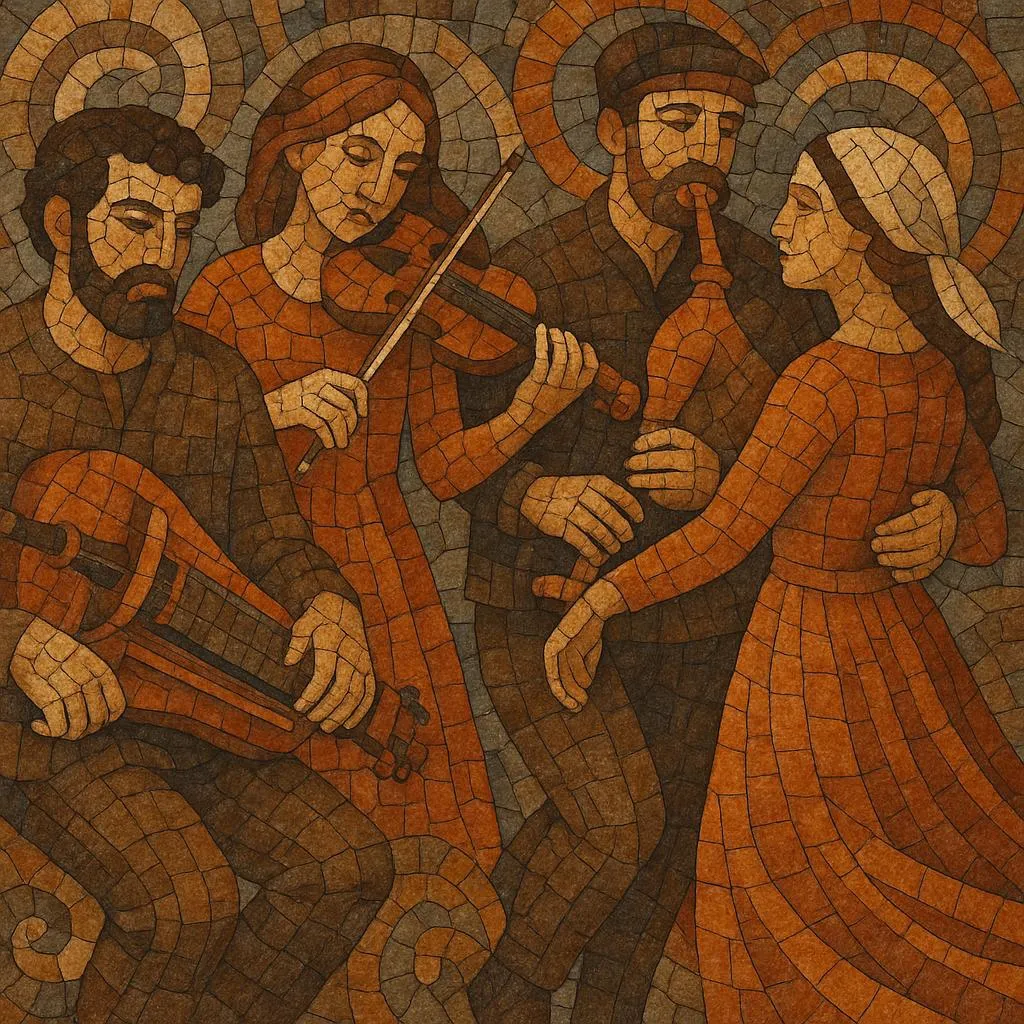
Unlike a concert-focused “folk” scene, balfolk is designed for participatory balls (bals) where musicians and dancers share the floor: couples’ dances (waltz, mazurka, scottish), set dances (bourrée in 2 and 3, circled mixers), and chain or line dances (an dro/hanter dro analogues) are central. The sound is a living blend: diatonic accordion (melodeon), hurdy-gurdy, bagpipes, fiddle, flutes, guitar, and percussion often combine with modern arrangements, looping, and subtle electronics. The result is music that balances hypnotic grooves, modal melodies, and supple phrasing tailored to dance energy and flow.

Balfolk emphasizes accessibility (simple teaches on the dance floor), tradition (regional tune types and modes), and innovation (new compositions in old forms), forming a pan-European social dance culture that prizes listening-through-dancing.


Sources: Spotify, Wikipedia, Discogs, RYM, MB, user feedback and other online sources

History

Roots and precursors

Balfolk grows from the 20th‑century folk revival in France and neighboring countries. Mid‑century collectors, dancers, and musicians documented local dance repertoires (bourrées from Auvergne and Berry, Breton chain dances, Gascon and Occitan variants) and revived diatonic accordion, hurdy‑gurdy, bagpipes, and fiddle traditions. Parallel Celtic and pan‑European revivals provided shared models for participatory folk balls.

From 'bal folk' to 'balfolk'

By the 1970s–1980s, "bal folk"—informal community dances featuring traditional repertoires—was established in France. In the 1990s, a younger generation reframed the practice as a cross‑regional, traveler‑friendly scene. Bands composed new tunes in the classic forms and standardized dance teaching at events, while festivals and workshops connected France, Belgium, the Netherlands, Italy, Germany, and beyond.

2000s–present: A pan‑European social dance culture

From the 2000s onward, the term "balfolk" came to denote a vibrant, international network: week‑end bals, urban weekly dances, and festivals (with classes by day, bals by night) spread across Western and Central Europe. Repertoires remained dance‑led—mazurkas with a dreamy lilt, groove‑forward scottishes, pulsing bourrées, entraining chain dances—while aesthetics diversified: acoustic trios, drone‑rich hurdy‑gurdy ensembles, and bands incorporating subtle electronics and looping.

Today, balfolk thrives on original composition alongside tradition. Its ethos—accessible teaching, inclusive floors, musician‑dancer feedback—keeps it a living, evolving social dance music rather than a museum style.

How to make a track in this genre

Core dance forms and feel
•   Waltz (3/4): flowing, lyrical phrasing; shape 8- or 16-bar periods to suit turns and travel. •   Mazurka (3/4): characteristic lilt with a gentle accent or lift on beat 2; elastic phrasing supports pivots and dips. •   Scottische/Scottish (4/4): sturdy groove, often with dotted or swung figures; clear 8-bar phrases aid figures and turns. •   Bourrée (2-beat or 3-beat): incisive propulsion; for 2-time versions, think 2/4 with strong upbeat pickup; for 3-time, use uneven stress for lift. •   Polka and gavotte variants: bright, buoyant articulation; keep tempos danceable rather than virtuosic.
Instrumentation and texture
•   Traditional core: diatonic accordion (melodeon), hurdy-gurdy (drones/rhythmic wheel buzz), bagpipes (cornemuse/biniou), fiddle, flutes/whistles, guitar/bouzouki, and light percussion (foot-tapping, frame drum). •   Arrange around drones and modal colors (Dorian, Mixolydian, Aeolian); pedal points under dance ostinati are common. •   Modern touches: tasteful looping, octave pedals, and ambient pads can widen texture, but always privilege the dance pulse.
Melody, harmony, and groove
•   Compose singable hooks with modal turns and neighbor tones; sequences help dancers anticipate phrasing. •   Harmonize sparsely: drones, fifths, and two-voice counterlines are idiomatic. Save full triads and color chords for cadences. •   Groove is paramount. Use bowings/bellows to articulate lift points (e.g., the mazurka’s beat‑2 sigh, bourrée pickups, scottische stomps).
Form and arrangement for the floor
•   Build in clear 8- or 16-bar sections; dancers rely on these to start figures. •   Typical dance length is several minutes; use variation (register changes, ornaments, counter-melodies) and dynamic arcs to avoid fatigue. •   Cue transitions musically (breaks, held notes, bass pickups) so the floor senses when a phrase or final cycle arrives.
Ornamentation and articulation
•   Fiddle: cuts, rolls, and slides; Accordion: bellows accents, grace notes; Hurdy‑gurdy: rhythmic trompette buzz patterns to drive pulse. •   Keep ornaments supportive of the step rather than virtuosic display.
Community practice
•   Test new tunes in live bals; adjust tempo and phrasing by watching dancers. •   Offer brief teaches or verbal cues before sets; clarity fosters full‑floor participation.

Top tracks

Locked
Share your favorite track to unlock other users’ top tracks

Upcoming concerts

in this genre
Influenced by

Download our mobile app

Get the Melodigging app and start digging for new genres on the go
© 2026 Melodigging
Melodding was created as a tribute to Every Noise at Once, which inspired us to help curious minds keep digging into music's ever-evolving genres.
Buy me a coffee for Melodigging