Your digging level
Description
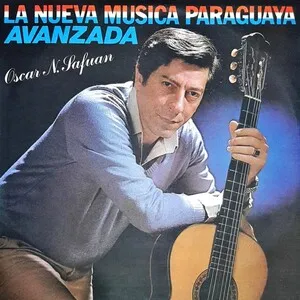
Avanzada is a Paraguayan popular music style that emerged as a modernizing fusion of established national forms and broader Latin American urban song traditions.
At its core, it combines elements of polka paraguaya and guarania with the harmonic language, rhythmic softness, and songcraft associated with bossa nova and MPB (Música Popular Brasileira).
The genre is generally characterized by refined songwriting, poetic and introspective lyrics, smoother vocal delivery, richer chord progressions than traditional rural styles, and a more cosmopolitan urban aesthetic while still retaining a recognizably Paraguayan melodic identity.
Avanzada can be understood as a bridge between traditional Paraguayan music and contemporary singer-songwriter pop, preserving local roots while embracing modern arrangements and broader South American influences.

History
Avanzada developed in Paraguay during the 1970s as musicians sought to renew national popular music without abandoning its local foundations. Instead of rejecting traditional Paraguayan idioms, artists reworked them through more modern arrangements, lyrical sophistication, and harmonic expansion.
The style drew especially from polka paraguaya and guarania, two central pillars of Paraguayan music, while also absorbing the intimate rhythmic feel and harmonic color of bossa nova as well as the broader urban songwriting culture of MPB in Brazil.
As Paraguayan popular music interacted more intensely with neighboring countries and with continental singer-songwriter movements, a generation of artists began writing songs that sounded more urbane, literary, and harmonically adventurous. This tendency became known as avanzada, literally suggesting something "advanced" or forward-looking.
Rather than being a rigidly standardized genre, avanzada functioned as a stylistic current. It often featured acoustic instrumentation, subtle percussion, lyrical emphasis, and arrangements that sat comfortably between folk tradition and artful popular song.
Avanzada became important as a vehicle for modern Paraguayan identity. It offered a way to sound contemporary while remaining rooted in the country's own melodic and rhythmic heritage.
For many listeners, the genre represented sophistication, introspection, and national renewal. It also fit within a wider Latin American pattern in which local traditions were reimagined through the lens of modern popular music, much as nueva canción, MPB, and other regional movements had done in their own contexts.
Although not always treated as a mass-market genre outside Paraguay, avanzada remains significant for understanding late-20th-century Paraguayan music. Its legacy survives in singer-songwriters and arrangers who continue blending Paraguayan traditional forms with jazz-pop harmony, Brazilian influence, and urban poetic songwriting.
Start from a Paraguayan foundation: combine the melodic contour and sentiment of guarania with the livelier pulse or phrase shapes associated with polka paraguaya.
Then soften and modernize the result using bossa nova-like groove and MPB-style harmonic richness. The goal is not to sound purely Brazilian, but to let Brazilian popular music refine the Paraguayan base.
Use a gentle, flowing rhythmic feel rather than a hard-driving dance pulse.
• For guarania-oriented songs, favor a slow to moderate tempo with expressive rubato in the vocal line. • For more polka-based pieces, keep the motion light and syncopated rather than rustic or heavily percussive. • Add subtle bossa-inspired syncopation in guitar comping or percussion. • Avoid overly rigid quantization; the groove should breathe.Harmony is one of the clearest markers of avanzada.
• Use richer chord vocabulary than in more traditional folk settings. • Include major 7ths, minor 7ths, 6ths, 9ths, suspensions, and passing diminished chords. • Employ smooth voice leading and elegant cadences. • Borrow from MPB and bossa nova harmonic practice, but keep the melody singable and grounded in Paraguayan lyricism.Write memorable, lyrical melodies with emotional warmth.
• Guarania influence often appears in long, expressive melodic lines. • Polka paraguaya influence may appear in clearer phrase symmetry and folk-derived turns. • Keep the tune intimate rather than theatrical. • Let the melody interact naturally with the language and poetic phrasing.Favor acoustic and semi-acoustic textures.
Typical choices include:
• acoustic guitar or nylon-string guitar • Paraguayan harp when appropriate • piano or electric piano • light bass • subtle percussion • strings or woodwinds for color in arranged settingsArrangements should feel tasteful and uncluttered. Use space, dynamics, and timbral contrast instead of heavy production.
Sing with clarity, warmth, and emotional restraint.
• Avoid excessive ornamentation unless it serves the song. • Lyrics should be poetic, reflective, and culturally grounded. • Themes may include love, memory, homeland, identity, landscape, and social feeling. • A literary tone works well, especially if balanced with direct emotional accessibility.The performance should communicate refinement and intimacy.
• Prioritize phrasing and text delivery. • Let accompaniment support the song rather than dominate it. • Keep the overall atmosphere elegant, heartfelt, and rooted in Paraguayan sensibility.A practical avanzada composition can be built like this:
-
•
Begin with a guarania-like or polka paraguaya-inspired melodic idea.
•Reharmonize it with bossa nova and MPB-flavored chords.
•Use a soft, syncopated guitar or piano groove.
•Write thoughtful, poetic lyrics.
•Arrange with acoustic instruments and subtle color.
•Perform with intimacy and emotional nuance rather than spectacle.