Your digging level
Description
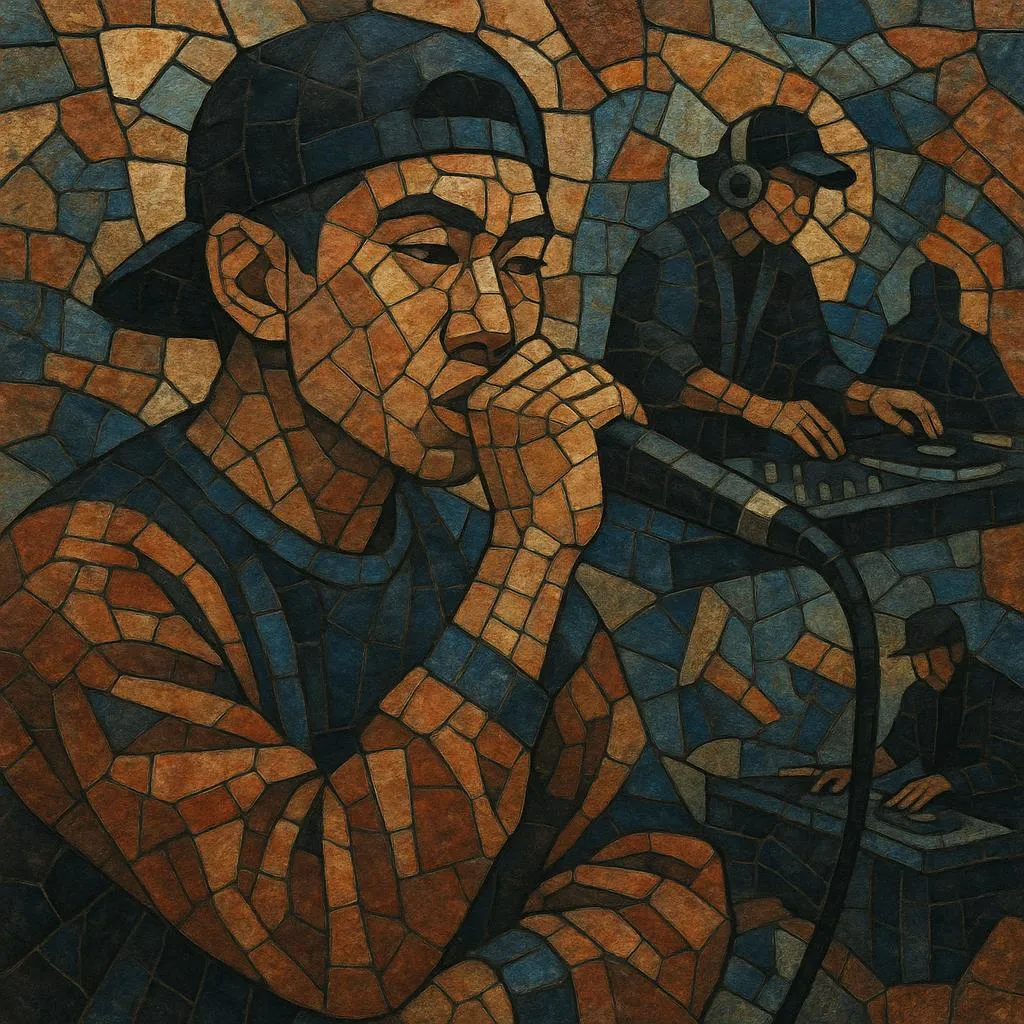
Asian American hip hop is the body of rap, DJ/turntablist work, production, and allied dance culture created by artists of Asian descent living in the United States.
Sonically it spans classic boom‑bap, West Coast G‑funk and hyphy slaps, Bay Area mob music, trap, and turntablist/battle-DJ traditions. Lyrically it often interweaves English with Asian languages (for example, Cantonese, Mandarin, Korean, Tagalog, Vietnamese, Khmer, Hmong), addresses immigration and diaspora identity, family expectations, racism, the "model minority" myth, and community pride, while also celebrating party culture, style, and hustle like mainstream U.S. hip hop.
Culturally, collegiate dance teams on the U.S. West Coast (especially in California) and large Asian American DJ/battle scenes helped normalize and popularize hip hop participation. From the mid‑1980s through the late 1990s, campus clubs and crews fed into a national presence that later exploded online via YouTube and televised competitions, making Asian American participation visible to domestic and international audiences.


History
Asian American participation in hip hop began to coalesce in the late 1980s as hip hop culture left the South Bronx and took root on the U.S. West Coast. Collegiate, culture‑centric dance clubs in California formed the backbone of an intercampus network of crews inspired by films like Breakin’ and Flashdance and by party dances of the era. In parallel, Filipino American DJs and turntablists became world‑class competitors, helping to cement a strong Asian American presence in the battle‑DJ circuit.
The 1990s saw the emergence of pioneering Asian American rap voices and crews that engaged boom‑bap aesthetics, West Coast funk, and independent DIY ethics, while addressing bicultural life in the U.S.
In the early 2000s, freestyle/battle victories and label signings brought new visibility—most famously via nationally televised battles and major‑label affiliations. At the same time, the rise of social networks and early YouTube offered a direct pipeline from bedroom studios to global audiences, allowing Asian American MCs, producers, and dance crews to bypass traditional gatekeeping.
Television dance competitions (e.g., America’s Best Dance Crew) and talent shows amplified the scene, normalizing Asian American excellence in hip hop performance for mass audiences and inspiring subsequent generations both in the U.S. and across Asia.
By the 2010s, Asian American hip hop became stylistically diverse: some artists leaned into Bay Area hyphy and mob music, others into trap’s 808 minimalism, and many fused turntablism, live instrumentation, or R&B hooks. Code‑switching, diaspora storytelling, and community‑specific narratives remained central.
Crucially, Asian American artists also acted as cultural bridges—collaborating with and influencing scenes in Korea, Japan, Taiwan, the Philippines, and Vietnam. The internet accelerated this feedback loop, with Asian American and Asian national artists learning from, competing with, and amplifying each other.
Asian American hip hop broadened who gets to be seen and heard in U.S. rap, helped dismantle narrow stereotypes, and demonstrated that hip hop is a flexible global vernacular. Campus dance networks, DJ battles, TV competitions, and YouTube all played pivotal roles in making Asian American participation a visible, worldwide phenomenon.