Your digging level
Description
American Romanticism in music refers to the 19th‑century U.S. adoption and adaptation of the European Romantic idiom—tonal but increasingly chromatic harmony, expansive melody, rich orchestration, and a taste for programmatic or poetic inspiration—filtered through American cultural sources.
Hallmarks include songful, folk‑tinged themes; narrative and landscape evocation; and an evolving nationalism that drew on Irish/Scottish melodies, Native American materials (often through the period’s now‑contested “Indianist” lens), African‑American spirituals, and hymns, all cast in Romantic forms such as the symphonic poem, concert overture, parlor song, and late‑Romantic symphony.
History
American Romanticism coalesced as U.S. composers and songwriters absorbed Romantic‑era techniques while seeking local color. New Orleans‑born pianist‑composer Louis Moreau Gottschalk fused European virtuoso style with Creole and Caribbean rhythms and tunes in piano works like Bamboula, La Savane, and Le Mancenillier, signaling a distinctly American Romantic voice. In parallel, Stephen Foster’s hugely popular parlor ballads cultivated a sentimental, melody‑first strain that dovetailed with Romantic taste in song.
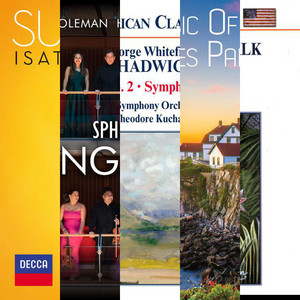
By the later 19th century, formally trained symphonists centered around Boston—John Knowles Paine, George Whitefield Chadwick, Amy Beach, Edward MacDowell, Horatio Parker, and Arthur Foote—built an American concert tradition in the late‑Romantic idiom (the so‑called Second New England School). Their music, often Germanic in craft yet increasingly national in topic and melody, established symphonies, tone poems, and choral‑orchestral works as pillars of U.S. art music.
Antonín Dvořák’s New York tenure (1892–95) urged American composers to mine spirituals and Native American melodies to forge a national style; his Symphony No. 9, “From the New World,” modeled this approach and sparked broad debate and emulation. Beach’s Gaelic Symphony (1896) drew on Irish tunes; MacDowell’s Indian Suite (1892) engaged Indigenous themes; and the Indianist movement (Farwell, Cadman, others) sought, albeit problematically, to synthesize Native sources with Romantic orchestration.
Though modernist currents rose after 1910, the lush, leitmotivic late‑Romantic orchestral language—by then naturalized in America—became foundational to Hollywood film scoring via émigré and U.S. composers (e.g., Korngold, Steiner) and remains a living conduit between American Romanticism and contemporary media music. The idiom’s symphonic breadth, chromatic color, and theme‑driven drama continue to influence U.S. concert music and cinema alike.