Your digging level

For this genre
0/8
🏆
Sign in, then listen to this genre to level up

Description

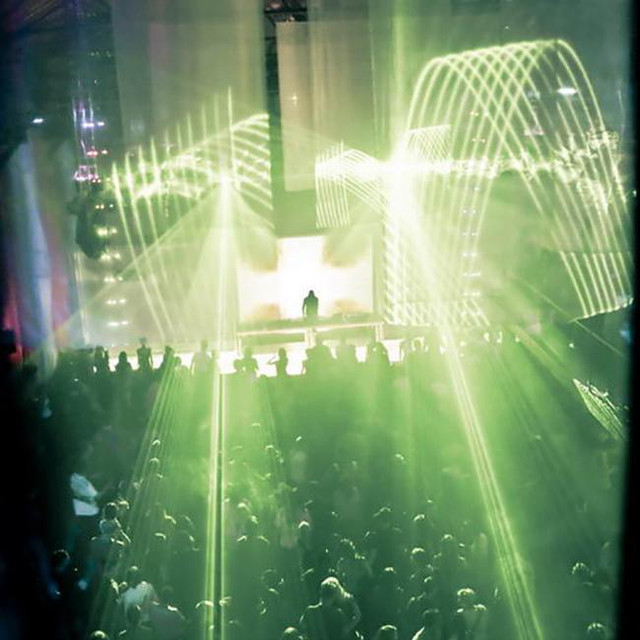
Ambient trance is a downtempo-leaning branch of trance that softens the club energy into a floating, cinematic space.

Emerging in the mid‑1990s, it often began as chillout or "beatless" remixes of trance tracks, taking the genre’s signature arpeggiated synthesizers, evolving pads, and euphoric harmonies and placing them in Ambient and Downtempo contexts. The result favors long reverb tails, slow filter sweeps, and gradual, wave‑like dynamics over big drops, making it ideal for Ibiza chillout terraces, after‑hours rooms, and attentive headphone listening.

Typical pieces use four‑on‑the‑floor or half‑time pulses at relaxed tempos, gentle off‑beat accents, and extended harmonic cycles that evoke vast, weightless atmospheres.


Sources: Spotify, Wikipedia, Discogs, RYM, MB, user feedback and other online sources

History

Origins (mid‑1990s)

Ambient trance crystallized in the mid‑1990s as the chilled, contemplative flipside of the European trance explosion. Producers and labels began issuing chillout/beatless remixes of trance records for after‑hours rooms and compilation culture, integrating Ambient’s spatial depth with trance’s arpeggios, luminous pads, and long‑form harmonic motion. UK superclubs, Ibiza’s terrace culture, and German electronic imprints helped define the sound’s slower tempos, smoothed percussion, and emphasis on atmosphere over peak‑time energy.

Consolidation (late 1990s–2000s)

As trance diversified, Ambient and Downtempo frameworks became a dedicated canvas for its melodic vocabulary. A network of labels and artists cultivated richly textured, widescreen productions: slow 4/4 pulses or gentle half‑time grooves, modular arpeggios, and deep sound design with evolving pads and field recordings. The music migrated from B‑sides and chillout remixes to purpose‑built albums that prioritized narrative flow, headphone detail, and continuous mixes.

Expansion and modern era (2010s–present)

Streaming and playlist culture broadened the audience for spacious, melody‑forward electronica. Contemporary producers mix techniques from progressive trance, ambient techno, psy‑adjacent downtempo, and cinematic scoring: granular textures, modal harmony, and restrained side‑chain motion. The idiom remains a bridge between dancefloor euphoria and reflective ambience—music that retains trance’s harmonic lift while embracing Ambient’s depth and patience.

How to make a track in this genre

Core aesthetic
•   Aim for a weightless, cinematic feel that preserves trance’s melodic lift but reduces percussive aggression. •   Think in long arcs: gradual introductions, evolving textures, and seamless transitions rather than drop‑centric structures.
Tempo, rhythm, and groove
•   Tempo: 90–110 BPM (half‑time or gentle 4/4), or a soft 110–125 BPM with reduced percussive density. •   Use a subdued four‑on‑the‑floor kick or a half‑time pulse; minimal claps/snares; soft off‑beat hats and shakers. •   Program rhythmic interest via gated pads, tremolo, and subtly syncopated arpeggios instead of heavy drum fills.
Harmony and melody
•   Favor modal or diatonic progressions with slow harmonic rhythm (e.g., minor with modal color: Dorian, Mixolydian, Aeolian). •   Build trance‑style arpeggios (16th‑note patterns) with long releases, stereo width, and gentle filter motion (low‑pass sweeps, resonance nudges). •   Use evolving pads and string‑like layers with extended chords (add9, add11, suspended voicings) to sustain a floating atmosphere.
Sound design and instrumentation
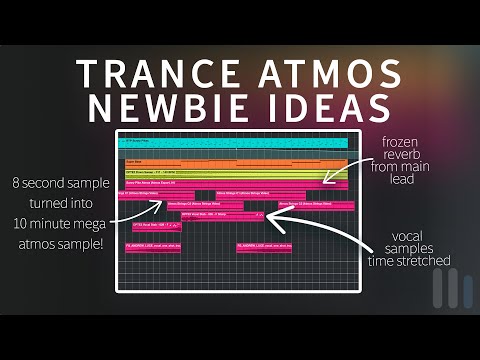
•   Core tools: lush polysynths, wavetable or virtual‑analog leads, airy pads, soft bass drones, and field recordings. •   Employ long reverbs (plate/hall), tempo‑synced delays (dotted‑eighth, triplet), subtle chorus/ensemble, and tasteful tape or tube saturation. •   Add ear candy: granular textures, subtle FM pings, filtered noise swells, and reverse cymbals/rises.
Arrangement and flow
•   Structure as an evolving journey: intro (texture/pad), gradual pulse entry, mid‑section with thematic development, extended breakdowns, and dissolving outro. •   Crossfade motifs; automate filters and effects for organic motion; layer background motifs that weave in and out.
Mixing and spatiality
•   Prioritize depth: pre‑delay and long tails to place elements at different distances; sculpt with EQ to avoid mud (HPF on pads, gentle low‑mid control). •   Keep low end soft and rounded; side‑chain bass/pads subtly to the kick for breathing space (very gentle amounts). •   Manage transients: soften drums to maintain calm; let arps/pads carry the movement.
Optional vocal and environmental elements
•   Integrate ethereal vocal phrases or choir pads (wordless or heavily processed). •   Use environmental ambiences (ocean, wind, night insects) as low‑level beds to enhance immersion.

Main artists

Top tracks

Locked
Share your favorite track to unlock other users’ top tracks

Upcoming concerts

in this genre
Influenced by
Has influenced

Download our mobile app

Get the Melodigging app and start digging for new genres on the go
© 2026 Melodigging
Melodding was created as a tribute to Every Noise at Once, which inspired us to help curious minds keep digging into music's ever-evolving genres.
Buy me a coffee for Melodigging