Your digging level
Description
Album-oriented rock (AOR) is a U.S. FM radio programming format that emerged in the late 1960s. Instead of focusing only on singles, it prioritizes deep cuts and longer tracks from full rock albums, showcasing the breadth of an artist’s recorded work.
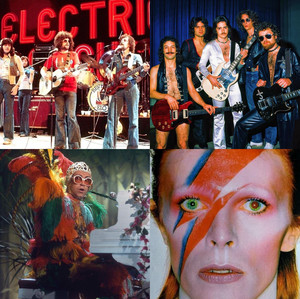
Built on the shift from AM singles culture to FM stereo listening, AOR favored album-friendly styles such as hard rock, progressive rock, blues rock, folk rock, and psychedelic rock. Through the 1970s and 1980s it became a dominant way rock was presented to listeners and, over time, its playlists and approach evolved into what is now commonly associated with classic rock radio.
Not to be confused with “adult-oriented rock” (also abbreviated AOR) or with arena rock as a stylistic label, album-oriented rock refers primarily to a radio format and programming philosophy.
History
With the rise of FM stereo broadcasting in the United States, freeform and progressive FM DJs began playing entire album sides and longer tracks that weren’t viable on AM Top 40. This album-centric listening culture laid the groundwork for a more structured format that would be called album-oriented rock (AOR), emphasizing deep cuts and cohesive album programming rather than singles alone.
During the 1970s, consultants and programmers systematized the approach: stations curated consistent rotations of album tracks by key rock acts—hard rock, progressive rock, blues rock, and folk-inflected rock were core pillars. Major-market stations such as WNEW-FM (New York), WMMS (Cleveland), KLOS (Los Angeles), and WBCN (Boston) became tastemaking AOR outlets, helping break artists and album tracks that rarely appeared on AM playlists.
As the format grew commercially successful, some stations tightened playlists, balancing deep cuts with proven staples. The sound tilted toward broadly appealing rock with strong hooks and high production values, but the defining trait remained album-centric programming, not just singles.
By the mid-to-late 1980s, a significant portion of AOR stations transitioned toward “classic rock,” codifying the core canon of 1960s–1980s album tracks. The album-oriented philosophy—valuing deep catalog alongside hits—endured, shaping how generations encountered rock heritage on radio.
Album-oriented rock professionalized FM rock programming and normalized the idea that full albums and deep cuts deserved radio space. It influenced later rock formats, cemented the notion of an enduring rock canon, and continues to inform how classic rock stations program their libraries.