Your digging level
Description
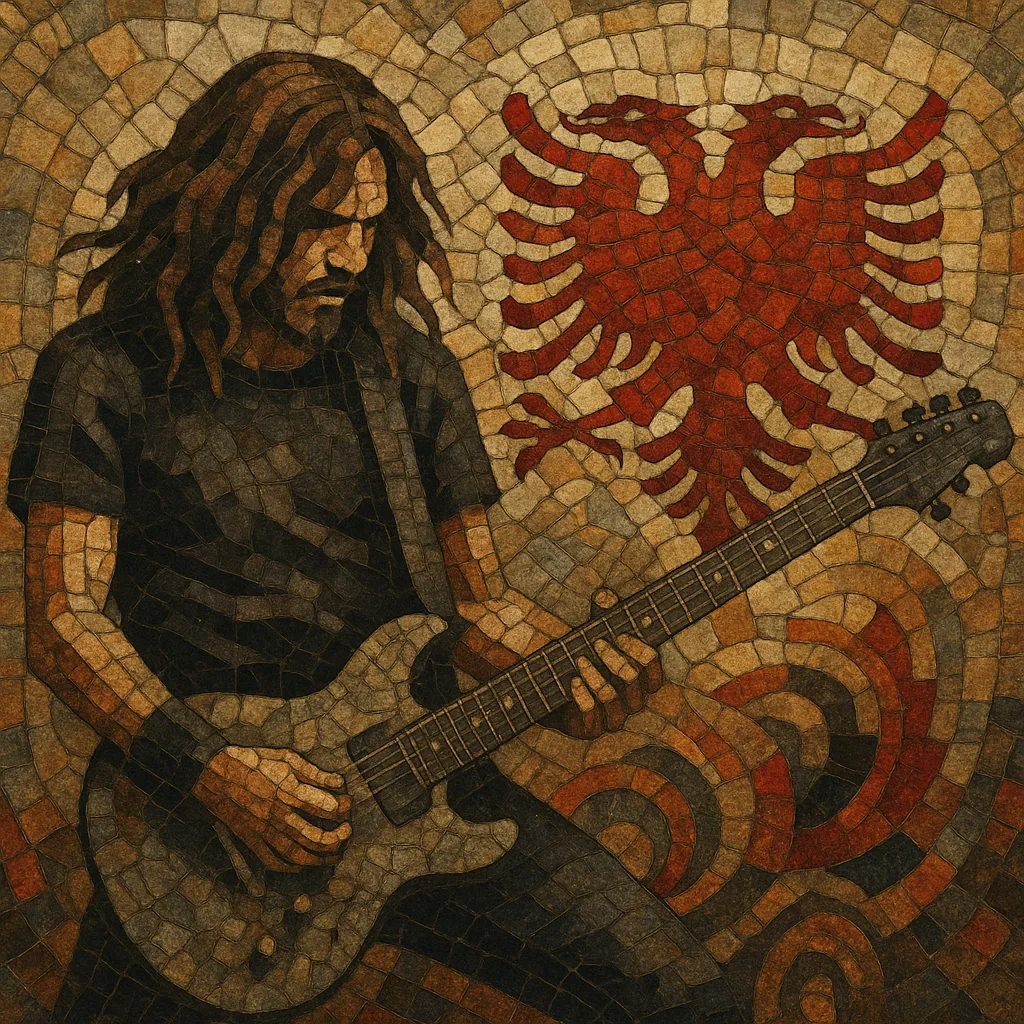
Albanian rock is the umbrella for rock music made by Albanian-speaking artists in Albania and the wider Albanian cultural space (notably Kosovo and North Macedonia), blending Western rock idioms with local folk colors and social themes.
Sonically it spans classic and hard rock, alternative, punk, and metal, but it frequently incorporates Balkan rhythmic footprints (such as 7/8 or 9/8), modal melodies drawn from Albanian folk, and lyrics in Gheg or Tosk dialects. The result is a style that can be both gritty and melodic, often carrying a sense of identity, resistance, and post‑transition reflection.
Because rock was tightly restricted in communist-era Albania, the earliest recognized Albanian-language rock scenes crystallized in the 1980s in Prishtina and Tetovo within then‑Yugoslavia. After 1991, a vibrant scene grew in Tirana and across the diaspora, expanding the genre’s range and production values.


History
Under Enver Hoxha’s communist regime, Western popular music was discouraged or banned in Albania, keeping formal rock activity underground. In parallel, however, Albanian-speaking musicians in Kosovo and North Macedonia—then within Yugoslavia’s more permissive cultural sphere—began experimenting with rock in the late 1970s and 1980s. Bands like Gjurmët in Prishtina pioneered Albanian-language new wave/rock, and by the late 1980s hard rock outfits such as Elita 5 (Tetovo) were active.
The fall of Albania’s communist system in 1991 opened the doors to rock in Tirana and other cities. Early heavy/rock acts (e.g., Thunder Way) gave way to a broader wave that included alternative and metal bands, while Kosovo continued to cultivate a strong scene with groups like Troja and, later, Jericho and Asgjë Sikur Dielli. Rock became a platform for social commentary, post‑war recovery themes (especially in Kosovo), and expressions of cultural identity.
Improved access to instruments, studios, and media produced cleaner recordings and stylistic variety: alternative, indie, and post‑grunge strands emerged alongside classic and hard rock. Some acts fused traditional elements—odd meters, folk instruments, and iso‑polyphonic textures—into modern arrangements. Live circuits, festivals, and regional cross-border gigs strengthened ties between Tirana, Prishtina, Tetovo, and the diaspora.
Contemporary Albanian rock coexists with pop and hip hop but retains a loyal audience and active scenes in both Albania and Kosovo. The style continues to leverage local folk modalities and narratives while adopting modern rock production. Its legacy is visible in how pop and singer‑songwriter acts in the region now embrace rock’s instrumentation, stagecraft, and lyrical candor.
Start with a classic rock lineup: electric guitar (rhythm/lead), electric bass, drum kit, and a lead vocalist. Keys or a second guitar are common. For a distinctly Albanian flavor, layer in folk timbres—e.g., çifteli or fyell—and use backing vocals to mimic iso‑polyphonic drones.
Write primarily in 4/4 for accessibility, but incorporate Balkan meters like 7/8 or 9/8 for sections, riffs, or turnarounds. Accentuate off‑beats or additive groupings (e.g., 2+2+3) to create regional momentum without losing rock drive.
Favor minor keys and modal colors associated with regional folk (e.g., Dorian or Phrygian-inflected lines). Guitar leads can alternate between pentatonic rock vocabulary and folkish scalar runs. Pedal tones or drone-like backing vocals subtly reference iso‑polyphony without overpowering the arrangement.
Use crunchy overdrive for rhythm guitars and a more saturated lead tone for solos. Contrast heavy, riff-driven verses with open, melodic choruses. When including folk instruments, carve space with arrangement and EQ so they cut through distorted textures.
Write in Albanian (Gheg or Tosk), balancing poetic imagery with direct social reflection. Common topics include identity, migration, love, resilience, and post‑transition realities. Vocals can be earnest and powerful; occasional call‑and‑response or layered harmonies nod to communal singing traditions.
Blend live room energy with modern clarity: tight drum editing, solid low-end for bass, and multi‑tracked guitars panned wide. If integrating folk instruments, record them relatively dry and place them forward in transitional passages to highlight the hybrid character.