Your digging level
Description
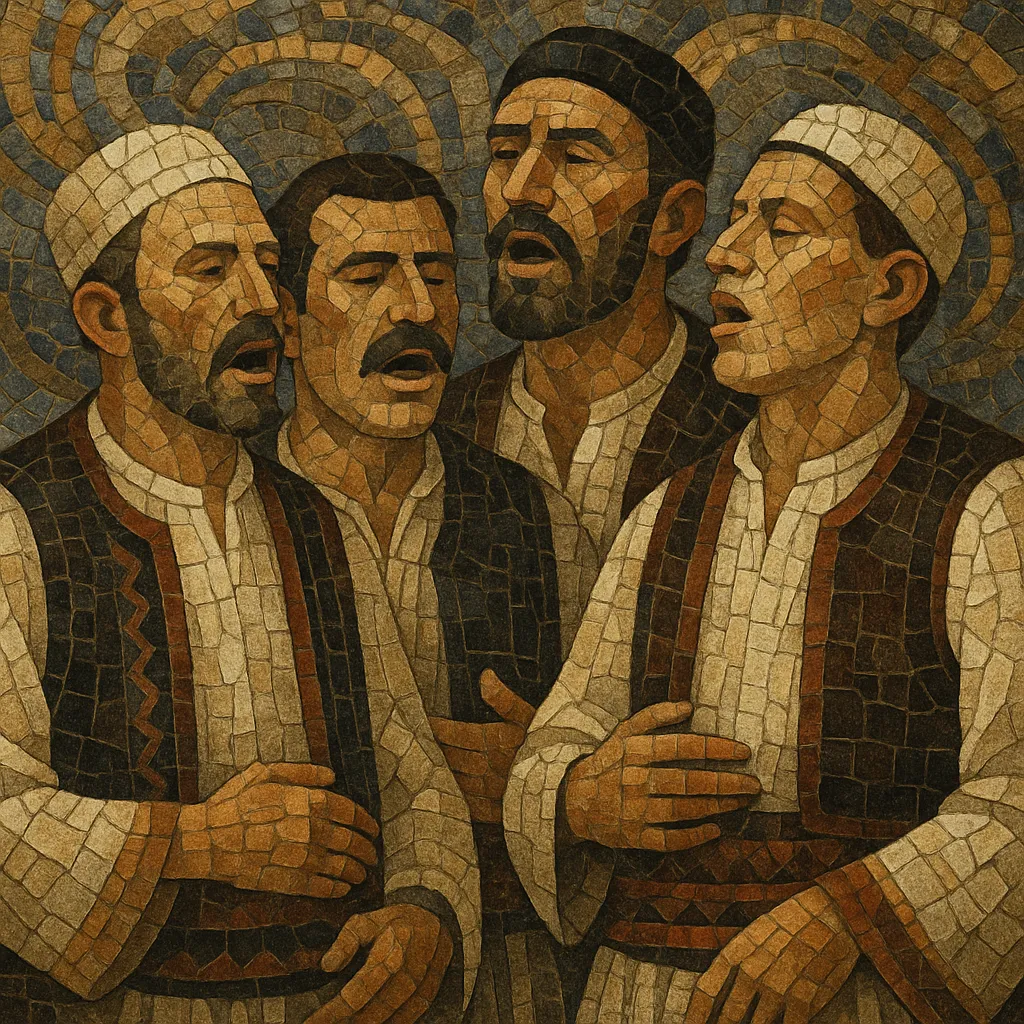
Albanian iso polyphony is a traditional a cappella vocal art from southern Albania (mainly the Tosk and Lab regions) defined by a sustained drone called the “iso” over which one or more lead voices weave interlocking melodies.
Performances are communal and role-based: a principal lead (marrës) introduces the melody, a second voice (kthyes) “turns” or answers it, a third voice (hedhës) may add soaring counters, and a chorus maintains the continuous iso. Modal, often pentachordal or pentatonic pitch organization, microtonal inflections, and open-throated timbres produce a resonant, buzzing sonority distinct to the area.
Repertoire includes laments, epic-historical songs, wedding and work songs, and pastoral pieces. The Tosk style is generally smoother and more diatonic, while the Lab style is rougher, more guttural, and often denser. Recognized by UNESCO as Intangible Cultural Heritage, iso polyphony remains a living practice of communal memory, identity, and ceremony.
History
Scholars trace Albanian iso polyphony to medieval times, with deeper roots likely in older Balkan communal singing practices. The hallmark “iso” (drone) shares conceptual kinship with the ison of Byzantine chant, yet Albanian iso polyphony evolved as a secular, village-based practice used for rituals, work, and social storytelling across the Tosk and Lab regions.
Travelers, ethnographers, and later ethnomusicologists began documenting the practice in the late 19th and throughout the 20th century. Field recordings, radio broadcasts, and the emergence of regional festivals helped codify stylistic distinctions between Tosk and Lab variants and preserved numerous local repertoires (wedding songs, laments, pastoral and epic songs).
During the socialist period, folklore ensembles and state-sponsored festivals (notably the National Folklore Festival in Gjirokastër, established in 1968) provided structured platforms for iso polyphony. This encouraged transmission, arrangement for stage, and broader national recognition, while still maintaining community-based performance in villages.
Albanian iso polyphony was proclaimed a Masterpiece of the Oral and Intangible Heritage of Humanity (2005) and inscribed on UNESCO’s Representative List (2008). This visibility spurred preservation initiatives, archival projects, and international touring by village groups and curated ensembles, introducing the style to world music audiences.
Today, iso polyphony thrives in southern Albania and among diaspora communities. Community groups continue to learn orally, often linked to family lineages and village identities. Some ensembles experiment with concert formats and collaborations, but the core remains communal, a cappella, role-based singing that embodies local history and collective memory.