

Your digging level
Description
Ainu folk music is the traditional music of the Ainu people of northern Japan (especially Hokkaidō) and, historically, adjacent regions such as southern Sakhalin. It is an oral tradition: for centuries, laws, myths, and community memory were transmitted through song, chant, and dance rather than through writing.
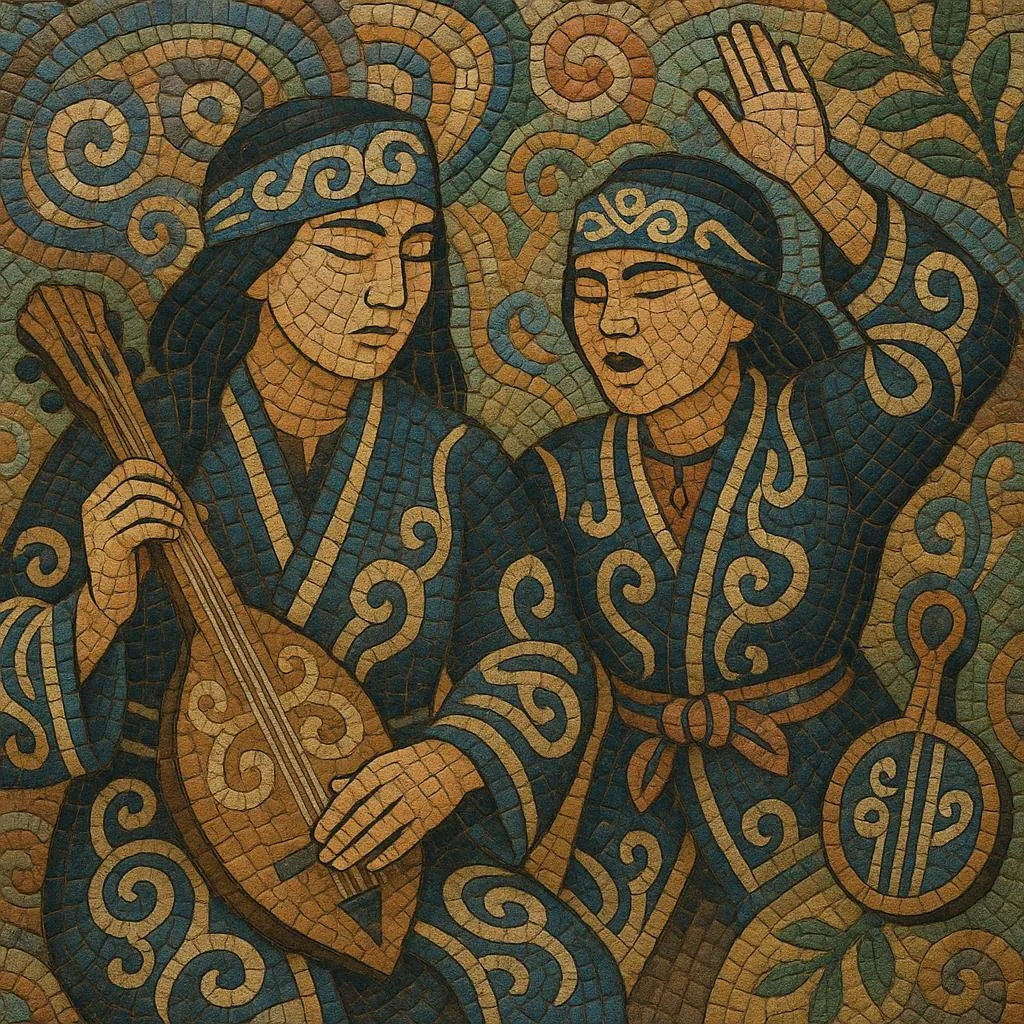
Characteristic forms include epic solo recitations (yukar), short social “sitting songs” (upopo) often sung in a circle with hand-clapping, and communal dance-songs (rimse). Typical timbres come from the droning, open-string resonance of the tonkori (a five‑string Ainu zither) and the shimmering rhythms of the mukkuri (Ainu mouth harp). Melodies favor narrow-range, pentatonic contours, abundant vocables, and repetitive ostinati; rhythm ranges from free, speech-like chant in epics to steady, stomping dance meters.
Texts and performance contexts are tightly interwoven with Ainu cosmology (kamuy, or spirits), hunting and fishing lifeways, and rites such as the iyomante (bear-sending ceremony). In the late 20th–21st century, culture-bearers and contemporary artists have revitalized these idioms, bringing Ainu sounds into festival stages and global fusion projects.
History
Ainu folk music predates written records in the Japanese archipelago and was maintained through oral transmission. Without an indigenous writing system, epic narratives (yukar) and social knowledge were preserved by skilled reciters and community singers. Core musical activities included circle singing (upopo), dance-songs (rimse), lullabies, and ceremonial music linked to animist cosmology and seasonal subsistence.
From the Kamakura to Edo periods, Ainu communities engaged in trade and conflict with Wajin (ethnic Japanese), leading to sporadic outside descriptions of Ainu song and dance. Systematic documentation increased in the late 19th–early 20th centuries through ethnography and phonographic recordings. Scholars and Ainu intellectuals (e.g., in the Nibutani region) began preserving texts of yukar and field recordings of singing, tonkori, and mukkuri.
Modernization and assimilationist policies in the Meiji through postwar eras pressured Ainu language and practices, resulting in declining everyday use of traditional song and instruments. Nonetheless, practices persisted within families and local preservation circles, particularly women’s upopo groups and custodians of epic chant.
From the 1980s onward, a cultural resurgence fostered renewed interest in the tonkori and mukkuri, community ensembles, and youth initiatives. Recordings and tours by tradition-bearers and contemporary artists introduced Ainu sounds to world-music audiences. Projects blending Ainu idioms with dub, rock, or electronic textures further amplified visibility, while festivals and the establishment of museums and cultural centers in Hokkaidō supported intergenerational transmission.
Contemporary Ainu folk music spans intimate, community-based practice and international stages. Pedagogical programs, archival releases, and collaborations sustain both conservative revival (faithful to local styles) and innovative fusions that keep Ainu musical identity audible in a global context.
Scales: Favor anhemitonic pentatonic or narrow-range modal patterns; melodic motion is stepwise with repeated motifs.
•Rhythm:
•Free/recitative (yukar) aligning phrase rhythm to speech prosody.
•Steady meters (often duple) for rimse/upopo; use hocket-like group textures via staggered entries.

