Genres
Artists
Albums
Make Music
Sign in
Sign in
Artists
Japanese Classical
Artists
Japanese Classical
Toshiko Yonekawa
1973
·
1 album
Listen
2
/5
Genres
Traditional Music
Traditional music is an umbrella term used in the mid–20th century by folklorists and ethnomusicologists to denote community-rooted, orally transmitted repertoires tied to social ritual, work, celebration, and storytelling. Unlike commercial pop or art-music traditions, traditional music is typically learned by ear, varies regionally, and evolves slowly through communal participation. It often features modal melodies, cyclic rhythms, heterophony or unison singing, and indigenous instruments whose timbres are integral to local identity. Lyrics tend to preserve language, history, and collective memory. While the musical practices themselves can be ancient, the phrase “traditional music” emerged to replace earlier, narrower or colonial framings like “folk” or “ethnic” music, foregrounding continuity, locality, and living practice rather than exoticism.
Discover
Listen
Sōkyoku
Sōkyoku (箏曲) is the classical Japanese repertoire for the koto zither that gained prominence in the Edo period. Centered on the 13‑string koto, it features refined timbres, flowing melodies, and an emphasis on space (ma) and expressive nuance. Although performed primarily on the Japanese koto, the idiom is closely related to the broader East Asian zither tradition; in some modern or cross‑cultural contexts, the Chinese guzheng may be used to render sōkyoku repertoire. Sōkyoku is often heard solo or within the sankyoku ensemble alongside shamisen and/or shakuhachi, creating an intimate chamber texture. Core forms include danmono (theme‑and‑variations instrumentals) and kumiuta (song cycles), and the music frequently employs traditional koto tunings such as hira‑jōshi and kumoi‑jōshi. The performance aesthetic values subtle ornamentation, flexible rhythm, and lyrical expression.
Discover
Listen
Japanese Classical
Japanese classical refers to the courtly, religious, theatrical, and chamber traditions that crystallized in Japan from the Nara and Heian periods onward. It encompasses Gagaku (imperial court music), Shinto ritual music (kagura), Buddhist chant (shōmyō), Noh and Kabuki repertories (e.g., nagauta, jōruri), and chamber music for koto, shamisen, and shakuhachi (sankyoku). The style emphasizes modal color (ryō and ritsu modes, along with later in/yo pentatonic variants), the dramatic architecture of jo–ha–kyū (slow introduction, development, swift conclusion), and the aesthetic of ma (meaningful silence/space). Textures are often heterophonic or layered, timbres are cultivated for breathy, reedy, and bell-like colors (e.g., shō, hichiriki, ryūteki), and rhythm can range from free-flowing chant to stately ceremonial cycles. The result is a contemplative yet ceremonially powerful sound world distinct from Western common-practice tonality.
Discover
Listen
Albums
1973
2
/5
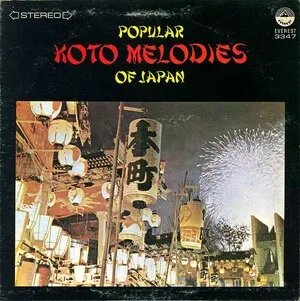
Popular Koto Melodies of Japan
Toshiko Yonekawa
Sōkyoku
Similar artists
2
/5
Aiko Hasegawa
Japanese Classical
Traditional Music
Danmono
2
/5
Yamato Ensemble
Sōkyoku
Japanese Classical
Jiuta
2
/5
Satomi Saeki And Alcvin Takegawa Ramos
Japanese Classical
Traditional Music
Sōkyoku
2
/5
Michio Miyagi
Japanese Classical
Traditional Music
Danmono
2
/5
Satomi Saeki
Japanese Classical
Traditional Music
Sōkyoku
2
/5
Nanae Yoshimura
Sōkyoku
Classical
Folk
2
/5
Kifu Mitsuhashi
Ryukyuan Music
Japanese Classical
Traditional Music
1
/5
Shinichi Yuize
Sōkyoku
Japanese Classical
Traditional Music
1
/5
Master Musicians Of The Ikuta School
Japanese Classical
Traditional Music
East Asian Classical Music
1
/5
Koto Ensemble Of The Ikuta School, Japan
Japanese Classical
Traditional Music
Asian Music
Download our mobile app
Get the Melodigging app and start digging for new genres on the go
Download on the App Store
Get it on Google Play
© 2026 Melodigging
Give feedback
Legal
Melodding was created as a tribute to
Every Noise at Once
, which inspired us to help curious minds keep digging into music's ever-evolving genres.