Genres
Artists
Albums
Make Music
Sign in
Sign in
Artists
Basshall
Artists
Basshall
TMX Official
Listen
2
/5
Genres
Basshall
Basshall is a club-focused fusion of modern dancehall riddims with the sound design and drops of bass-heavy EDM. It keeps the dembow-derived, off‑beat swing of Jamaican dancehall while layering sub‑driven 808s, aggressive synths, and festival‑ready builds and drops borrowed from trap, electro house, and UK bass. Typical tempos sit around 95–110 BPM (or 130–140 BPM with a halftime feel). Vocals often draw on Jamaican patois toasting or catchy pop hooks, and arrangements alternate between groove-led verses and explosive, sound‑system drops. Emerging from European (especially Dutch) club culture and the global‑bass scene, Basshall spreads dancehall’s energy into big‑room contexts without losing its Caribbean rhythmic DNA.
Discover
Listen
Kompa Gouyad
Kompa gouyad is a sensual, slow‑to‑mid‑tempo strain of Haitian konpa (compas) that centers the dance known as “gouyad” (Creole for a rolling, grinding waist movement). It stretches konpa’s four‑on‑the‑floor pulse into languid grooves, foregrounding warm bass lines, velvety keyboards, palm‑muted guitar comping, and romantic, melismatic vocals. Compared to faster party konpa, gouyad favors space and sustain: extended vamps, breakdowns designed for the floor, and lyrical themes of love, longing, and seduction. Typical tempos sit roughly between 80–100 BPM (often 85–95), with a steady kick on each beat, a syncopated bass that locks to the drum’s subdivisions, bright guitar meringue figures, and congas/cowbell ornaments that gently propel the groove without crowding it. While rooted in classic konpa and Haitian méringue, kompa gouyad also absorbs the smoother textures of zouk/zouk love and contemporary R&B balladry, making it a modern, diaspora‑shaped sound equally at home in Port‑au‑Prince, Miami, Montréal, and Paris.
Discover
Listen
Azonto
Azonto is a contemporary Ghanaian dance-music style built for parties, street performances, and viral choreography. Emerging in the early 2010s, it matches swaggering, humorous dance moves with catchy call-and-response hooks and MC-led verses. Musically, Azonto sits on a bright, syncopated 4/4 groove—often between 105–130 BPM—with crisp handclaps, off‑beat hi‑hats, bouncing kick patterns, and short melodic riffs from synths, bell/mallet tones, or plucks. Harmony is usually minimal (two to four repeating chords), keeping the spotlight on rhythm, energy, and vocal interplay. Lyrics blend Twi, Ga, and Ghanaian Pidgin with English, and celebrate fashion, flirtation, everyday jokes, and local slang. The genre rose with dance challenges and YouTube-era virality, helping push West African pop into UK and global club culture. Signature tracks include Sarkodie & E.L.’s “U Go Kill Me,” Fuse ODG’s “Azonto” and “Antenna,” Castro’s “Azonto Fiesta,” and Gasmilla’s “Aboodatoi.”
Discover
Listen
Urban Kiz
Urban Kiz is a contemporary, club-oriented offshoot of kizomba that took shape in Europe—especially in Paris—in the early-to-mid 2010s. It adapts the sensual, close-connection feel of kizomba to straighter, trap- and R&B-influenced beats with pronounced bass lines, crisp hi‑hats, and engineered breaks that suit the stop‑and‑go aesthetics of Urban Kiz social dancing. Musically, it favors 4/4 grooves around 88–102 BPM, less of the lilting/zouk swing found in classic kizomba, and more linear phrasing with dramatic drops, filters, and space for micro-pauses. Vocals (often in Portuguese, French, Cape Verdean Creole, or English) may be original toplines, sampled phrases, or R&B‑style hooks layered over sleek electronic production. Producers frequently label releases or remixes specifically for "Urban Kiz" floors, reinforcing the genre’s identity within the partner‑dance scene.
Discover
Listen
Shatta
Shatta is a raw, high-energy French Caribbean take on dancehall that crystallized in the 2010s within the Guadeloupe–Martinique scene. It is powered by hard-hitting dembow-derived grooves, booming 808 sub-bass, clipped snares, and sirens/airhorns designed for clubs and car sound systems. Vocals—often in Antillean Creole and French—favor short, repetitive hooks, call-and-response chants, and provocative, party-focused or streetwise themes. Stylistically, Shatta blends Jamaican dancehall attitude with local French Antillean aesthetics (and some bouyon drive), plus trap-era sound design. The result is an aggressive, minimal, dancefloor-first sound that’s immediately “bashment” in feel yet distinct to the FWI (French West Indies).
Discover
Listen
Moombahton
Moombahton is a dance music genre that fuses the high-energy, synth-driven sound design and build‑drop structures of Dutch/electro house with the slower, syncopated dembow rhythm of reggaeton and dancehall. Characteristically sitting around 108–115 BPM (often ~110), it emphasizes heavy, swung percussion, off‑beat stabs, and midrange lead synths, while retaining Latin/Caribbean groove and call‑and‑response vocal hooks. The result is festival‑ready EDM power at a slower, body‑rolling tempo that feels both tropical and club‑focused.
Discover
Listen
Ragga
Ragga (short for raggamuffin) is a digital-era branch of Jamaican dancehall that foregrounds electronic rhythms, heavy sub‑bass, and rapid‑fire toasting in Jamaican Patois. It typically uses drum machines, sampled or synthesized basslines, and minimal harmonic movement, creating spacious, hard‑hitting “riddims” over which multiple deejays deliver contrasting versions. The style crystallized in the mid‑1980s after the pivotal “Sleng Teng” riddim popularized fully digital production, ushering in a new sound that was simultaneously streetwise, club‑ready, and globally exportable. Lyrically, ragga ranges from party‑starting “slackness” and braggadocio to social commentary, and its vocal delivery combines singing, chanting, and MC‑style flows.
Discover
Listen
Dancehall
Dancehall is a Jamaican popular music style built around bass‑heavy, groove‑centric riddims and the vocal art of chatting or singjaying in Jamaican Patois. It emphasizes direct, energetic delivery, call‑and‑response hooks, and a party‑forward attitude, while also leaving space for sharp social commentary and witty wordplay. The genre is fundamentally riddim‑based: producers release instrumental tracks (riddims) that many different vocalists "voice" with their own songs. This culture encourages competitive creativity, rapid evolution of styles, and a constant stream of new versions. Tempos typically sit in the midtempo range, with syncopated kicks and snares and prominent sub‑bass. Since the mid‑1980s, digital drum machines and synths have defined much of dancehall’s sound, though live instrumentation and hybrid production are common too.
Discover
Listen
Show all 8 genres
Similar artists
4
/5
Blaiz Fayah
Shatta
Afrobeats
Basshall
3
/5
Mr. Vegas
Afrobeats
Basshall
Dancehall
3
/5
Jahyanai
Dancehall Guyanaise
Afrobeats
Basshall
3
/5
Leftside
Basshall
Dancehall
Moombahton
2
/5
Caine
Basshall
Dancehall
Moombahton
2
/5
DJ Luc
Basshall
Dancehall
Moombahton
5
/5
Burna Boy
Afrobeats
Dancehall
Afrobeat
4
/5
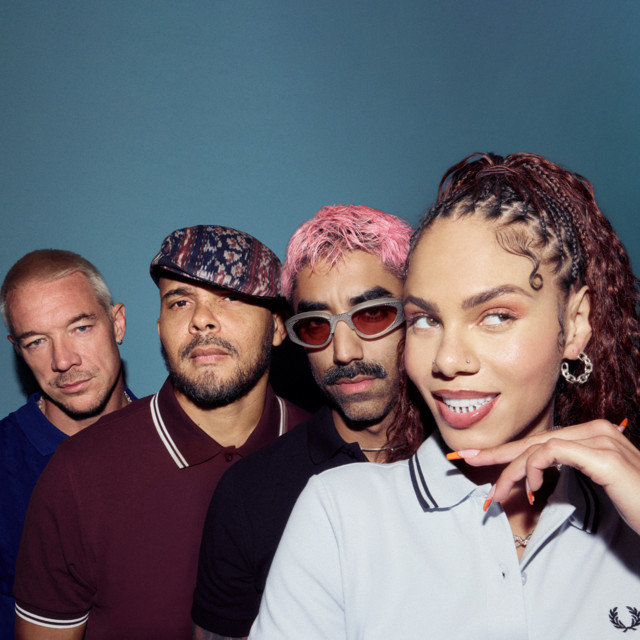
Major Lazer
Electronic
Dancehall
Edm
4
/5
Kybba
Afrobeats
Basshall
Dancehall
4
/5
Vybz Kartel
Afrobeats
Basshall
Dancehall
Download our mobile app
Get the Melodigging app and start digging for new genres on the go
Download on the App Store
Get it on Google Play
© 2026 Melodigging
Give feedback
Legal
Melodding was created as a tribute to
Every Noise at Once
, which inspired us to help curious minds keep digging into music's ever-evolving genres.