Your digging level

For this genre
0/8
🏆
Sign in, then listen to this genre to level up

Description

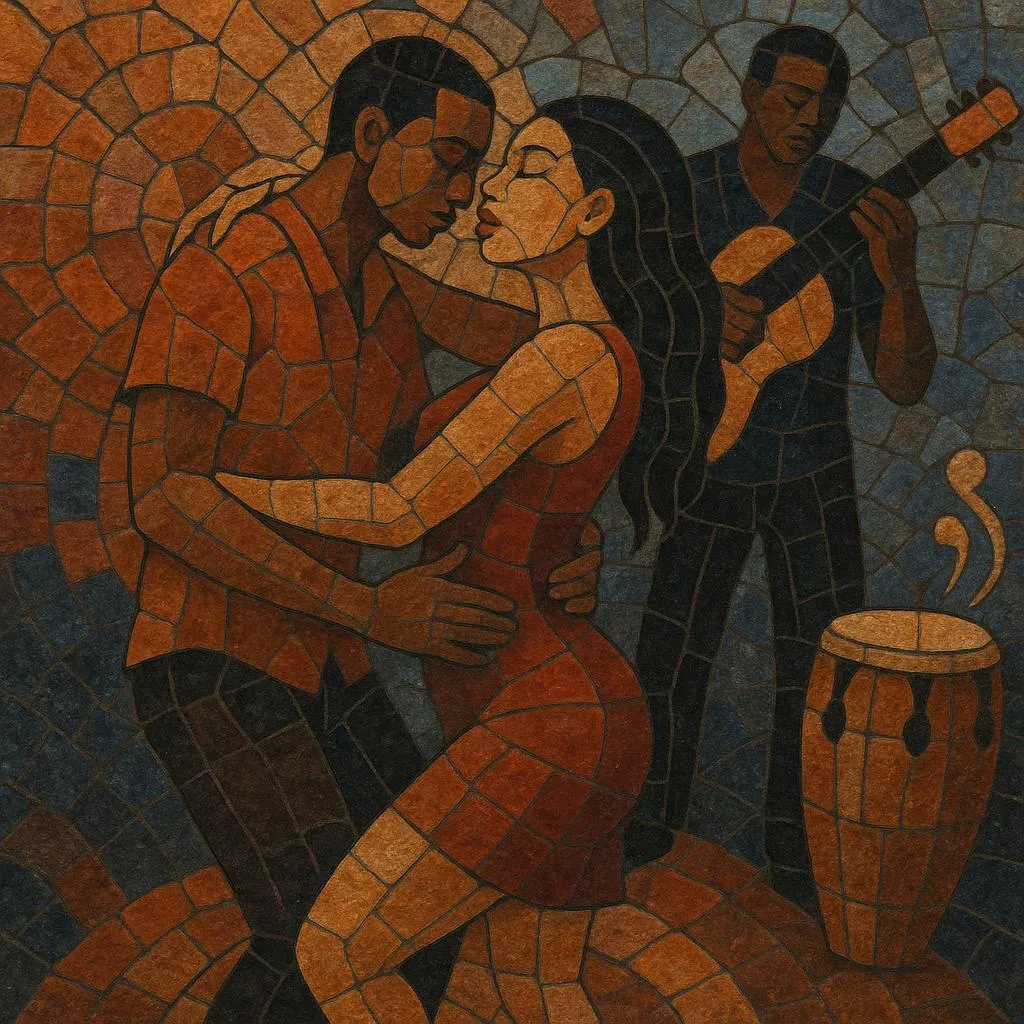
Kompa gouyad is a sensual, slow‑to‑mid‑tempo strain of Haitian konpa (compas) that centers the dance known as “gouyad” (Creole for a rolling, grinding waist movement). It stretches konpa’s four‑on‑the‑floor pulse into languid grooves, foregrounding warm bass lines, velvety keyboards, palm‑muted guitar comping, and romantic, melismatic vocals.

Compared to faster party konpa, gouyad favors space and sustain: extended vamps, breakdowns designed for the floor, and lyrical themes of love, longing, and seduction. Typical tempos sit roughly between 80–100 BPM (often 85–95), with a steady kick on each beat, a syncopated bass that locks to the drum’s subdivisions, bright guitar meringue figures, and congas/cowbell ornaments that gently propel the groove without crowding it.

While rooted in classic konpa and Haitian méringue, kompa gouyad also absorbs the smoother textures of zouk/zouk love and contemporary R&B balladry, making it a modern, diaspora‑shaped sound equally at home in Port‑au‑Prince, Miami, Montréal, and Paris.


Sources: Spotify, Wikipedia, Discogs, RYM, MB, user feedback and other online sources

History

Roots in Konpa and Méringue

Kompa gouyad grows directly from konpa (compas)—the modern, amplified evolution of Haitian méringue developed in the mid‑20th century. From its beginnings, konpa has included slower love songs and ballad grooves that dancers used for intimate, circular hip movements—the seed of what became branded as “gouyad.”

The Gouyad Name and Aesthetic Consolidate (late 2000s–2010s)

Although the dance practice is older, the term “gouyad” rose to prominence in the late 2000s and especially the 2010s, when bands and DJs began marketing slow konpa selections and remixes explicitly for extended gouyad segments on the dance floor. Production leaned into lush keyboards, sub‑friendly bass, and polished vocal duets; arrangements featured long mid‑sections and calls encouraging dancers to settle into the sway.

Diaspora Amplification

Haitian diaspora hubs—Miami/Fort Lauderdale, New York, Montréal, and Paris—played a crucial role. Club DJs curated “gouyad sets,” artists released singles branded as “gouyad,” and streaming helped distinguish the tag from faster party konpa. Cross‑pollination with zouk love and contemporary R&B in these scenes refined the genre’s silky textures and romantic focus.

Today

Kompa gouyad is now a recognized programming lane for bands and DJs, a go‑to mood for weddings and socials, and a streaming category that signals slow‑burn, dance‑forward konpa. Many leading konpa groups feature at least one gouyad‑forward track per album or set, sustaining the style’s popularity across Haiti and the diaspora.

How to make a track in this genre

Groove and Tempo
•   Aim for 85–95 BPM (slow‑to‑mid range). •   Use a four‑on‑the‑floor kick (1‑2‑3‑4) with soft, roomy snare/rim accents and closed hi‑hat patterns that breathe. •   Layer congas, shakers, and a light cowbell figure; keep percussion supportive rather than busy.
Bass and Harmony
•   Write a round, melodic bass line that locks to the kick, often using dotted‑eighth/sixteenth interplay and passing tones. •   Favor diatonic progressions in major or relative minor with added 7ths/9ths (e.g., I–vi–IV–V, ii–V–I) to maintain warmth and romance.
Guitar and Keys
•   Guitar: palm‑muted, percussive meringue comping; short, bright up‑strokes and arpeggio fills that outline the harmony without crowding the vocal. •   Keys: sustained pads, Rhodes/EP layers, gentle brass stabs, and a simple, memorable hook motif; use filters and reverb/delay to create depth.
Vocals and Lyrics
•   Lead vocals are smooth and expressive; consider call‑and‑response with backing vocals. •   Lyrics focus on love, yearning, tenderness, and reconciliation, often in Haitian Creole (with French or English phrases in diaspora contexts).
Arrangement and Form
•   Intro with a signature keyboard or guitar riff. •   Verse–pre–chorus–chorus with a long dance vamp/bridge designed for gouyad. •   Include dynamic breaks (drops, percussion‑only sections) that invite dancers to settle into the sway.
Production Tips
•   Prioritize low‑end clarity (kick‑bass relationship) and silky midrange for vocals/keys. •   Use tasteful ambience (plates/rooms) and stereo width; avoid excessive brightness that would fatigue dancers during long vamps.
Get Your Haitian Kompa Groove On With This Gouyad Dance Tutorial For 2023!
HaitianBeats
How To Make Kompa Gouyad Like A Pro In 2025 (Fl Studio Tutorial)
Zouk Craft

Best playlists

Main artists

Top tracks

Locked
Share your favorite track to unlock other users’ top tracks

Upcoming concerts

in this genre
Influenced by
Has influenced
No genres found

Download our mobile app

Get the Melodigging app and start digging for new genres on the go
© 2026 Melodigging
Melodding was created as a tribute to Every Noise at Once, which inspired us to help curious minds keep digging into music's ever-evolving genres.
Buy me a coffee for Melodigging