Genres
Artists
Albums
Make Music
Sign in
Sign in
Artists
Japanese Classical
Artists
Japanese Classical
The Imperial Court Ensemble
2006
·
1 album
Listen
1
/5
Genres
Traditional Music
Traditional music is an umbrella term used in the mid–20th century by folklorists and ethnomusicologists to denote community-rooted, orally transmitted repertoires tied to social ritual, work, celebration, and storytelling. Unlike commercial pop or art-music traditions, traditional music is typically learned by ear, varies regionally, and evolves slowly through communal participation. It often features modal melodies, cyclic rhythms, heterophony or unison singing, and indigenous instruments whose timbres are integral to local identity. Lyrics tend to preserve language, history, and collective memory. While the musical practices themselves can be ancient, the phrase “traditional music” emerged to replace earlier, narrower or colonial framings like “folk” or “ethnic” music, foregrounding continuity, locality, and living practice rather than exoticism.
Discover
Listen
Folk
Folk is a song-centered acoustic tradition rooted in community storytelling, everyday life, and social history. It emphasizes clear melodies, simple harmonies, and lyrics that foreground narrative, protest, and personal testimony. As a modern recorded genre, folk coalesced in the early-to-mid 20th century in the United States out of older ballad, work song, and rural dance traditions. It typically features acoustic instruments (guitar, banjo, fiddle, mandolin, harmonica), strophic song forms, and participatory singing (choruses, call-and-response).
Discover
Listen
Country
Country is a roots-based popular music from the rural American South that blends Anglo-Celtic ballad traditions with African American blues, gospel, and string-band dance music. It is characterized by narrative songwriting, plainspoken vocals with regional twang, and a palette of acoustic and electric instruments such as acoustic guitar, fiddle, banjo, pedal steel, and telecaster guitar. Rhythmically it favors two-step feels, train beats, shuffles, and waltzes, while harmony is largely diatonic (I–IV–V) with occasional country chromaticism and secondary dominants. Across a century, country has evolved through substyles like honky-tonk, the Nashville and Bakersfield sounds, outlaw country, neotraditionalist revivals, pop-country, and country-rap hybrids, but it consistently prioritizes storytelling about everyday life, love, work, faith, place, and identity.
Discover
Listen
Classical
Classical music is the notated art-music tradition of Europe and its global descendants, characterized by durable forms, carefully codified harmony and counterpoint, and a literate score-based practice. The term “classical” can refer broadly to the entire Western art-music lineage from the Medieval era to today, not just the Classical period (c. 1750s–1820s). It privileges long-form structures (such as symphonies, sonatas, concertos, masses, and operas), functional or modal harmony, thematic development, and timbral nuance across ensembles ranging from solo instruments to full orchestras and choirs. Across centuries, the style evolved from chant and modal polyphony to tonal harmony, and later to post-tonal idioms, while maintaining a shared emphasis on written notation, performance practice, and craft.
Discover
Listen
Japanese Classical
Japanese classical refers to the courtly, religious, theatrical, and chamber traditions that crystallized in Japan from the Nara and Heian periods onward. It encompasses Gagaku (imperial court music), Shinto ritual music (kagura), Buddhist chant (shōmyō), Noh and Kabuki repertories (e.g., nagauta, jōruri), and chamber music for koto, shamisen, and shakuhachi (sankyoku). The style emphasizes modal color (ryō and ritsu modes, along with later in/yo pentatonic variants), the dramatic architecture of jo–ha–kyū (slow introduction, development, swift conclusion), and the aesthetic of ma (meaningful silence/space). Textures are often heterophonic or layered, timbres are cultivated for breathy, reedy, and bell-like colors (e.g., shō, hichiriki, ryūteki), and rhythm can range from free-flowing chant to stately ceremonial cycles. The result is a contemplative yet ceremonially powerful sound world distinct from Western common-practice tonality.
Discover
Listen
Gagaku
Gagaku is the ancient court music of Japan, performed for imperial and Shinto ceremonial contexts. It is characterized by a stately, breath-based flow; shimmering sustained chords from the shō (mouth organ); penetrating, ornamented melodies on hichiriki (double-reed) and ryūteki (transverse flute); and delicately patterned percussion. The ensemble typically includes winds (shō, hichiriki, ryūteki/komabue/kagurabue), strings (gaku-biwa, gakusō/koto, wagon), and percussion (shōkō, kakko, taiko, dadaiko). Textures are largely heterophonic, modes derive from the ryo and ritsu systems, and pieces unfold in the jo–ha–kyū arc from introduction through development to swift close. Many works accompany bugaku (court dance), while vocal repertoires such as saibara and rōei present courtly song traditions.
Discover
Listen
Albums
2006
1
/5
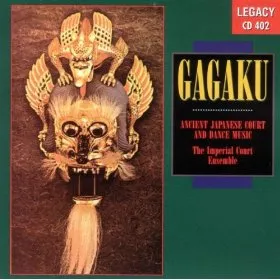
Gagaku: Ancient Japanese Court and Dance Music
The Imperial Court Ensemble
Gagaku
Classical
Country
Similar artists
2
/5
Nanae Yoshimura
Sōkyoku
Classical
Folk
1
/5
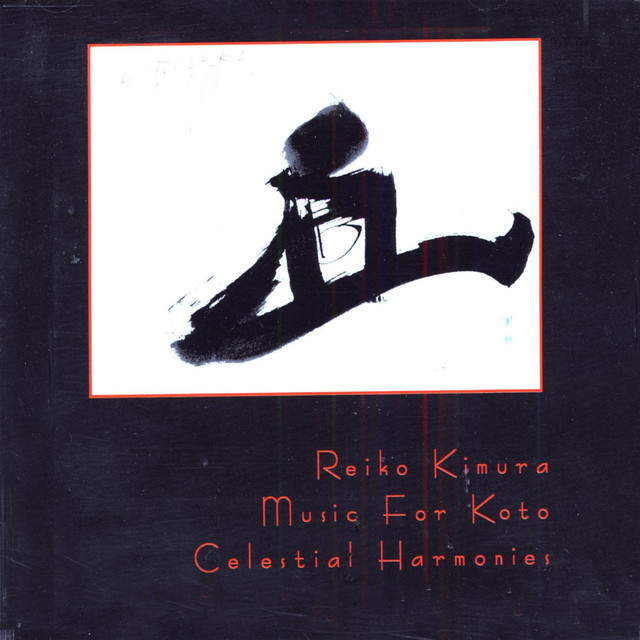
Reiko Kimura
Japanese Classical
Traditional Music
Classical
1
/5
Various Artists
Afro-Funk
Alternative Rock
Ambient
2
/5
Nonesuch Explorer Series
East Asian Classical Music
Japanese Music
East Asian Music
2
/5
Michio Miyagi
Japanese Classical
Traditional Music
Danmono
2
/5
Kifu Mitsuhashi
Ryukyuan Music
Japanese Classical
Traditional Music
1
/5
The Kyoto Nohgaku Kai
Japanese Classical
Traditional Music
Classical
1
/5
Guo Brothers
Japanese Classical
Traditional Music
Chinese Folk Music
1
/5
Satomi Fukami
Japanese Classical
Traditional Music
Danmono
1
/5
Mayumi Miyata
Classical
Japanese Classical
Traditional Music
Download our mobile app
Get the Melodigging app and start digging for new genres on the go
Download on the App Store
Get it on Google Play
© 2026 Melodigging
Give feedback
Legal
Melodding was created as a tribute to
Every Noise at Once
, which inspired us to help curious minds keep digging into music's ever-evolving genres.