Genres
Artists
Albums
Make Music
Sign in
Sign in
Artists
Reggaeton Mexa
Artists
Reggaeton Mexa
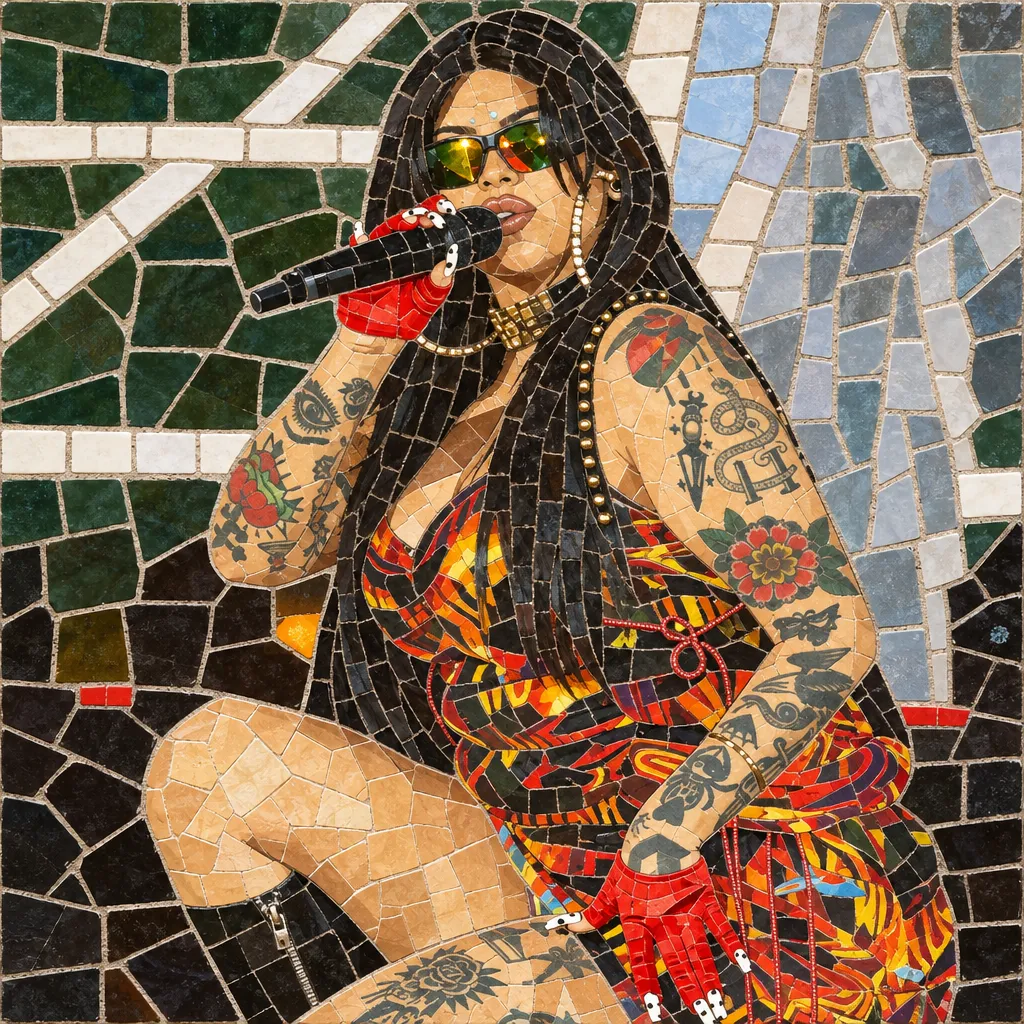
Rosa Pistola
2024
·
1 album
Listen
3
/5
Genres
Reggaeton Mexa
Reggaeton mexa is the Mexican take on reggaetón, fusing the classic dembow pulse with local slang, humor, and references to Mexican youth culture. It leans on viral, dance‑oriented hooks and streetwise storytelling, often delivered with bold, tongue‑in‑cheek bravado. Beyond straight perreo, producers and artists frequently blend elements from regional mexicano and cumbia with modern urbano textures (808s, crisp claps, autotune‑forward vocals). The result is a distinctly Mexican club sound that thrives on social media, parties, and neighborhood scenes in Mexico City, Monterrey, and Guadalajara.
Discover
Listen
Neoperreo
Neoperreo is a 2010s, internet-native reboot of reggaeton’s perreo culture, spearheaded by a DIY, club-oriented scene that embraces queer, feminist, and body-positive values. It keeps the genre’s dembow backbone while pushing sound design into heavier 808s, crisp digital percussion, and glossy autotuned vocals. Aesthetically, it borrows from global/experimental club currents, moombahton’s mid-tempo thump, and hyperpop’s online sensibility, yielding tracks that are minimal yet hard-hitting, hooky but adventurous. Neoperreo thrives in parties, YouTube/SoundCloud ecosystems, and pop-up scenes across Latin America, Spain, and the diaspora—designed first and foremost for the dancefloor and for perreo.
Discover
Listen
Singeli
Singeli is a hyper-accelerated Tanzanian dance music and MC tradition that emerged in Dar es Salaam’s working-class neighborhoods in the mid‑2000s. Built on blisteringly fast drum programming—often between 180 and 300 BPM—it features shouted or rapped vocals in Swahili and street slang, rapid-fire call‑and‑response, and looped keyboard riffs or chopped samples. While it draws from local ngoma rhythms, mchiriku street styles, and the broader tarab/taarab lineage, singeli is its own distinctly Tanzanian sound rather than soukous or classical taarab. Performances are intensely kinetic: DJs trigger barrages of claps, toms, and snares while MCs hype the crowd, and dancers drive the energy with footwork and shoulder moves. The overall aesthetic is raw, DIY, and maximal, but also playful and community‑focused.
Discover
Listen
Cumbiatón
Cumbiatón is a hybrid style that fuses the groove and melodic motifs of cumbia with the dembow-driven pulse of reggaeton. It typically sits at a mid-tempo around 90–105 BPM, combining hand percussion and folkloric textures with contemporary urban drum programming. The style often features accordion or synth-accordion hooks, guacharaca or güiro patterns, tumba/cabasa or conga accents, and a prominent dembow kick–snare framework. Vocals range from sung choruses with call-and-response coros to rap verses, and lyrics usually orbit themes of romance, barrio life, dancing, and youthful nightlife.
Discover
Listen
Club
Club is an umbrella style of mainstream dance music crafted primarily for nightclub sound systems and DJ-centric environments. It emphasizes steady four-on-the-floor rhythms, prominent basslines, repetitive hooks, and builds/drops designed to energize a dance floor. While it borrows from house, techno, disco, italo-disco, freestyle, and electro, Club prioritizes immediacy and crowd response over subcultural purity. Tracks are arranged for mixing, extended grooves, and vocal refrains that translate well to peak-time moments. In radio or chart contexts, "club" often denotes dance-forward pop or DJ-led productions tailored for mass club play.
Discover
Listen
Latin
Latin (as a genre label) is a broad umbrella used by the recording industry to categorize popular music rooted in Latin America, the Caribbean, and the Iberian world, often characterized by syncopated Afro-diasporic rhythms, dance-forward grooves, and lyrics primarily in Spanish or Portuguese. As a marketplace category that took shape in the mid-20th century United States, it gathers diverse traditions—Afro-Cuban, Brazilian, Mexican, and Caribbean styles—into a shared space. In practice, "Latin" spans everything from big-band mambo and bolero ballads to contemporary pop, rock, hip hop, and dance fusions produced by artists of Latin American heritage.
Discover
Listen
Electronic
Electronic is a broad umbrella genre defined by the primary use of electronically generated or electronically processed sound. It encompasses music made with synthesizers, drum machines, samplers, computers, and studio/tape techniques, as well as electroacoustic manipulation of recorded or synthetic sources. The genre ranges from academic and experimental traditions to popular and dance-oriented forms. While its sonic palette is rooted in electricity and circuitry, its aesthetics span minimal and textural explorations, structured song forms, and beat-driven club permutations. Electronic emphasizes sound design, timbre, and studio-as-instrument practices as much as melody and harmony.
Discover
Listen
Cumbia
Cumbia is a syncretic dance-music tradition from Colombia’s Caribbean coast that blends African rhythmic heritage, Indigenous (especially gaita flute) melodic practice, and Spanish colonial instrumentation and forms. Traditionally performed in a moderate 2/4 (often felt in 4/4 today), it features interlocking hand-drum parts (tambora, alegre, llamador), guacharaca or maracas for steady texture, and long cane flutes (gaita hembra and gaita macho) carrying call-and-response melodies. As it spread in the 20th century, orchestras and dance bands added accordion, horns, piano, bass, and later electric guitar and synthesizers, creating urban and pan–Latin American variants. Harmonically simple and rhythm-forward, cumbia places groove, ostinati, and vocal refrains at the center, making it both ceremonial in origin and enduringly popular on social dance floors across the Americas.
Discover
Listen
Guaracha
Guaracha is a fast‑paced Cuban song–dance genre known for witty, satirical, and often picaresque lyrics delivered over a driving Afro‑Cuban groove. It typically uses the son clave (in 2–3 or 3–2 orientation), call‑and‑response coros, and a lively montuno section that invites dance and audience participation. Originally tied to popular and comic theater, guaracha later became a staple of Cuban conjuntos and charangas, and it survives in the salsa repertoire as a label for brisk, upbeat numbers. Instrumentation commonly includes voice(s), guitar or tres, bass, bongó, maracas, claves, and often trumpets or charanga flute/violins. Harmonies are straightforward and bright (major keys, I–IV–V with frequent secondary dominants), while the rhythmic feel is relentlessly syncopated and festive. The term should not be confused with modern "guaracha edm" (a separate, contemporary club style); historical Cuban guaracha is a distinct traditional genre with roots in 19th‑century Havana and theatrical culture.
Discover
Listen
Show all 9 genres
Albums
2024
1
/5
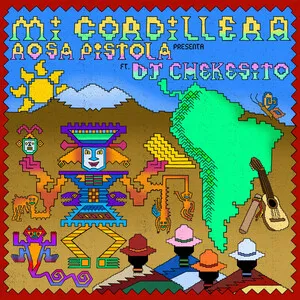
Mi cordillera
Rosa Pistola & DJ Chekesito
Cumbiatón
Similar artists
1
/5
Various Artists
Afro-Funk
Alternative Rock
Ambient
4
/5
El Bogueto
Reggaeton Mexa
Cumbiatón
Previa
4
/5
Cachirula
Neoperreo
Gogeo
Guaracha
4
/5
Yeri Mua
Reggaeton Mexa
Urbano Mexicano
Latin Viral Pop
4
/5
Dani Flow
Reggaeton Mexa
Urbano Mexicano
Reggaeton
4
/5
LOOJAN
Reggaeton Mexa
Cumbiatón
Neoperreo
2
/5
Dj Bekman
Gogeo
Reggaeton Mexa
Cumbiatón
5
/5
Bad Bunny
Latin
Reggaeton
Trap Latino
5
/5
KAROL G
Reggaeton
Latin
Trap Latino
5
/5
Anuel AA
Reggaeton
Trap Latino
Latin
Download our mobile app
Get the Melodigging app and start digging for new genres on the go
Download on the App Store
Get it on Google Play
© 2026 Melodigging
Give feedback
Legal
Melodding was created as a tribute to
Every Noise at Once
, which inspired us to help curious minds keep digging into music's ever-evolving genres.