Your digging level
Description
Singeli is a hyper-accelerated Tanzanian dance music and MC tradition that emerged in Dar es Salaam’s working-class neighborhoods in the mid‑2000s.
Built on blisteringly fast drum programming—often between 180 and 300 BPM—it features shouted or rapped vocals in Swahili and street slang, rapid-fire call‑and‑response, and looped keyboard riffs or chopped samples. While it draws from local ngoma rhythms, mchiriku street styles, and the broader tarab/taarab lineage, singeli is its own distinctly Tanzanian sound rather than soukous or classical taarab.
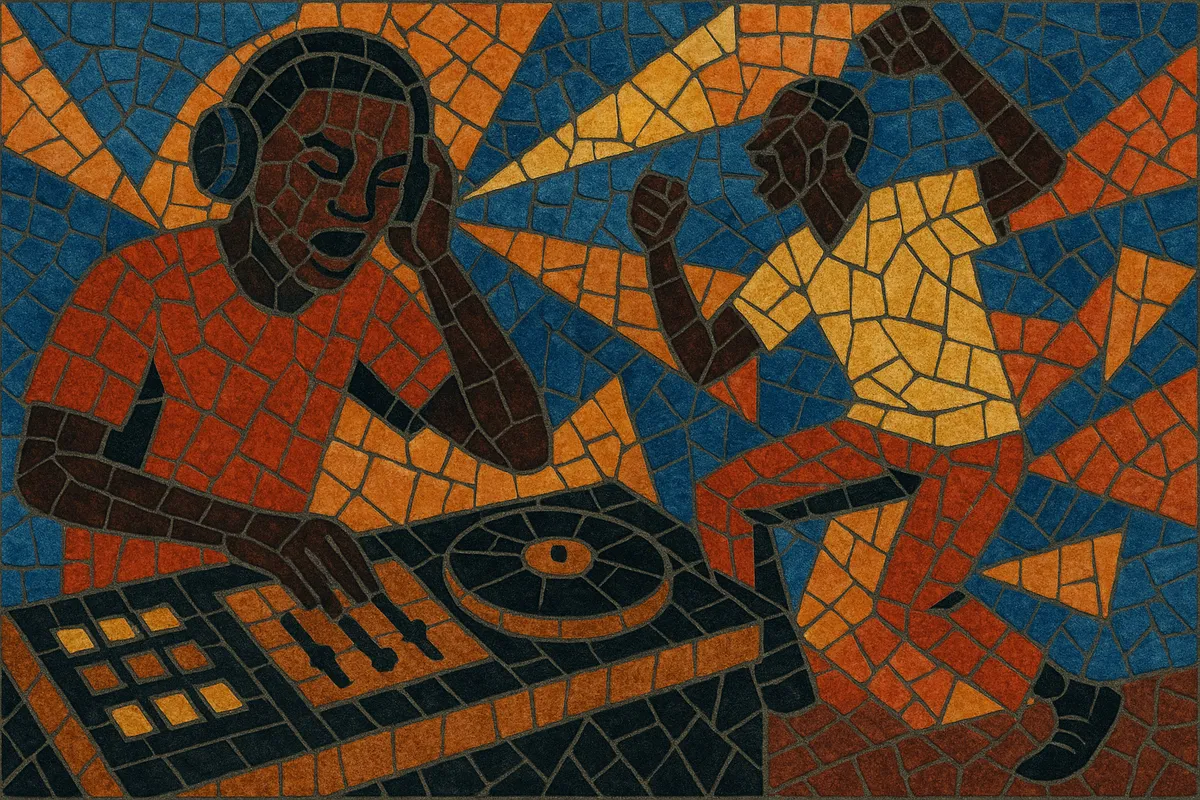
Performances are intensely kinetic: DJs trigger barrages of claps, toms, and snares while MCs hype the crowd, and dancers drive the energy with footwork and shoulder moves. The overall aesthetic is raw, DIY, and maximal, but also playful and community‑focused.


History
Singeli began in Dar es Salaam, Tanzania—especially in neighborhoods like Mtogole (Tandale ward) among Zaramo communities—where home setups and local sound systems incubated a new, ultra‑fast street style. Young DJs and MCs fused ngoma party rhythms, mchiriku’s gritty synth/keyboard loops, and the melodic sensibility linked to tarab/taarab accompaniment, but stripped everything down for speed and impact.
Throughout the 2010s, clusters of producers and MCs organized around neighborhood studios and crews, refining a recognizable toolbox: lightning BPMs, insistent claps, sirens and whistle FX, looping synth hooks, and MC toasting or rapid rap. Street shows, weddings, and block parties spread the sound throughout Dar es Salaam, then across Tanzania. Compilations and label partnerships helped document the scene and introduced key figures to wider audiences.
From the late 2010s onward, festival showcases and international releases brought singeli to global dance and experimental circuits. The style diversified: some tracks leaned harder into percussive minimalism and rave‑ready acidity; others foregrounded choral/kwaya inflections and social storytelling. By the early 2020s, the sound had a footprint across the Great Lakes region while remaining rooted in Tanzanian street culture and community events.
Singeli emphasizes speed, crowd interaction, and spontaneity. Sets often stack brief, high‑intensity tracks with abrupt drops, MC mic‑tags, and switch‑ups. Gendered performance norms exist but are fluid: many male MCs favor machine‑gun rap cadences, while many female MCs channel kwaya/choral styles—both equally central to the form.