Genres
Artists
Albums
Make Music
Sign in
Sign in
Artists
Nueva Canción Chilena
Artists
Nueva Canción Chilena
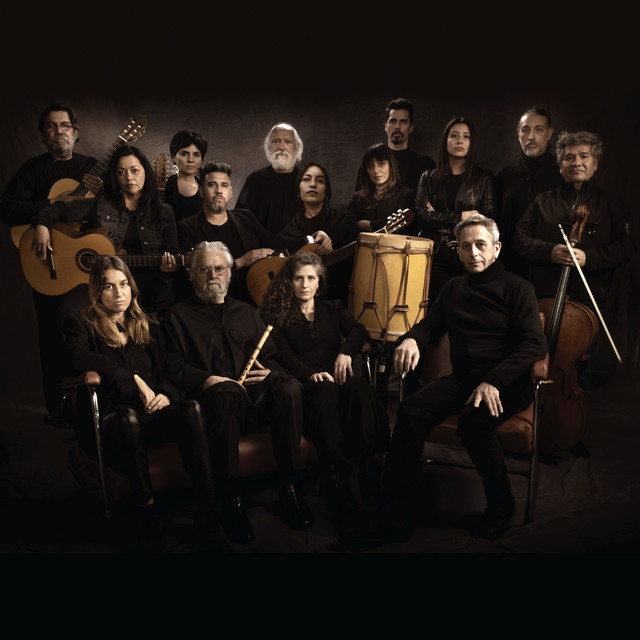
Quilapayún
1967–2023
·
10 albums
Listen
3
/5
Genres
Musica Nublensina
Musica nublensina refers to the contemporary, locally rooted music scene of Chile’s Ñuble Region (Chillán, San Carlos, Quirihue and surrounding communes). It is a place-based umbrella term rather than a single strict style, bringing together indie, folk, rock, cumbia, and singer‑songwriter currents that reflect the area’s cultural memory and its current independent ecosystem. Musically, the scene blends Chilean folk idioms (cueca campesina, tonadas, nueva canción legacies) with modern pop/indie textures, occasional Caribbean rhythms (via the long Chile–Caribbean exchange), and a DIY production ethos. Lyrically, songs often carry costumbrista imagery—rivers, cordillera, harvests, barrios—and a quietly political, community‑minded sensibility characteristic of central‑southern Chile. Because it is a geographic scene, musica nublensina naturally includes both heritage influences (iconic Ñuble‑born artists of the 20th century) and an active network of 2010s–2020s independent bands, solo acts, ensembles, and collectives.
Discover
Listen
Nueva Canción Chilena
Nueva canción chilena is a socially engaged song movement that arose in Chile in the 1960s, blending traditional Chilean and Andean folk idioms with contemporary, often left-leaning political and poetic lyrics. Musically it draws on cueca, tonada, huayno, and carnavalito grooves and timbres, foregrounding acoustic textures such as charango, quena, zampoña, guitar, and bombo legüero. Vocals are central—solo or choral—with clear, story-driven delivery. The result is a repertoire that feels both rooted in the rural and indigenous past and urgently modern in its message. Beyond its aesthetics, the genre functioned as a cultural movement: it organized peñas (folk venues), independent labels, and collective ensembles to channel popular demands for social justice, workers’ rights, and national identity. Its songs became anthems of solidarity across Latin America and the world.
Discover
Listen
Folclor Andino
Folclor andino is the pan‑regional folk music of the Andean highlands, shaped by Indigenous Quechua and Aymara traditions and later mestizo influences. It centers on wind instruments such as quena (notched flute) and zampoña/siku (panpipes), the small 10‑string charango, guitar, and deep hand‑drummed bombos, producing bright timbres over earthy rhythms. Melodically it favors pentatonic and natural minor (Aeolian/Dorian) scales, parallel thirds, antiphonal hocketing between panpipe parts, and cyclical ostinatos. Repertoire often draws from regional forms like huayno, yaraví, carnavalito, and related highland dances, with lyrics that invoke the mountains, Pachamama (Mother Earth), love, migration, and social realities. As a modern stage and recording genre, folclor andino coalesced mid‑20th century when urban ensembles standardized instrumentation and performance, later intersecting with nueva canción’s socially engaged aesthetics and spreading globally through tours and world‑music circuits.
Discover
Listen
Latin Folk
Latin folk is a broad umbrella for singer‑songwriter and ensemble music that draws on traditional folk forms from across Latin America while presenting them in contemporary, often acoustically driven arrangements. It emphasizes storytelling, social and poetic lyricism, and the timbres of regional instruments such as the guitar, charango, quena, zampoña, cuatro, and bombo legüero. Rhythmic cells are borrowed from pan‑regional traditions (chacarera, cueca, zamba, huayno, joropo, son, and others), yet songs are commonly shaped in accessible verse‑chorus structures. While its roots are centuries old, the modern genre coalesced during the mid‑20th‑century folk revival and the Nueva Canción movements, which linked ancestral sounds with contemporary concerns such as identity, justice, and cultural memory.
Discover
Listen
Nueva Canción
Nueva canción is a Latin American song movement that emerged in the 1960s, blending traditional folk forms with contemporary, socially engaged songwriting. It foregrounds poetic, politically conscious lyrics that address social justice, labor, indigenous rights, anti-imperialism, and everyday dignity. Musically, it draws on Andean and Southern Cone folk idioms—such as cueca, zamba, and chacarera—alongside pan-Latin ballad traditions. Typical instrumentation includes nylon-string guitar, charango, quena and zampoña (panpipes), bombo legüero, and rich vocal harmonies, often arranged for ensembles. The style’s melodic language favors modal inflections and singable, anthemic choruses designed for communal participation. While it became a continent-wide phenomenon, Chilean artists were especially pivotal in shaping its aesthetics and political ethos, with the movement later radiating into Argentina, Uruguay, and Spain.
Discover
Listen
Nueva Canción Latinoamericana
Nueva canción latinoamericana is a socially engaged song movement that revitalized Latin American folk traditions to address contemporary political and cultural realities. It blends rural and indigenous folk rhythms with modern, singer‑songwriter poetry, using acoustic instruments such as guitar, charango, quena, and bombo legüero. Lyrics foreground social justice, anti‑imperialism, labor struggle, indigenous rights, and national identity, often delivered in clear, declamatory melodies that invite communal singing. The result is music that is both rooted in local traditions and explicitly modern in its political consciousness.
Discover
Listen
Nueva Trova
Nueva trova is a Cuban singer‑songwriter movement that emerged in the late 1960s, blending the poetic intimacy of the island’s older trova tradition with socially conscious, often revolutionary, lyrics. It is typically guitar‑led and intimate, but can expand to small ensembles with subtle jazz‑inflected harmonies, echoing the filin (feeling) style and the romanticism of bolero while drawing rhythmic color from Cuban son and guajira. While aesthetically close to the broader Latin American nueva canción, nueva trova is distinctly Cuban in its idiom, metaphorical language, and engagement with post‑1959 cultural life.
Discover
Listen
Poetry
Poetry (as a recorded genre) centers on the spoken or performed recitation of verse, foregrounding voice, diction, rhythm, and imagery over conventional song structure. Performances may be entirely unaccompanied or framed by sparse accompaniment such as piano, strings, jazz combos, drones, or subtle sound design. Unlike broader spoken word, which can include storytelling, monologues, and comedy, poetry recordings focus on literary verse—metered, rhymed, or free—delivered with attention to prosody and poetic form. Releases range from archival readings by canonical poets to contemporary performance sets recorded in studios, classrooms, libraries, and clubs. The listening experience often emphasizes intimacy and textual clarity: microphones capture breath, cadence, and silence, while arrangements (if any) remain secondary to the poem’s language and pacing.
Discover
Listen
Spoken Word
Spoken word is a performance-centered genre where text—poems, monologues, stories, or manifestos—is delivered aloud with musicality in voice rather than through singing. It may be entirely a cappella or accompanied by sparse instrumentation (often jazz combos, ambient textures, or minimal electronics) that frames the cadence and rhetoric of the performer. The emphasis is on language: prosody, pacing, imagery, and argument. Pieces often explore personal narratives, social critique, and political themes, drawing on techniques such as internal rhyme, alliteration, and repetition. While recordings exist, the tradition is fundamentally live, prioritizing immediacy, audience engagement, and oratorical presence.
Discover
Listen
Latin
Latin (as a genre label) is a broad umbrella used by the recording industry to categorize popular music rooted in Latin America, the Caribbean, and the Iberian world, often characterized by syncopated Afro-diasporic rhythms, dance-forward grooves, and lyrics primarily in Spanish or Portuguese. As a marketplace category that took shape in the mid-20th century United States, it gathers diverse traditions—Afro-Cuban, Brazilian, Mexican, and Caribbean styles—into a shared space. In practice, "Latin" spans everything from big-band mambo and bolero ballads to contemporary pop, rock, hip hop, and dance fusions produced by artists of Latin American heritage.
Discover
Listen
Trova
Trova is a Cuban singer‑songwriter tradition that emerged in the late 19th century, centered on itinerant guitar‑accompanied vocalists who composed and performed their own songs. Characterized by intimate, lyrical delivery and refined guitar accompaniment, trova blends Spanish poetic songcraft with Cuban rhythmic sensibilities (notably the habanera pulse). Themes commonly include love, longing, social observation, and patriotic sentiment, often presented in strophic forms suitable for serenades or small gatherings. The tradition laid the groundwork for Cuban bolero and later songwriter movements, preserving a focus on melody, poetic text, and expressive, ornamented vocal lines.
Discover
Listen
Chilean Music
Chilean music is an umbrella term for the diverse musical practices that developed in Chile, spanning rural folk traditions, urban popular music, and modern hybrid scenes. Its core pillars include the cueca (the national dance), the tonada chilena, and Andean-influenced folk, alongside later movements such as Nueva Canción Chilena, rock en español, cumbia chilena, indie pop/rock, hip hop, reggaetón, and experimental scenes. Forged at the crossroads of Indigenous (Mapuche and Andean), Iberian (Spanish folk and salon forms), and Afro-diasporic currents (via the zamacueca), Chilean music combines characteristic strummed guitars, the guitarrón chileno and paya traditions, Andean winds (quena, zampoña), cueca’s stamping rhythms and pandero hand drum, and poetic, socially conscious lyricism. In the 20th century it became a continental reference through Nueva Canción’s politically engaged songwriting and later through rock, pop, and urban genres that placed Chile on the global map.
Discover
Listen
Tonada Chilena
Tonada chilena is a lyrical, strophic song form from central Chile, distinct from the livelier cueca and typically performed at a moderate to slow tempo. It emphasizes expressive melody and poetic texts—often octosyllabic quatrains—sung over simple harmonic progressions. Rhythmically, the tonada often exhibits Iberian sesquiáltera (the interplay of 6/8 and 3/4), but it can also be felt in straightforward 3/4. Its accompaniment is traditionally carried by guitar (sometimes in alternate tunings), arpa chilena (Chilean harp), guitarrón chileno in some contexts, and occasionally accordion. The overall character is sentimental, nostalgic, and romantic, with a focus on vocal phrasing and word-painting. While the tonada shares Spanish roots with many Hispanic song forms, it matured into a distinctly Chilean idiom in the 19th and early 20th centuries and became a cornerstone of urban and rural repertoires, radio songbooks, and later the folk revival.
Discover
Listen
Show all 13 genres
Albums
2023
1
/5
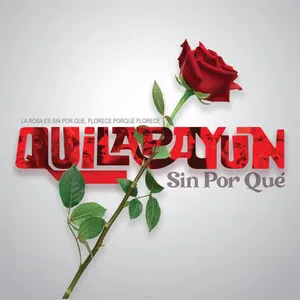
Sin por qué
Quilapayún
Tonada Chilena
1974
2
/5
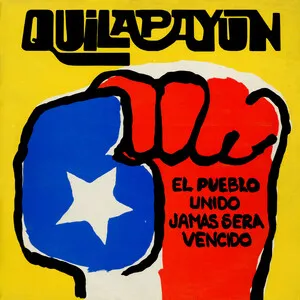
El pueblo unido jamas sera vencido
Quilapayún
Nueva Canción Chilena
Chilean Music
1970
3
/5
Santa María de Iquique - Cantata popular
Quilapayún
Poetry
Nueva Canción Chilena
Chilean Music
1970
1
/5
Santa María de Iquique - Cantata popular
Quilapayún
Spoken Word
Nueva Canción Latinoamericana
1969
2
/5
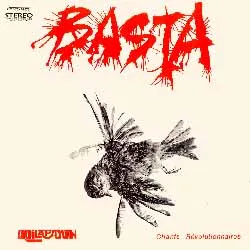
Basta
Quilapayún
Nueva Canción Chilena
Chilean Music
1968
2
/5
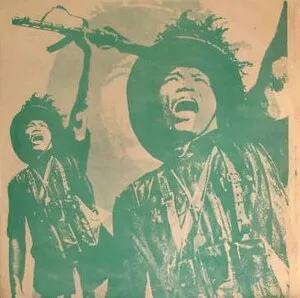
X Viet-Nam
Quilapayún
Nueva Canción Chilena
1968
1
/5
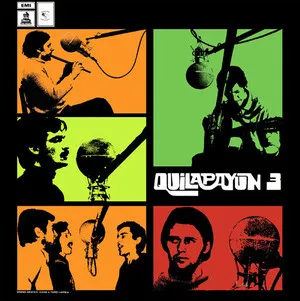
Quilapayún 3
Quilapayún
Nueva Canción Chilena
1968
1
/5
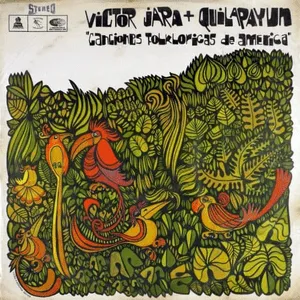
Canciones folklóricas de América
Víctor Jara & Quilapayún
Nueva Canción Chilena
Chilean Music
Nueva Canción Latinoamericana
1967
1
/5
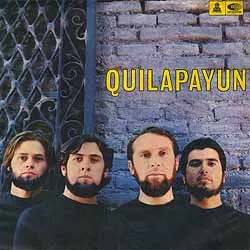
Quilapayun
Quilapayún
Nueva Canción Chilena
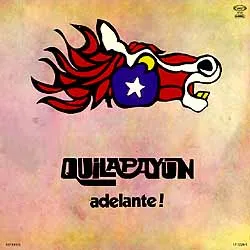
Adelante!
Quilapayún
Nueva Canción Chilena
Similar artists
3
/5
Inti-Illimani
Nueva Canción Chilena
Conjunto Andino
Chilean Music
3
/5
Victor Jara
Chilean Music
Nueva Canción
Nueva Canción Chilena
3
/5
Violeta Parra
Musica Nublensina
Chilean Music
Latin
3
/5
Illapu
Nueva Canción
Conjunto Andino
Chilean Music
2
/5
Patricio Manns
Folclor Andino
Latin Folk
Musica Nublensina
2
/5
Angel Parra
Folclor Andino
Latin Folk
Musica Nublensina
2
/5
Rolando Alarcon
Folclor Andino
Latin Folk
Musica Nublensina
4
/5
Silvio Rodríguez
Nueva Trova
Trova
Singer-Songwriter
4
/5
Jorge Drexler
Nueva Canción
Candombe
Nueva Trova
4
/5
Joan Manuel Serrat
Nueva Canción Española
Nova Cançó
Nueva Trova
Download our mobile app
Get the Melodigging app and start digging for new genres on the go
Download on the App Store
Get it on Google Play
© 2026 Melodigging
Give feedback
Legal
Melodding was created as a tribute to
Every Noise at Once
, which inspired us to help curious minds keep digging into music's ever-evolving genres.