Genres
Artists
Albums
Make Music
Sign in
Sign in
Artists
Anatolian Rock
Artists
Anatolian Rock
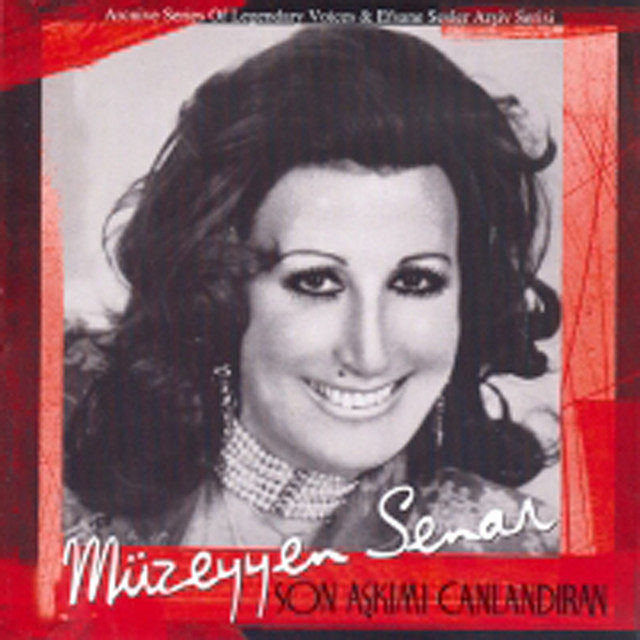
Müzeyyen Senar
1987
·
1 album
Listen
3
/5
Genres
Huzunlu Sarkilar
Hüzünlü şarkılar (literally “melancholy/sorrowful songs”) is a contemporary Turkish micro‑scene and streaming tag that gathers slow to mid‑tempo, emotive songs spanning indie, alternative rock, pop ballads, and modern echoes of arabesk. The style is unified less by strict form than by feeling: minor or modal harmony (often with Turkish makam color), intimate vocals, and lyrics steeped in longing (gurbet), heartbreak, and the culturally resonant idea of hüzün. Arrangements typically blend acoustic guitars, piano, soft synth pads, string lines, and occasionally bağlama, with restrained percussion and reverberant spaces. The result is a wistful, atmospheric sound that sits between classic Turkish balladry and modern indie aesthetics.
Discover
Listen
Anatolian Rock
Anatolian rock (also called Anadolu rock or Turkish psych) is a hybrid style that fuses Western rock idioms with Anatolian/Turkish folk traditions and the makam-based modal system. It emerged in the mid-to-late 1960s as Turkish musicians adapted beat, garage, and psychedelic rock to local melodies, scales, and rhythms. Typical instrumentation combines fuzzed electric guitars and bass with amplified bağlama (saz), Farfisa/Hammond organs, and a rock drum kit, often supplemented by traditional percussion. Songs frequently use "aksak" (limping) meters such as 9/8, 7/8, and 5/8, and melodies draw on makams like Hicaz, Hüseyni, Uşşak, Rast, and Kürdi. Lyrics are usually in Turkish and range from folk poetry and mystic allegory to social critique and protest. The style is renowned for its thick, swirling textures—spring reverb, tape saturation, phasing, and wah-wah—while retaining the narrative and modal richness of Anatolian musical heritage. It stands as a signature example of East–West synthesis in popular music.
Discover
Listen
Arabesk
Arabesk is a Turkish popular music style characterized by deeply emotive singing, melodramatic lyrics, and melodies grounded in the makam (modal) tradition. It blends elements of Turkish classical/urban art music, regional folk timbres (especially the bağlama/saz), and lush orchestral arrangements inspired by mid-20th-century Middle Eastern film music. Typical performances feature melisma, expressive vibrato, microtonal inflections, and frequent use of the Hijaz/Phrygian dominant flavor, often at slow-to-mid tempos with prominent strings and acoustic instruments. Lyrical themes revolve around longing (gurbet), fate, heartbreak, social displacement, and moral struggle—reflecting the rural-to-urban migration experience that shaped modern Turkey.
Discover
Listen
Rumeli Turkuleri
Rumeli türküleri are the Turkish-language folk songs of Rumelia (the Balkan lands of the former Ottoman Empire), carried and shaped by Turkish, Muslim, and multiethnic communities in today’s Greece (Western Thrace), North Macedonia, Bulgaria, Kosovo, Albania, Bosnia and beyond. They fuse Ottoman/Turkish makams with distinctly Balkan dance rhythms (notably 9/8 karsilama and 7/8 meters), and are commonly performed with G-clarinet, violin, accordion, bağlama/saz, oud, kanun, and lively hand percussion (darbuka, davul). Lyrically they span love, longing and migration (gurbet), weddings, and playful banter, often reflecting the bittersweet memory of displacement from the Balkans to modern Turkey in the 19th–20th centuries.
Discover
Listen
Turkish Classical
Turkish classical (Ottoman/Turkish art music) is a refined modal art tradition centered on the makam (scale/melodic behavior) system and cyclical rhythms called usul. It developed in the Ottoman court, Mevlevi lodges, and urban salons, using an intimate chamber instrumentation (ney, tanbur, ud, kemençe, kanun, keman) and highly ornamented vocal lines. Compositions follow characteristic forms such as peşrev and saz semaisi (instrumental), as well as vocal forms like beste, kar, semai, yürük semai, and the later şarkı. Improvisation (taksim) introduces and connects sections, exploring the seyir (melodic path) of the chosen makam with nuanced microtonal inflections. Its aesthetic emphasizes subtle emotion, controlled ornamentation, and measured development, with repertoire spanning sacred (Mevlevi ayin) and secular works. The tradition balances composed structure and spontaneous improvisation, cultivated through the meşk (master–apprentice) pedagogy.
Discover
Listen
Albums
1987
Son Aşkımı Canlandıran
Müzeyyen Senar
Rumeli Turkuleri
Similar artists
3
/5
Kamuran Akkor
Arabesk
Anatolian Rock
Fantezi
3
/5
Özdemir Erdoğan
Jazz
Anatolian Rock
Arabesk
3
/5
Zeki Müren
Anatolian Rock
Arabesk
Turkish Classical
4
/5
Ahmet Kaya
Özgün Müzik
Arabesk
Anatolian Rock
4
/5
Barış Manço
Anatolian Rock
Turkish Pop
Progressive Rock
4
/5
Nilüfer
Turkish Pop
Anatolian Rock
Arabesk
3
/5
Ferdi Özbeğen
Anatolian Rock
Arabesk
Turkish Pop
3
/5
Selda Bağcan
Anatolian Rock
Turkish Folk Music
Arabesk
3
/5
Kıraç
Anatolian Rock
Arabesk
Turkish Pop
3
/5
Cem Karaca
Anatolian Rock
Rock
Arabesk
Download our mobile app
Get the Melodigging app and start digging for new genres on the go
Download on the App Store
Get it on Google Play
© 2026 Melodigging
Give feedback
Legal
Melodding was created as a tribute to
Every Noise at Once
, which inspired us to help curious minds keep digging into music's ever-evolving genres.