Genres
Artists
Albums
Make Music
Sign in
Sign in
Artists
Luk Thung
Artists
Luk Thung
Musiciens de la cour de Norodom Sihanouk & Sovana Pour
2010
·
1 album
Listen
1
/5
Genres
Luk Thung
Luk thung (literally “child of the fields”) is Thailand’s post–World War II rural popular song style, often described as Thai country. It arose in central Thailand and was quickly embraced nationwide, especially in the northeast. Musically, it fuses Thai melodic sensibilities and ornamented, vibrato‑rich singing with hybrid ensembles that mix traditional instruments (e.g., khaen/khene, phin, saw duang/saw u, ranat) and Western band formats (electric guitars, bass, drum kit, brass, keyboards). Its rhythms and arrangements show cosmopolitan influences from Japanese enka, Indonesian kroncong/dangdut currents, Latin American dance idioms (mambo, rumba, bolero), and American country and popular music. Characteristic features include slow to moderate tempos, expressive melisma and portamento, lyrical storytelling about rural life, love and migration, and a polished stagecraft that blends folk identity with popular showmanship.
Discover
Listen
Traditional Music
Traditional music is an umbrella term used in the mid–20th century by folklorists and ethnomusicologists to denote community-rooted, orally transmitted repertoires tied to social ritual, work, celebration, and storytelling. Unlike commercial pop or art-music traditions, traditional music is typically learned by ear, varies regionally, and evolves slowly through communal participation. It often features modal melodies, cyclic rhythms, heterophony or unison singing, and indigenous instruments whose timbres are integral to local identity. Lyrics tend to preserve language, history, and collective memory. While the musical practices themselves can be ancient, the phrase “traditional music” emerged to replace earlier, narrower or colonial framings like “folk” or “ethnic” music, foregrounding continuity, locality, and living practice rather than exoticism.
Discover
Listen
Southeast Asian Classical
Southeast Asian classical is a family of courtly and ritual art-music traditions from mainland and island Southeast Asia, encompassing gong–chime ensembles such as Javanese/Balinese gamelan (Indonesia), piphat (Thailand), pinpeat (Cambodia), and hsaing waing (Myanmar), as well as Vietnamese imperial and chamber repertoires. These traditions privilege cyclical time, heterophonic textures, and modal systems tied to ceremonial, theatrical, and cosmological functions. Characteristic sound worlds include bronze gongs, metallophones, and xylophones marking colotomic cycles; reeded oboes (pi/sralai), bamboo flutes, lutes and zithers (e.g., đàn tranh), and the Burmese arched harp (saung gauk); double-headed drums (kendang/thon–rammana) articulating form; and rich layers of elaboration around a skeletal melody. Tuning is non-tempered and culturally specific (e.g., sléndro and pélog in Java/Bali; equidistant heptatonic systems in much of mainland Southeast Asia). The music accompanies court ritual, dance-drama, shadow puppetry, and temple observances, yet also thrives today in conservatories, cultural troupes, and contemporary composition.
Discover
Listen
Albums
2010
Musiques Khmeres royales & populaires - Cambodge
Musiciens de la cour de Norodom Sihanouk & Sovana Pour
Southeast Asian Classical
Similar artists
Hide discovered
1
/5
The Prasit Thawon Ensemble
Luk Thung
Phleng Phuea Chiwit
Traditional Music
1
/5
Khantoke
Luk Thung
Phleng Phuea Chiwit
Traditional Music
1
/5
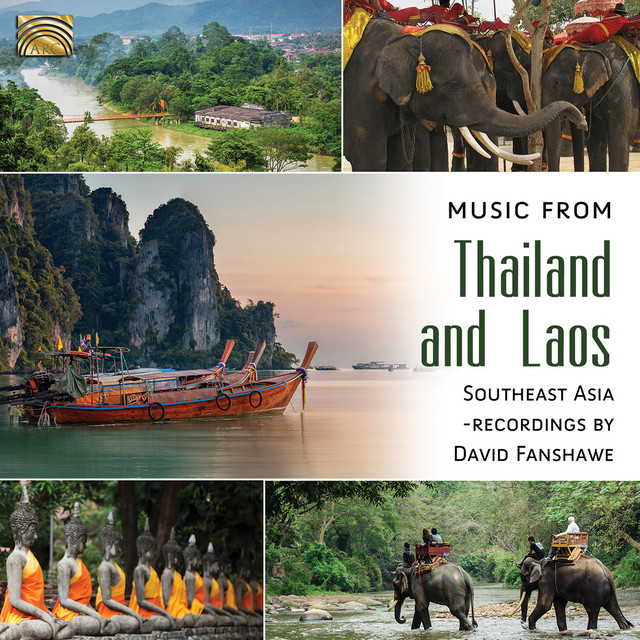
David Fanshawe
Exotica
Luk Thung
Phleng Phuea Chiwit
2
/5
Ocean Media
Luk Thung
Traditional Music
2
/5
นิก กอไผ่
Luk Thung
Traditional Music
2
/5
ชัยภัค ภัทรจินดา
Luk Thung
Traditional Music
2
/5
เลอเกียรติ มหาวินิจฉัยมนตรี
Luk Thung
Traditional Music
2
/5
หนุ่ม ภูไท
Luk Thung
Phleng Phuea Chiwit
Traditional Music
2
/5
Narongrit Tosa-nga
Luk Thung
Traditional Music
2
/5
อ.เสรี หวังในธรรม
Luk Thung
Traditional Music
Download our mobile app
Get the Melodigging app and start digging for new genres on the go
Download on the App Store
Get it on Google Play
© 2026 Melodigging
Give feedback
About & FAQ
Legal
Melodding was created as a tribute to
Every Noise at Once
, which inspired us to help curious minds keep digging into music's ever-evolving genres.