Genres
Artists
Albums
Make Music
Sign in
Sign in
Artists
Exotica
Artists
Exotica
David Fanshawe
1 album
Listen
1
/5
Genres
Phleng Phuea Chiwit
Phleng phuea chiwit, literally "songs for life," is a Thai folk-rock and protest-music tradition that blends Western singer-songwriter and rock idioms with Thai folk forms. It emerged around student and workers' movements in the 1970s and became a vehicle for social critique, storytelling, and cultural pride. Musically, it combines acoustic guitars and band-based rock arrangements with Thai instruments and melodic contours drawn from luk thung, luk krung, and mor lam. Lyrically, it is narrative and topical, addressing rural hardship, labor rights, democracy, and everyday struggles, often with poetic language and memorable choruses meant for communal singing.
Discover
Listen
Exotica
Exotica is a mid‑century style of mood music that blends jazz harmony, easy‑listening orchestration, and a collage of global percussion and timbral signifiers meant to evoke imaginary tropical, Polynesian, Asian, African, and Latin locales. Characterized by vibraphone and marimba leads, lush strings, woodwinds, wordless vocals, bird calls, gongs, and abundant reverberation, it creates a cinematic “armchair travel” experience. Rather than documenting specific traditions, exotica assembles stylized sound cues—Afro‑Cuban grooves, Polynesian drum patterns, pentatonic and whole‑tone colors—into atmospheric mini‑dramas. The genre flourished alongside postwar tiki culture and hi‑fi/stereo demonstrations, prioritizing vivid spatial staging and evocative orchestration over virtuoso soloing.
Discover
Listen
Luk Thung
Luk thung (literally “child of the fields”) is Thailand’s post–World War II rural popular song style, often described as Thai country. It arose in central Thailand and was quickly embraced nationwide, especially in the northeast. Musically, it fuses Thai melodic sensibilities and ornamented, vibrato‑rich singing with hybrid ensembles that mix traditional instruments (e.g., khaen/khene, phin, saw duang/saw u, ranat) and Western band formats (electric guitars, bass, drum kit, brass, keyboards). Its rhythms and arrangements show cosmopolitan influences from Japanese enka, Indonesian kroncong/dangdut currents, Latin American dance idioms (mambo, rumba, bolero), and American country and popular music. Characteristic features include slow to moderate tempos, expressive melisma and portamento, lyrical storytelling about rural life, love and migration, and a polished stagecraft that blends folk identity with popular showmanship.
Discover
Listen
Traditional Music
Traditional music is an umbrella term used in the mid–20th century by folklorists and ethnomusicologists to denote community-rooted, orally transmitted repertoires tied to social ritual, work, celebration, and storytelling. Unlike commercial pop or art-music traditions, traditional music is typically learned by ear, varies regionally, and evolves slowly through communal participation. It often features modal melodies, cyclic rhythms, heterophony or unison singing, and indigenous instruments whose timbres are integral to local identity. Lyrics tend to preserve language, history, and collective memory. While the musical practices themselves can be ancient, the phrase “traditional music” emerged to replace earlier, narrower or colonial framings like “folk” or “ethnic” music, foregrounding continuity, locality, and living practice rather than exoticism.
Discover
Listen
Fijiri
Fijiri (also spelled fidjeri) is the sea-song repertoire of the pearl-diving communities of the Persian Gulf, especially in Bahrain and Kuwait. It is led by a powerful soloist (the nahhām) who is answered by a chorus of divers, creating a call-and-response texture supported by handclaps and very sparse percussion. The core instruments are the mirwās, a small double-sided hand drum played with the fingers, and the jāhlah, a clay pot struck and rubbed with the hands. Together with coordinated clapping, they generate the interlocking rhythms that propel the songs. Melodically, fijiri draws on Gulf-Arab modal practice and features melismatic, ornamented solo lines floating over the steady pulse of the chorus. Traditionally performed at weekly gatherings of divers and crew, fijiri alternates free, emotive solos with tightly synchronized choral sections. The texts evoke the sea, the hardships and camaraderie of diving, spiritual reflection, and the longing felt during long voyages.
Discover
Listen
Albums
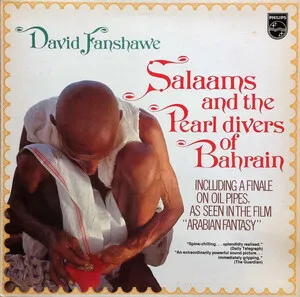
Salaams and the Pearl Divers of Bahrain
David Fanshawe
Fijiri
Similar artists
1
/5
Local Traditional Artists
Celtic
Exotica
Luk Thung
2
/5
หนุ่ม ภูไท
Luk Thung
Phleng Phuea Chiwit
Traditional Music
1
/5
ศิลปินกรมศิลปากร
Luk Thung
Phleng Phuea Chiwit
Traditional Music
1
/5
สำนักการสังคีตกรมศิลปากร
Luk Thung
Phleng Phuea Chiwit
Traditional Music
1
/5
Imade Saputra
Exotica
Luk Thung
Traditional Music
1
/5
Pichit Paiboon
Luk Thung
Phleng Phuea Chiwit
Traditional Music
1
/5
The Prasit Thawon Ensemble
Luk Thung
Phleng Phuea Chiwit
Traditional Music
1
/5
Molam Lao
Luk Thung
Phleng Phuea Chiwit
Traditional Music
1
/5
Baanyen Raggan
Luk Thung
Phleng Phuea Chiwit
T-Pop
1
/5
Khantoke
Luk Thung
Phleng Phuea Chiwit
Traditional Music
Download our mobile app
Get the Melodigging app and start digging for new genres on the go
Download on the App Store
Get it on Google Play
© 2026 Melodigging
Give feedback
Legal
Melodding was created as a tribute to
Every Noise at Once
, which inspired us to help curious minds keep digging into music's ever-evolving genres.