Genres
Artists
Albums
Make Music
Sign in
Sign in
Artists
Opera
Artists
Opera
Marcello Giordani
2000
·
1 album
Listen
1
/5
Genres
Grand Opera
Grand opera is a monumental 19th‑century French operatic form defined by large forces, spectacular staging, and serious historical or religious subjects. Typically laid out in five acts, it features extensive choruses, virtuosic arias and ensembles, full ballet sequences (the obligatory "divertissement"), and elaborate scenic effects that turn political and moral conflicts into public spectacle. Musically, grand opera expands the Romantic orchestra, favors accompanied recitative over secco dialogue, and uses coloristic orchestration, on‑ and off‑stage bands, and crowd scenes to heighten dramaturgy. It emerged at the Paris Opéra (Académie Royale/Impériale) in the late 1820s–1830s through works by Auber, Meyerbeer, and Halévy, and quickly became an international template for large‑scale operatic production.
Discover
Listen
Opera
Opera is a large-scale theatrical genre that combines music, drama, and visual spectacle, in which the story is primarily conveyed through singing accompanied by an orchestra. It unites solo voices, ensembles, and chorus with staging, costumes, and often dance to create a total artwork. Emerging in late Renaissance Italy and flourishing in the Baroque era, opera developed signature forms such as recitative (speech-like singing that advances the plot) and aria (lyrical numbers that explore character and emotion). Over the centuries it evolved diverse national styles—Italian bel canto, French grand opéra, German music drama—while continually experimenting with orchestration, harmony, narrative structure, and stagecraft.
Discover
Listen
Requiem
A requiem is a musical setting of the Roman Catholic Mass for the Dead (Missa pro defunctis). Historically rooted in Latin liturgy, it sets movements such as the Introit, Kyrie, (historically) the Sequence Dies irae, Offertory, Sanctus, Agnus Dei, and Communion, and often includes additional responsories like Libera me and In paradisum. While the earliest requiems were monophonic chants, the genre became a showcase for polyphonic and later symphonic choral writing. Renaissance composers wrote austere, modal settings; Classical and Romantic composers expanded the forces and dramatic scope; and 20th–21st century composers reimagined the form with new languages, from neo-modal and impressionistic harmonies to avant‑garde sonorities. Today, requiems appear both in liturgy and as concert works, symbolizing collective mourning, remembrance, and spiritual reflection.
Discover
Listen
Albums
2000
1
/5
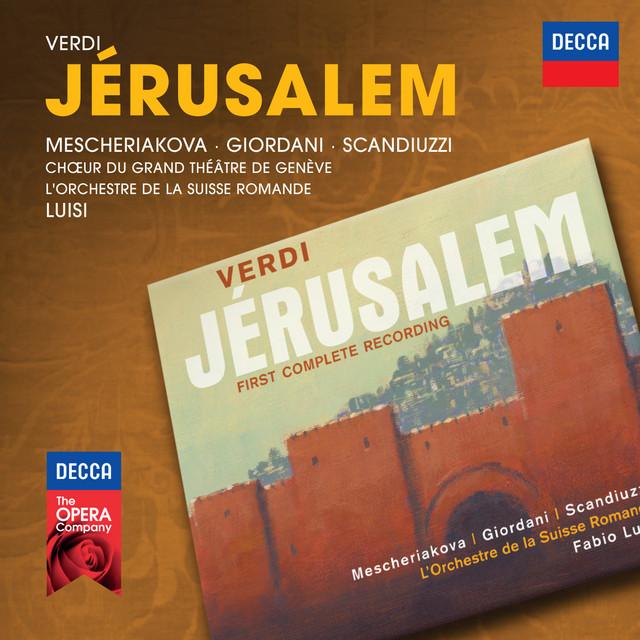
Jérusalem
Giuseppe Verdi
Grand Opera
Similar artists
4
/5
London Symphony Orchestra
Classical
Ballet
Concerto
4
/5
Philharmonia Orchestra
Classical
Opera
Choral
4
/5
Claudio Abbado
Classical
Concerto
Impressionism
4
/5
Giuseppe Verdi
Grand Opera
Requiem
Classical
3
/5
Sir Colin Davis
Classical
Requiem
Deep Soundtrack
3
/5
Carlo Maria Giulini
Classical
Opera
Requiem
3
/5
Orchestra of the Age of Enlightenment
Classical
Choral
Opera
3
/5
London Symphony Chorus
Requiem
Choral
Classical
2
/5
Nicolai Ghiaurov
Grand Opera
Classical
Opera
2
/5
José van Dam
Classical
Opera
Requiem
Download our mobile app
Get the Melodigging app and start digging for new genres on the go
Download on the App Store
Get it on Google Play
© 2026 Melodigging
Give feedback
Legal
Melodding was created as a tribute to
Every Noise at Once
, which inspired us to help curious minds keep digging into music's ever-evolving genres.