Genres
Artists
Albums
Make Music
Sign in
Sign in
Artists
Banda
Artists
Banda
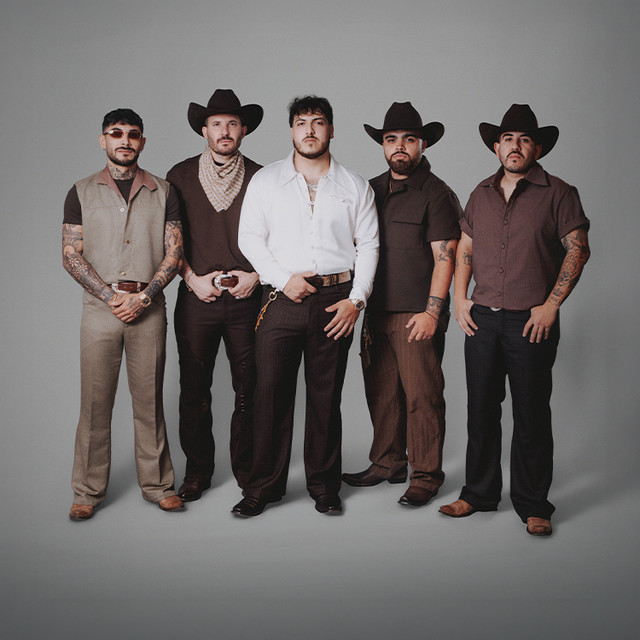
Leonardo Aguilar
Listen
3
/5
Genres
Latin Viral Pop
Latin viral pop is a contemporary, platform-native branch of Latin pop designed to travel fast across social networks and streaming playlists. It blends chart-ready pop songwriting with urbano Latin foundations—especially reggaeton’s dembow, Latin trap cadences, and dancehall bounce—wrapped in short, hook-first structures optimized for TikTok, Instagram Reels, and YouTube Shorts. Songs typically feature bilingual Spanish/Spanglish lyrics, call-and-response choruses, earworm toplines, and post-chorus vocal chops or riffs that work as 10–20‑second “shareable moments.” Production favors glossy, bass-forward mixes with 808s, syncopated dembow hi-hats, and polished synths or guitar loops. Themes center on romance, desire, empowerment, and partying, with frequent high-profile collaborations to amplify reach across regions and fanbases.
Discover
Listen
Reparto
Reparto is a contemporary Cuban urban dance genre that grew out of Havana’s neighborhood (“el reparto”) party circuits. It is built for high-energy street dancing, emphasizing syncopated, loop-based rhythms, shouted hooks, and a raw, percussive low-end that often feels closer to club-ready reggaeton than to traditional Cuban pop. A distinctive trait is the incorporation of Cuban music elements—especially salsa-derived rhythmic language and, in many productions, salsa-like guitar picking patterns that add a bright, montuno-adjacent drive over modern drum programming. Vocals typically alternate between rap-style delivery, call-and-response chants, and catchy repeated slogans designed for crowd participation.
Discover
Listen
Corrido Tumbado
Corrido tumbado (sometimes called trap corrido) is a contemporary fusion of the traditional Mexican corrido with trap and hip hop aesthetics. It preserves acoustic, sierreño-style instrumentation—lead requinto guitar, rhythm guitar (often 12‑string), and tololoche or tuba—while adopting modern rhythmic feels, flows, and production habits from trap: half‑time grooves, skittering hi‑hats, 808 sub‑bass layers, ad‑libs, and light Auto‑Tune. Lyrically, it updates the corrido’s narrative tradition with first‑person storytelling about hustle, street life, migration, romance, luxury brands, and cannabis culture, frequently delivered with contemporary Mexican slang and occasional Spanglish. The result is a laid‑back yet gritty sound that bridges Regional Mexicano and global urban music cultures.
Discover
Listen
Latin Pop
Latin pop is mainstream pop music performed primarily in Spanish (and sometimes Portuguese) that blends contemporary pop songwriting with Latin American and Iberian rhythms, harmonies, and vocal stylings. It typically features verse–pre-chorus–chorus forms, catchy hooks, polished production, and a balance between rhythmic drive and romantic lyric themes. Classic Latin pop often leans on bolero- and ballad-informed melodies and soft-rock textures, while modern Latin pop readily incorporates dance-pop, electronic, and urbano elements (such as reggaeton-influenced grooves) without losing its sing-along pop core.
Discover
Listen
Pop
Pop is a broad, hook-driven style of popular music designed for wide appeal. It emphasizes memorable melodies, concise song structures, polished vocals, and production intended for radio, charts, and mass media. While pop continually absorbs elements from other styles, its core remains singable choruses, accessible harmonies, and rhythmic clarity. Typical forms include verse–pre-chorus–chorus, frequent use of bridges and middle-eights, and ear-catching intros and outros. Pop is not defined by a single instrumentation. It flexibly incorporates acoustic and electric instruments, drum machines, synthesizers, and increasingly digital production techniques, always in service of the song and the hook.
Discover
Listen
Rock
Rock is a broad family of popular music centered on amplified instruments, a strong backbeat, and song forms that foreground riffs, choruses, and anthemic hooks. Emerging from mid‑20th‑century American styles like rhythm & blues, country, and gospel-inflected rock and roll, rock quickly expanded in scope—absorbing folk, blues, and psychedelic ideas—while shaping global youth culture. Core sonic markers include electric guitar (often overdriven), electric bass, drum kit emphasizing beats 2 and 4, and emotive lead vocals. Rock songs commonly use verse–chorus structures, blues-derived harmony, and memorable melodic motifs, ranging from intimate ballads to high‑energy, stadium‑sized performances.
Discover
Listen
Regional Mexicano
Regional Mexicano (Música Mexicana) is an umbrella term for folk-derived regional styles from Mexico and their Mexican American continuations in the Southwestern United States. Rather than one single sound, it gathers subgenres tied to specific regions—such as mariachi and ranchera (Jalisco/Centro-Occidente), norteño and sierreño (Norte), banda sinaloense (Sinaloa), and narrative corridos that travel nationwide. Its foundations reach back to the 16th–19th centuries, when Indigenous musical practices fused with Spanish song forms, African rhythms, and European dance-band traditions (polka, waltz, schottische), later meeting brass-band instrumentation and, in the North, accordion-led ensembles. In the 20th century it consolidated through radio, cinema, and records, and in the late 20th century became a major Spanish-language radio format in the U.S. Today it ranges from emotive ranchera ballads to high-energy banda and norteño dance music and modern corridos that reflect contemporary social life.
Discover
Listen
Banda
Banda is the traditional music of the Banda peoples of the Central African Republic and adjacent regions of the central Sudano–Congolese belt. It centers on communal performance—singers, dancers, and instrumentalists creating interlocking parts that are woven together through call-and-response and polyrhythm. Characteristic timbres include ensembles of natural horns (notably among Banda-Linda groups) that perform single-note hocketing to build complex melodic textures, wooden slit-drums used for rhythm and communication, frame and barrel drums, rattles, handclaps, transverse and end-blown flutes, and lamellophones (sanza/likembe). Vocal music ranges from antiphonal work and dance songs to ceremonial chants, often supporting life-cycle rituals, healing, hunting, and communal celebrations. Melodically, Banda repertoires commonly employ pentatonic and heptatonic pitch collections, while rhythmically they favor layered ostinati in compound meters (e.g., 12/8) and additive patterns. The music functions as living social practice, binding community, marking identity, and conveying oral history.
Discover
Listen
Ranchera
Ranchera (canción ranchera) is a traditional Mexican song genre characterized by passionate, emotive vocals; memorable, singable melodies; and direct, heartfelt lyrics about love, heartbreak, drinking, patriotism, rural life, and personal honor. Although its roots reach back to rural song traditions of the late 18th and early 19th centuries, ranchera consolidated as a national popular style before the Mexican Revolution and was later projected across Latin America through the Golden Age of Mexican cinema. The genre is commonly performed with mariachi (violins, trumpets, vihuela, guitarra, guitarrón), but it can also appear with norteño, banda, or solo voice-and-guitar arrangements. Musically, rancheras often use simple strophic or verse–chorus forms, tonal harmonies (I–IV–V with occasional secondary dominants or modulations), and meters in 3/4 (vals ranchero) or 2/4 and 4/4 (ranchera alegre or ranchera lenta). Vocal delivery features expressive rubato, dramatic dynamic arcs, and the iconic grito (a shouted cry) between phrases.
Discover
Listen
Mariachi
Mariachi is a traditional Mexican ensemble and performance practice that crystallized in western Mexico (especially Jalisco, Colima, Nayarit, and Michoacán) and later became a national and international emblem of Mexican music. Modern mariachi bands typically feature multiple violins, two trumpets, and a rhythm section anchored by the high‑pitched, five‑string vihuela and the deep, fretless guitarrón, often alongside a standard guitar and, in some historic or regional variants, the Mexican harp. The sound balances bright, projecting trumpets and soaring violins over rich strummed textures and a powerful, melodic bass line. Repertoire spans regional sones (including son jalisciense), huapangos, rancheras, corridos, boleros, waltzes, and polkas. Vocal delivery is central: most players sing in stacked harmonies, trade lead verses, and punctuate performances with expressive gritos (exclamations). Costuming (charro suits) and stylized stagecraft are integral to the genre’s identity.
Discover
Listen
Show all 10 genres
Similar artists
5
/5
Christian Nodal
Grupera
Mariachi
Ranchera
4
/5
Ángela Aguilar
Mariachi
Ranchera
Banda
5
/5
Carín León
Regional Mexicano
Alternative Country
Latin Pop
5
/5
Vicente Fernández
Bolero
Mariachi
Ranchera
4
/5
Espinoza Paz
Banda
Grupera
Mariachi
4
/5
Pepe Aguilar
Mariachi
Banda
Ranchera
4
/5
El Bebeto
Mariachi
Banda
Grupera
3
/5
Omar Chaparro
Banda
Mariachi
Ranchera
5
/5
Grupo Frontera
Tejano
Cumbia Norteña Mexicana
Grupera
5
/5
Grupo Firme
Grupera
Ranchera
Norteño
Download our mobile app
Get the Melodigging app and start digging for new genres on the go
Download on the App Store
Get it on Google Play
© 2026 Melodigging
Give feedback
Legal
Melodding was created as a tribute to
Every Noise at Once
, which inspired us to help curious minds keep digging into music's ever-evolving genres.